How to Master Order Block Trading Strategy
TL;DR
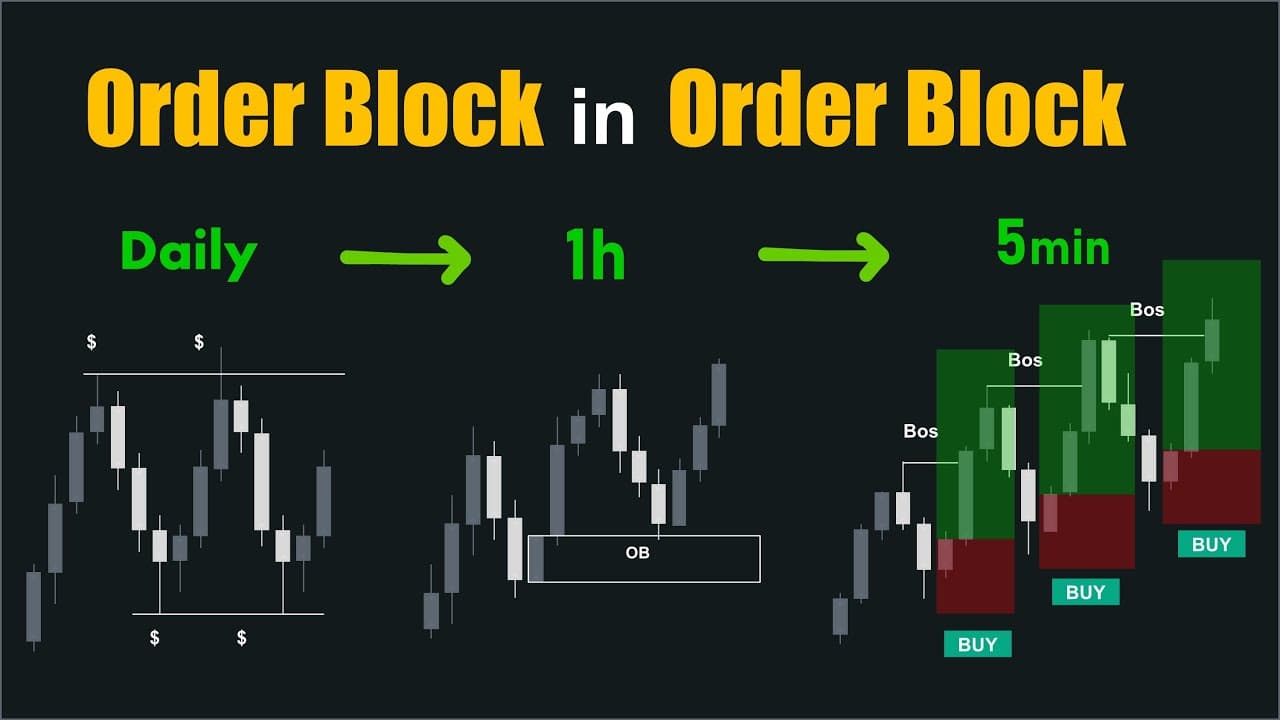
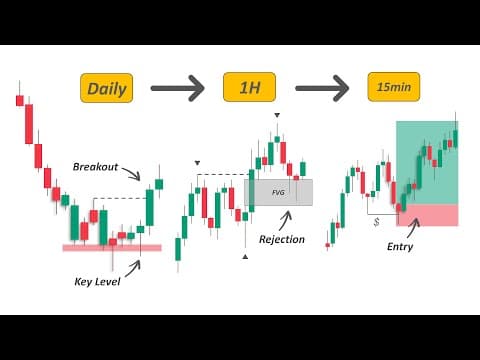
To successfully trade using the order block strategy, identify key trading zones on higher time frames, confirm reversals on lower time frames, and manage trades within these zones for optimal entries. This systematic approach can be applied across different markets, enhancing trading accuracy and profitability.
Transcript
hey guys welcome back to another episode of smart risk in this video we will show you one of our Advanced entry strategies which we have developed using smart money techniques order block and Order block today we will show you step by step how to fully apply this trading setup on any chart with all the mechanical rules that need to be followed this... Read More
Key Insights
- Order blocks are key trading zones identified on higher time frames.
- Reversals should be confirmed on lower time frames before entering trades.
- Fair value gaps indicate areas where institutional activity has occurred.
- Liquidity levels influence price movements and are crucial for analysis.
- Trading in empty spaces between key levels reduces manipulation risks.
- The strategy is applicable to currency, stock, and crypto markets.
- Combining multiple time frames provides a comprehensive market view.
- Risk management involves limiting active trades and reducing risk exposure.
Install to Summarize YouTube Videos and Get Transcripts
Explore YouTube Video Summarizer or Get YouTube Transcript Extractor
Questions & Answers
Q: How to identify order blocks in trading?
Order blocks are identified on higher time frames as areas where institutional activity has likely occurred. These zones are marked by candles that create fair value gaps or represent significant support or resistance. Traders should look for these characteristics to pinpoint optimal trading zones for potential market reactions.
Q: What is the significance of fair value gaps?
Fair value gaps signify areas where significant institutional activity has moved the price, creating an imbalance. These gaps often attract the market back to fill remaining orders, providing opportunities for traders to enter positions. Identifying these gaps is crucial for understanding potential price movements and planning trades accordingly.
Q: Why is liquidity important in trading?
Liquidity is essential as it influences price movements. Markets tend to move towards areas with high liquidity, where significant buying or selling can occur. Understanding liquidity levels helps traders anticipate potential price reactions and manage trades effectively, ensuring entries and exits are well-timed and strategic.
Q: How to confirm reversals on lower time frames?
Reversals on lower time frames are confirmed by observing changes in market character, such as break of structures or liquidity sweeps. Traders should look for patterns indicating a shift in trend direction, such as higher highs and lows, before entering trades. This confirmation ensures trades are aligned with market momentum.
Q: What role do key levels play in trading strategies?
Key levels act as significant support or resistance areas where price reactions are likely. Trading strategies focus on these levels to anticipate potential reversals or continuations. By marking key levels on higher time frames, traders can plan entries and exits with greater precision, avoiding areas prone to manipulation.
Q: When should traders use multiple time frames?
Traders should use multiple time frames to gain a comprehensive understanding of market conditions. Analyzing higher time frames provides a broader market context, while lower time frames offer detailed entry and exit points. This multi-time frame approach enhances decision-making and increases the likelihood of successful trades.
Q: How to manage risk in order block trading?
Risk management in order block trading involves setting stop-losses at strategic levels, limiting active trades to reduce exposure, and adhering to a maximum risk percentage per trade. Traders should continuously assess market conditions and adjust their risk parameters to ensure consistent and disciplined trading practices.
Q: What is the importance of backtesting trading strategies?
Backtesting trading strategies is crucial for evaluating their effectiveness and potential profitability. By simulating trades using historical data, traders can identify strengths and weaknesses in their approach, refine their methods, and build confidence in their strategy. This process is essential for developing a robust and reliable trading plan.
Summary & Key Takeaways
-
Order block trading involves identifying key zones on higher time frames and confirming reversals on lower time frames. This approach enhances entry accuracy and can be applied across various markets. The strategy emphasizes trading in empty spaces to avoid manipulation and requires a systematic method for consistent results.
-
The strategy uses a combination of time frames to analyze market conditions and identify optimal trading zones. Key elements include order blocks, fair value gaps, and liquidity levels. Traders should focus on trading in areas with less manipulation risk and manage trades with strict risk controls.
-
A successful order block strategy requires understanding market structure, identifying liquidity areas, and using fair value gaps for trade confirmations. This approach offers high-quality entries and is adaptable to different financial markets, making it a versatile tool for traders seeking disciplined and strategic trading methods.
Read in Other Languages (beta)
Share This Summary 📚
Summarize YouTube Videos and Get Video Transcripts with 1-Click
Try YouTube Summary with ChatGPT & Claude or YouTube Transcript Generator
Explore More Summaries from Smart Risk 📚

Summarize YouTube Videos and Get Video Transcripts with 1-Click
Try YouTube Summary with ChatGPT & Claude or YouTube Transcript Generator