How to Use Breaker Blocks in Trading Strategy
TL;DR
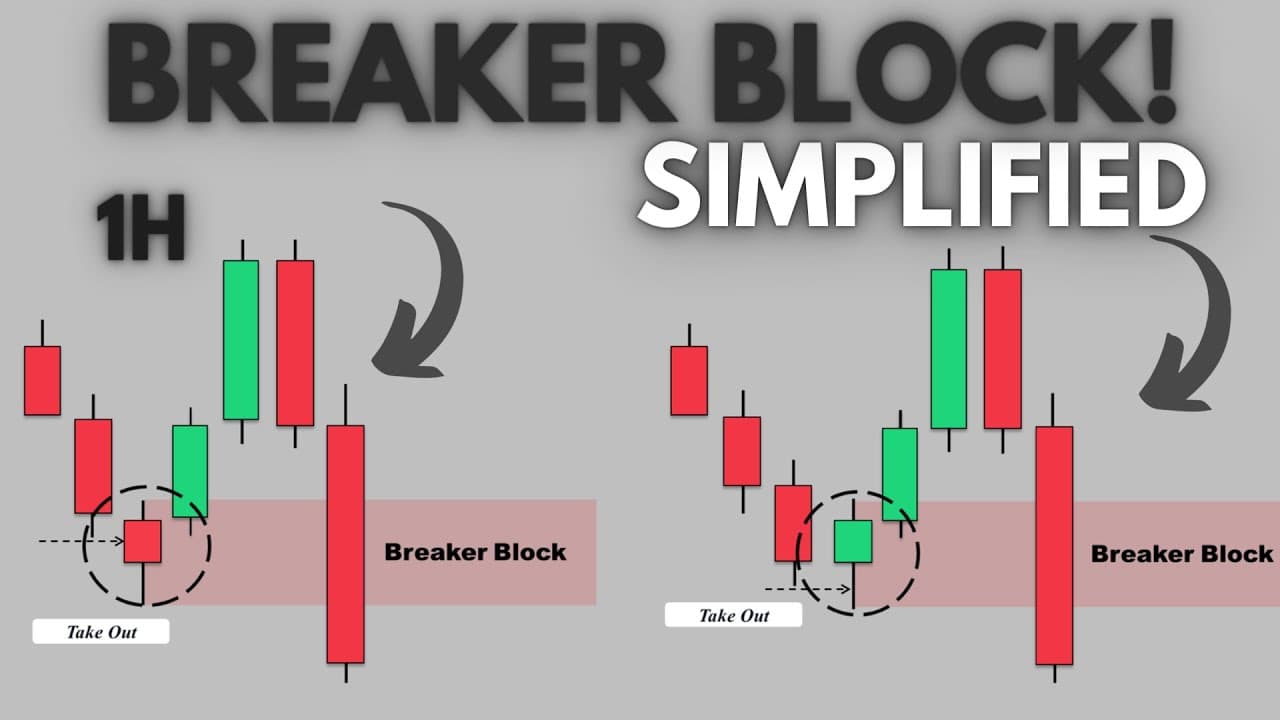
A breaker block is a previously failed order block that becomes a key supply or demand zone on a price chart. This video explains how to identify and use breaker blocks to improve trading strategies by recognizing high-probability setups and avoiding missed opportunities. It covers the psychology, criteria, and rules for valid breaker blocks in various market scenarios.
Transcript
Hey traders and welcome to another episode of Smart Risk. Today in this video, we will dive deep into breaker blocks and show you how to use them to get one step ahead of the market. Mastering this concept will provide you with insights into identifying high probability trading setups on the price chart and help you avoid missing perfect trades. We... Read More
Key Insights
- A breaker block is a failed order block that becomes a supply or demand zone.
- Breaker blocks occur when an order block is broken in the opposite direction.
- They are used to mitigate positions and serve as areas where positions are added.
- Valid breaker blocks require price to clear buyside or sellside liquidity.
- In bullish scenarios, breaker blocks form after a higher high; in bearish, after a lower low.
- A breaker block is valid only if the price breaks and closes below or above it.
- Breaker blocks are typically considered for one-time use in trading setups.
- High-quality setups occur when breaker blocks coincide with liquidity voids or order blocks.
Install to Summarize YouTube Videos and Get Transcripts
Explore YouTube Video Summarizer or Get YouTube Transcript Extractor
Questions & Answers
Q: What is a breaker block in trading?
A breaker block is a previously failed order block that becomes a key supply or demand zone on a price chart. It occurs when a prior order block is broken in the opposite direction, switching its characteristic from supply to demand or vice versa. This concept helps traders identify high-probability trading setups.
Q: How do breaker blocks form?
Breaker blocks form when a previous order block is broken in the opposite direction, causing it to switch from a supply to a demand zone, or vice versa. This typically happens when the market structure shifts, often due to factors like economic news, overvaluation, or tapping into higher time frame key areas.
Q: What criteria are needed to identify a valid breaker block?
To identify a valid breaker block, the price must clear buyside or sellside liquidity and form a market structure shift. The price should also break and close below or above the breaker block with the candle body. Additionally, breaker blocks are considered for one-time use, focusing on the initial trading opportunity.
Q: Why are breaker blocks used in trading?
Breaker blocks are used to mitigate positions and provide areas where positions are added. They help traders identify high-probability trading setups by marking key supply or demand zones on the price chart. Understanding breaker blocks allows traders to anticipate price reversals and improve their trading strategies.
Q: What is the psychology behind breaker blocks?
The psychology behind breaker blocks involves traders trapped by market shifts who expect the price to return to their break-even point. This creates momentum as they close positions, filling numerous orders. Retail traders also see breaker blocks as trend line breakouts, providing shorting opportunities, reinforcing the zone's significance.
Q: How do breaker blocks differ in bullish and bearish scenarios?
In bullish scenarios, a breaker block forms after a higher high is created, while in bearish scenarios, it forms after a lower low. This ensures significant price movement before a market structure shift, filtering out manipulated moves. The breaker block then acts as a key zone for potential reversals.
Q: What are high-quality setups for breaker blocks?
High-quality setups for breaker blocks occur when they coincide with liquidity voids or order blocks. These setups offer high success probabilities as they represent areas with numerous previously executed orders. The price is likely to respect these zones, providing opportunities for profitable trades.
Q: How can traders execute trades using breaker blocks?
Traders can execute trades using breaker blocks by placing entries at the highest point of the breaker block, with stop losses a few pips below fair value gaps. Strategies may include single time frame entries or seeking additional confirmation through lower time frame reversal patterns within the breaker block area.
Summary & Key Takeaways
-
Breaker blocks are failed order blocks that become supply or demand zones, used to identify high-probability trading setups. They occur when price breaks an order block in the opposite direction, changing its characteristic. Valid breaker blocks require clearing liquidity and a market structure shift.
-
The video explains the psychology behind breaker blocks, where traders trapped by market shifts seek break-even points, creating momentum. It highlights the importance of recognizing breaker blocks in bullish and bearish scenarios, emphasizing criteria like clearing liquidity and price closures.
-
Effective breaker block setups include those formed after liquidity sweeps or alongside order blocks. These setups offer high success probabilities, as they represent areas with previously executed orders. The video provides strategies for identifying and trading these setups across various time frames.
Read in Other Languages (beta)
Share This Summary 📚
Summarize YouTube Videos and Get Video Transcripts with 1-Click
Try YouTube Summary with ChatGPT & Claude or YouTube Transcript Generator
Explore More Summaries from Smart Risk 📚



Summarize YouTube Videos and Get Video Transcripts with 1-Click
Try YouTube Summary with ChatGPT & Claude or YouTube Transcript Generator