How to Map and Identify Market Structures
TL;DR
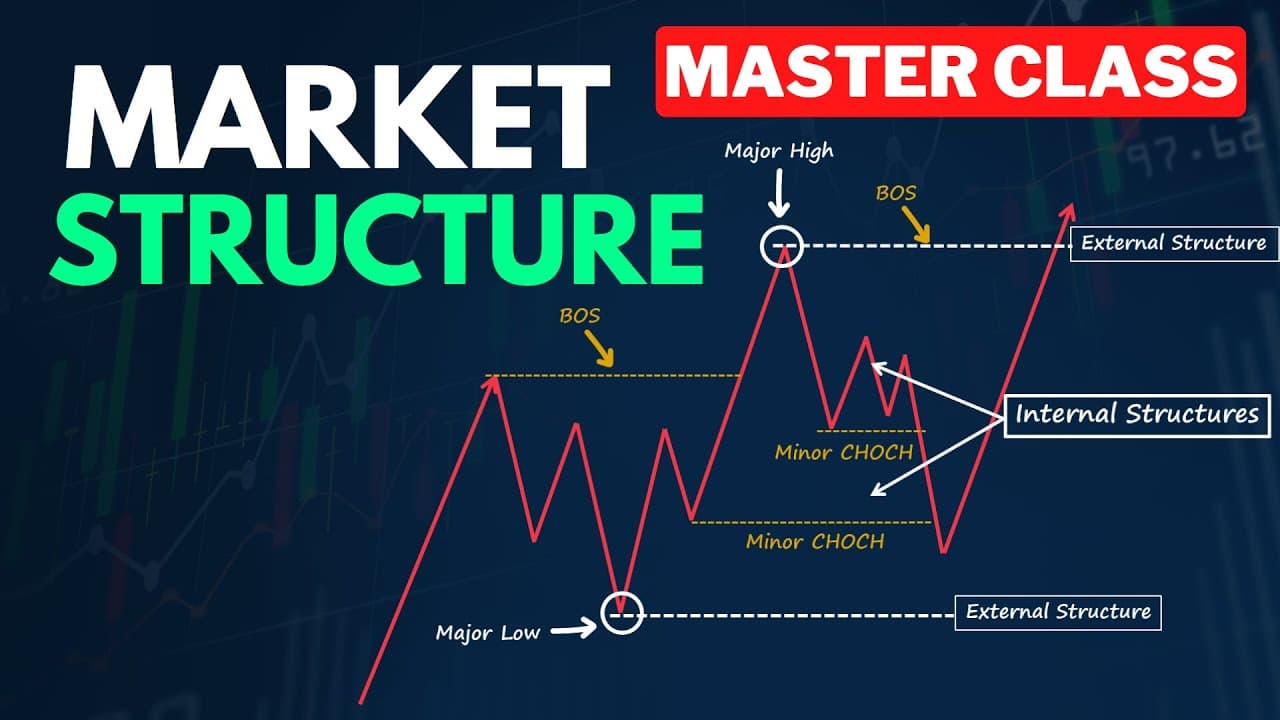
Accurately identifying market structures is crucial for successful trading. Key concepts include understanding uptrends and downtrends, recognizing major highs and lows, and using break of structure (BOS) to signal trend continuation or reversal. Proper mapping of market structures can help traders avoid common pitfalls and improve profitability.
Transcript
Hello traders and welcome back to another episode of Smart Risk. Accurately identifying and mapping the market structure along with its crucial elements is the initial key step that every trader must take on their trading journey for success and profitability. One of the primary reasons many traders face losses is their failure to properly identify... Read More
Key Insights
- Market structure is the foundational element in trading, helping traders identify trends and make informed decisions.
- An uptrend is characterized by higher highs and higher lows, while a downtrend features lower lows and lower highs.
- Break of structure (BOS) occurs when price breaks and closes above or below a major high or low, signaling potential trend continuation.
- Valid BOS requires the body of a candle to close beyond the previous structure, not just a wick penetration.
- Change of character indicates a shift in market direction, requiring a break of the last major low or high with a candle's body.
- Internal structures form within major highs and lows, and their nature doesn't affect the overall trend direction.
- In a bullish market, a valid change of character requires the price to close below the last major low.
- In a bearish market, a valid change of character requires the price to close above the last major high.
Install to Summarize YouTube Videos and Get Transcripts
Explore YouTube Video Summarizer or Get YouTube Transcript Extractor
Questions & Answers
Q: How to identify a valid break of structure in trading?
A valid break of structure (BOS) occurs when the price breaks and closes above the most recent higher high or below the most recent lower low with the body of a candle. This indicates a potential continuation of the current trend. A mere wick penetration without a candle body closure is not considered a valid BOS.
Q: What is the importance of recognizing major highs and lows in market structure?
Recognizing major highs and lows is crucial as they define the external structures of the market. These points help traders identify the current trading range and determine the market's trend direction. A break of these major points signals potential trend continuation or reversal, aiding in strategic trading decisions.
Q: When is a change of character considered valid in market analysis?
A change of character is considered valid when the price breaks and closes below the last major low (in a bullish market) or above the last major high (in a bearish market) with the body of a candle. This indicates a potential shift in market direction, signaling traders to adjust their strategies accordingly.
Q: Why is it important to differentiate between internal and external market structures?
Differentiating between internal and external market structures is important because external structures define the major highs and lows that indicate trend direction, while internal structures form within these points. The nature of internal price action does not affect the overall trend, allowing traders to focus on significant break points for strategic decisions.
Q: What role does the break of structure (BOS) play in trend analysis?
The break of structure (BOS) plays a critical role in trend analysis by indicating potential trend continuation. When the price breaks and closes beyond a major high or low, it signals that the current trend may persist. Recognizing valid BOS helps traders align their strategies with the prevailing market direction.
Q: How can traders avoid common pitfalls in market structure analysis?
Traders can avoid common pitfalls by accurately identifying major highs and lows, recognizing valid breaks of structure, and understanding the distinction between internal and external structures. Avoiding assumptions based on minor changes and waiting for valid signals helps prevent trading on the wrong side of the market.
Q: What is the significance of candle body closure in confirming a break of structure?
Candle body closure is significant in confirming a break of structure because it provides a clear indication of price commitment beyond a major high or low. Unlike wick penetration, a candle body closure signals a more decisive break, reducing false signals and enhancing the reliability of trend continuation or reversal analysis.
Q: How does market structure mapping aid in strategic trading?
Market structure mapping aids in strategic trading by providing a clear framework for identifying trend direction, potential break points, and reversal signals. By understanding key concepts like break of structure and change of character, traders can make informed decisions, align their strategies with market trends, and improve their profitability.
Summary & Key Takeaways
-
Accurately identifying market structures is essential for traders to understand trends and make informed decisions. Key elements include uptrends with higher highs and lows, and downtrends with lower highs and lows. Recognizing major highs and lows helps in identifying trend direction.
-
Break of structure (BOS) is a critical concept where the price breaks and closes beyond a major high or low, indicating trend continuation. A valid BOS requires a candle's body to close beyond the previous structure, not just a wick penetration.
-
Change of character signals a shift in market direction. In a bullish market, it requires a break below the last major low, while in a bearish market, it requires a break above the last major high. Internal structures within major highs and lows do not affect the overall trend.
Read in Other Languages (beta)
Share This Summary 📚
Summarize YouTube Videos and Get Video Transcripts with 1-Click
Try YouTube Summary with ChatGPT & Claude or YouTube Transcript Generator
Explore More Summaries from Smart Risk 📚
Summarize YouTube Videos and Get Video Transcripts with 1-Click
Try YouTube Summary with ChatGPT & Claude or YouTube Transcript Generator