How to Understand Liquidity in Forex Trading
TL;DR
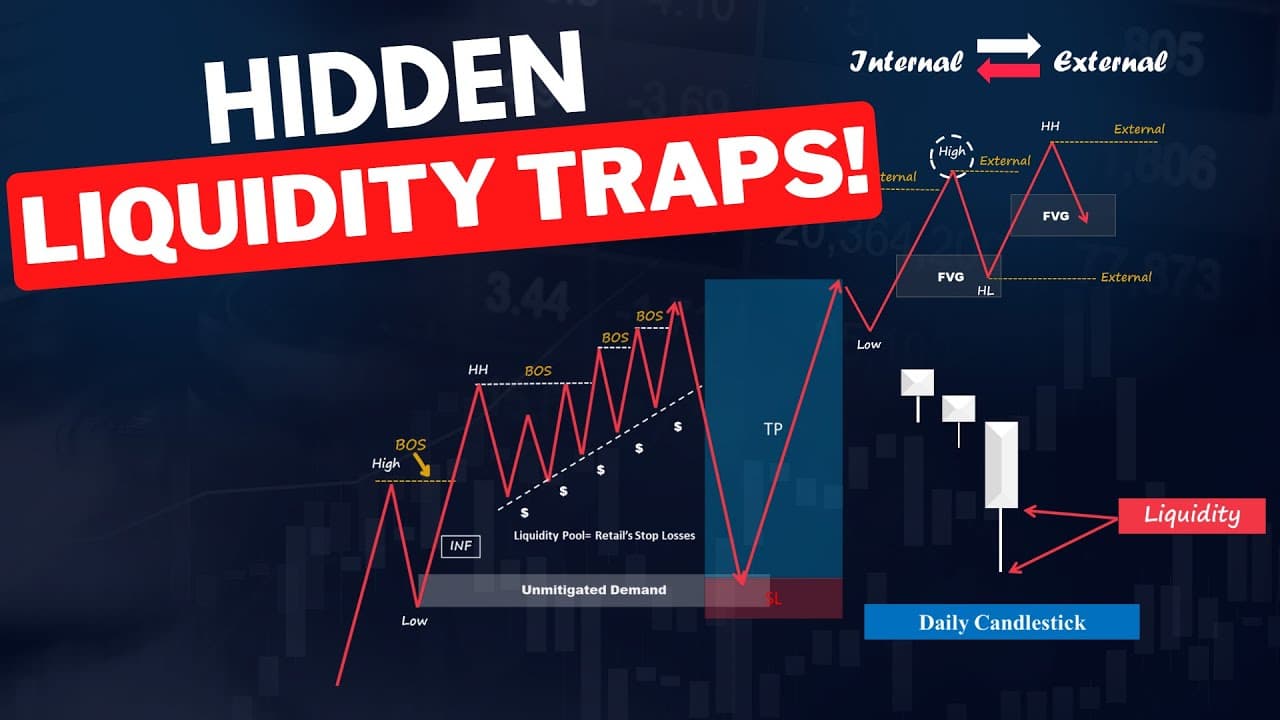
Liquidity is crucial in trading as it affects market dynamics and trader strategies. Understanding liquidity patterns, such as equal lows and highs, helps traders identify market traps set by smart money. Recognizing static and dynamic liquidity zones can prevent losses and improve trading outcomes by aligning with market movements.
Transcript
Hey traders and welcome to another episode of Smart Risk. Do you know what separates the pros from the amateurs in trading? It's the ability to read and understand the language of the market. And that's exactly what we're covering today. In this advanced episode, we're diving deep into one of the essential concepts in trading, liquidity. We'll also... Read More
Key Insights
- Liquidity is essential for market transactions and impacts trading strategies.
- Smart money manipulates market scenarios to deceive traders and trigger stop-losses.
- Dynamic liquidity drives market movements, represented by external and internal liquidity.
- Static liquidity zones are areas with significant order volumes, influencing price direction.
- Equal lows and highs form liquidity pools that smart money targets for stop-loss sweeps.
- Trendline liquidity patterns create opportunities for smart money to clear retail stop-losses.
- Liquidity sweeps confirm supply or demand areas, enhancing trading strategy reliability.
- Ignoring liquidity zones can lead to significant trading losses.
Install to Summarize YouTube Videos and Get Transcripts
Explore YouTube Video Summarizer or Get YouTube Transcript Extractor
Questions & Answers
Q: How does liquidity affect trading strategies?
Liquidity affects trading strategies by influencing market dynamics and the execution of trades. High liquidity allows for smoother transactions and tighter spreads, while low liquidity can lead to increased volatility and wider spreads. Understanding liquidity zones helps traders anticipate market movements and align their strategies accordingly, improving trading outcomes.
Q: What is the role of smart money in market manipulation?
Smart money refers to large financial institutions that have the power to influence market conditions. They often manipulate the market by creating scenarios that mislead retail traders, triggering their stop-losses, and generating additional momentum. Understanding smart money tactics helps traders recognize market traps and adjust their strategies to avoid losses.
Q: What are static and dynamic liquidity zones?
Static liquidity zones are specific areas in the market where large volumes of orders, such as stop-losses and pending orders, are concentrated. Dynamic liquidity refers to factors that drive market movements, such as external and internal liquidity within market structures. Recognizing these zones helps traders understand market dynamics and improve their trading strategies.
Q: How do equal lows and highs create liquidity pools?
Equal lows and highs occur when price levels form at the same position, creating a concentration of stop-losses and pending orders. These levels act as liquidity pools that smart money targets to trigger stop-losses and generate momentum. Identifying these patterns helps traders anticipate market movements and align their strategies with smart money actions.
Q: Why are trendline liquidity patterns important for traders?
Trendline liquidity patterns are important because they indicate areas where retail traders place stop-losses along trendlines. Smart money targets these areas to clear stop-losses and create momentum. Recognizing trendline liquidity patterns helps traders anticipate market movements and improve their trading strategies by aligning with smart money actions.
Q: What is a liquidity sweep and why is it significant?
A liquidity sweep occurs when the market clears a concentration of stop-losses or pending orders, confirming the strength of a supply or demand area. It is significant because it provides traders with a confluence factor, enhancing the reliability of their trading strategies. Recognizing liquidity sweeps helps traders avoid false signals and improve trade success rates.
Q: How can ignoring liquidity zones lead to trading losses?
Ignoring liquidity zones can lead to trading losses because these areas influence price direction and market dynamics. Traders who fail to recognize these zones may fall into market traps set by smart money, resulting in stop-loss triggers and unfavorable trade outcomes. Understanding liquidity zones is crucial for aligning strategies with market movements and avoiding losses.
Q: What strategies can traders use to align with smart money actions?
Traders can align with smart money actions by identifying liquidity zones, recognizing patterns like equal lows and highs, and understanding trendline liquidity. By anticipating smart money movements and adjusting their strategies accordingly, traders can improve their trade success rates, avoid market traps, and capitalize on momentum created by liquidity sweeps.
Summary & Key Takeaways
-
Liquidity in trading involves understanding market dynamics and identifying patterns like equal lows and highs. These patterns create liquidity pools that smart money targets, leading to stop-loss sweeps. Recognizing static and dynamic liquidity zones is crucial for aligning with market movements and improving trading outcomes.
-
Smart money manipulates market conditions to deceive traders, often triggering stop-losses. Traders can enhance their strategies by identifying liquidity sweeps, which confirm supply or demand areas. Recognizing these patterns helps prevent losses and increases the probability of successful trades.
-
Trendline liquidity patterns offer opportunities for smart money to clear retail stop-losses. By understanding these patterns and liquidity zones, traders can better align their strategies with market dynamics. Ignoring these zones can result in significant losses, making liquidity knowledge essential for traders.
Read in Other Languages (beta)
Share This Summary 📚
Summarize YouTube Videos and Get Video Transcripts with 1-Click
Try YouTube Summary with ChatGPT & Claude or YouTube Transcript Generator
Explore More Summaries from Smart Risk 📚
Summarize YouTube Videos and Get Video Transcripts with 1-Click
Try YouTube Summary with ChatGPT & Claude or YouTube Transcript Generator