How to write hooks that stop scrolling now?
TL;DR
Open loops and curiosity gaps work by creating information gaps readers feel compelled to close. Use juxtaposition to pair two unlikely ideas and trigger ethical fear to keep viewers engaged. Practice flowing from awareness to problem awareness and then offer a solution, guiding the audience through the open loop until they seek closure.
Transcript
All right, in this video we're going to talk about how to write open loops, aka write curiosity gaps, because it's a word that a lot of people have thrown around, but nobody really talks about how to do it. So, I'm going to explain that here. Now, if you aren't really sure what an open loop or a curiosity gap is, essentially it's an information gap... Read More
Key Insights
- Open loops are information gaps that readers want to close, and they can drive engagement by creating a task in the audience’s mind that needs completion.
- The key to effective curiosity gaps is juxtaposition, which involves pairing two ideas that do not normally go together to create a compelling hook.
- Ethical fear can be used to trigger attention, but it should be balanced and not rely on extreme or manipulative tactics.
- Two practical approaches are recommended: use juxtaposition to generate curiosity and use fear driven cues to motivate continued viewing or reading.
- Ads and copy should guide the audience from awareness of a gap to the process of closing it without misleading them.
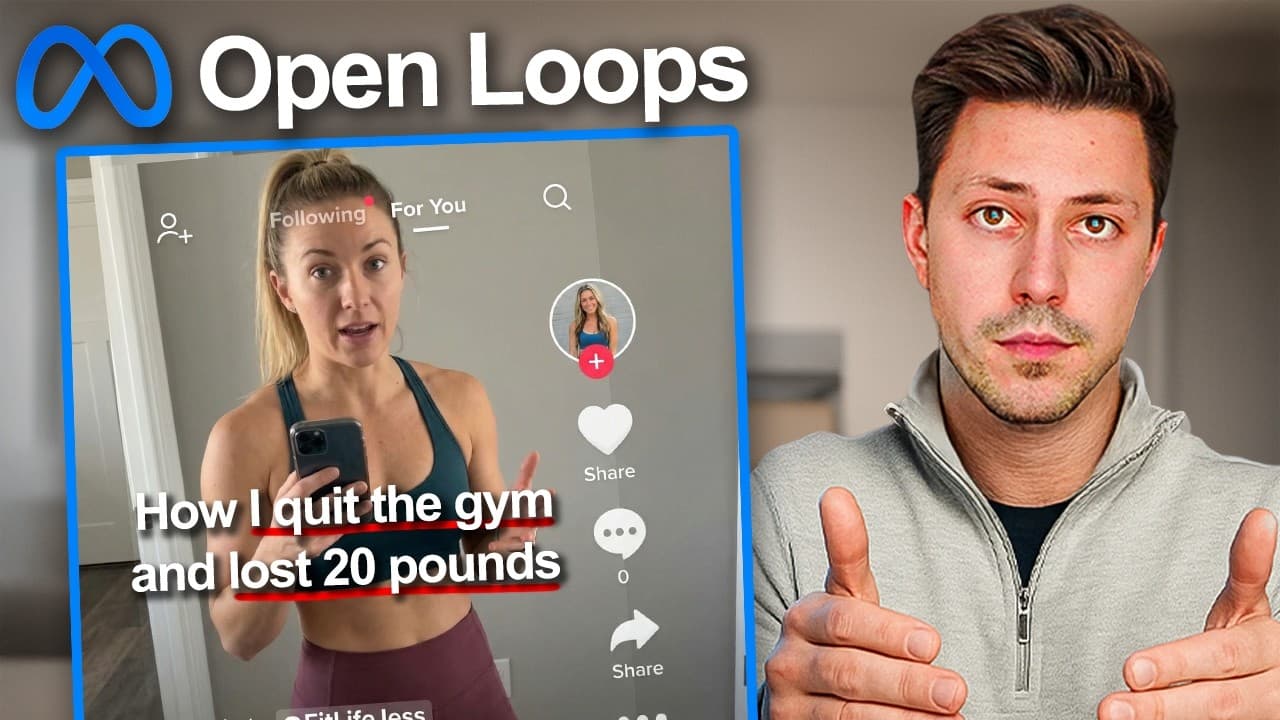
- Examples like quitting the gym and losing weight or deodorants that behave like toxic ones illustrate how contrasting ideas create interest.
- Consistency in tone and ethical considerations helps sustain long term brand trust while still achieving engagement.
- Practice writing with two disparate elements and test which combinations generate the strongest open loops for your audience.
Install to Summarize YouTube Videos and Get Transcripts
Explore YouTube Video Summarizer or Get YouTube Transcript Extractor
Questions & Answers
Q: What is an open loop in marketing copy and why does it matter?
An open loop is an information gap created in the reader or viewer that motivates them to seek closure by continuing to engage with the content. It matters because it captures attention, drives curiosity, and keeps the audience invested long enough to receive the full message or solution later in the piece.
Q: How can juxtaposition improve hooks, and what are some safe examples?
Juxtaposition improves hooks by placing two elements that do not normally belong together in one idea, prompting curiosity about how they relate. Safe examples include contrasting a common belief with an unexpected outcome, such as quitting the gym and losing weight, which prompts questions about the mechanism behind the result.
Q: What role does ethical fear play in curiosity gaps?
Ethical fear acts as a motivator by signaling potential risk in a non sensational way, encouraging the audience to continue for reassurance or to verify safety. It should be used sparingly and responsibly to avoid fear mongering while still enabling engagement and informed decision making.
Q: What is a practical way to start practicing open loops in copy?
Start by writing two ideas that don’t normally go together and craft a sentence that links them in a surprising way. Then present a clear question or unresolved outcome that invites the reader to learn how the gap gets closed, keeping the tone ethical and informative.
Q: How can open loops be used ethically in ads?
In ads, open loops should lead to a truthful resolution on the landing page or subsequent content, avoid misleading claims, and provide valuable context. The goal is to respect the audience while guiding them toward a legitimate solution or product that addresses the gap created.
Q: What is the difference between awareness stages in open loop copy?
The difference lies in how the loop moves the audience from problem awareness to solution or product awareness. Opening a gap captures interest, and subsequent messaging should clearly address how the gap is closed, aligning with the audience’s current stage in the buying journey.
Q: Why is coupling two non related ideas effective for attention?
Coupling two unrelated ideas creates cognitive dissonance and curiosity, prompting the reader to resolve the tension by seeking more information. This tension keeps attention anchored to the message as the audience looks for the logical path that connects the pair.
Q: What should creators avoid when using fear in hooks?
Creators should avoid extreme or manipulative fear that prescribes harmful outcomes if the viewer does not act. The technique should be used to prompt safe, constructive questioning and verification of information rather than creating unnecessary panic or harm.
Summary & Key Takeaways
-
Summary point 1: The video centers on teaching open loops and curiosity gaps using practical explanations and examples, emphasizing how to create attention grabbing hooks by triggering curiosity and pairing unlikely concepts.
-
Summary point 2: It highlights juxtaposition as a core technique, describing how placing two incompatible ideas together generates an information gap that audiences want to fill, and provides branding sensitive guidance for ethical use.
-
Summary point 3: The content stresses using ethical fear to prompt protective responses, suggesting careful application in ads and copy to avoid fear mongering while still driving engagement and comprehension.
Read in Other Languages (beta)
Share This Summary 📚
Summarize YouTube Videos and Get Video Transcripts with 1-Click
Try YouTube Summary with ChatGPT & Claude or YouTube Transcript Generator
Explore More Summaries from Spencer Pawliw 📚

Summarize YouTube Videos and Get Video Transcripts with 1-Click
Try YouTube Summary with ChatGPT & Claude or YouTube Transcript Generator