10 Best Peter Thiel Interviews and Talks

Jul 27, 2026
11 min read
143 views
Last updated: July 2026
This is a curated set of Peter Thiel's ten best talks and interviews, built for founders who want his thinking on monopoly, secrets, stagnation, and where technology goes next. It moves from concrete startup strategy into his broader argument about why progress slowed and what that means for the future.
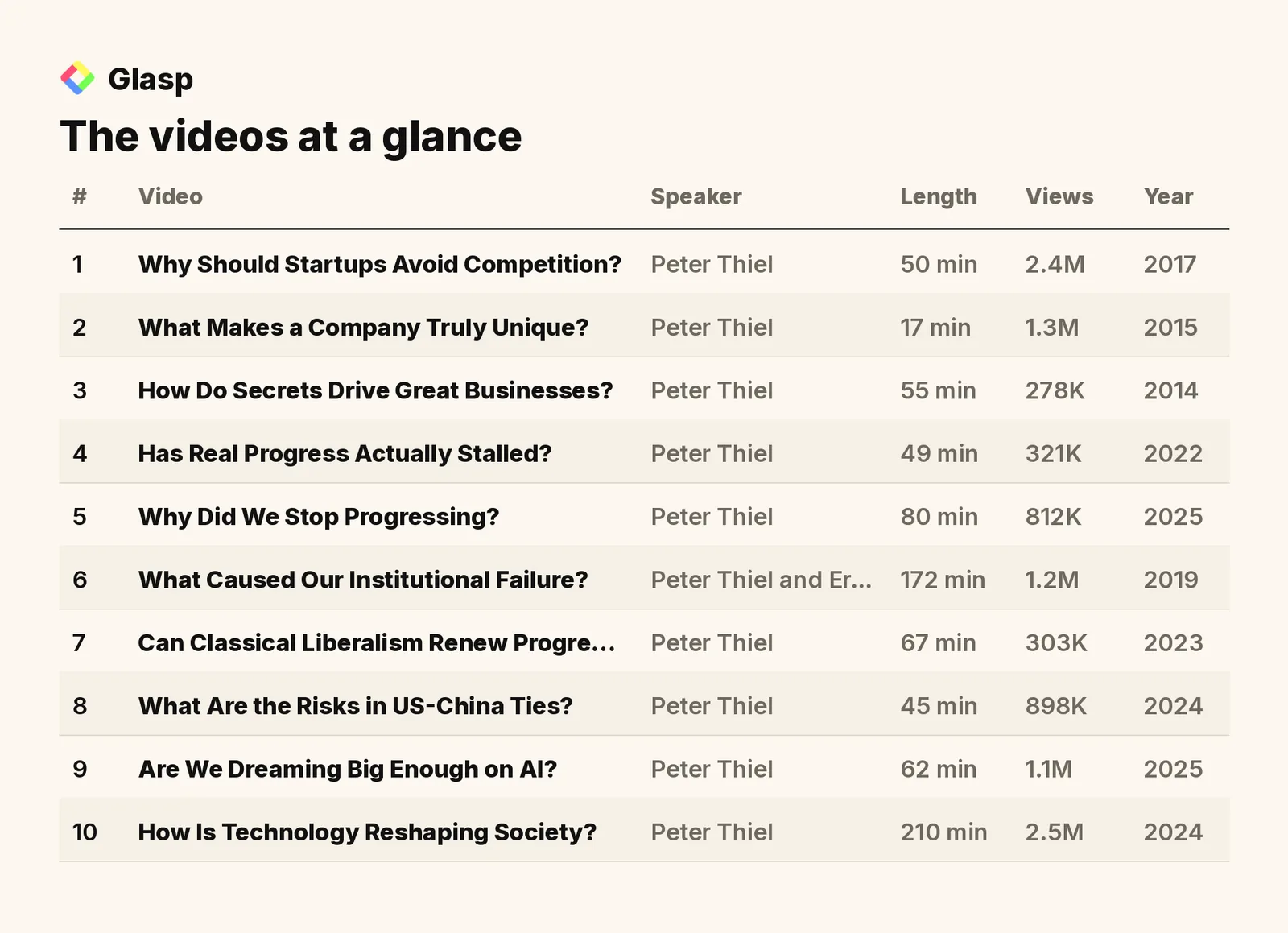
The full set runs about 807 minutes, roughly thirteen and a half hours, spanning short keynotes to long-form podcasts. These are the recordings where Thiel lays out his core ideas most completely, which is why founders keep returning to them.
The videos on this list, in the order to watch them, are:
Why Should Startups Avoid Competition? (Peter Thiel)
What Makes a Company Truly Unique? (Peter Thiel)
How Do Secrets Drive Great Businesses? (Peter Thiel)
Has Real Progress Actually Stalled? (Peter Thiel)
Why Did We Stop Progressing? (Peter Thiel)
What Caused Our Institutional Failure? (Peter Thiel and Eric Weinstein)
Can Classical Liberalism Renew Progress? (Peter Thiel)
What Are the Risks in US-China Ties? (Peter Thiel)
Are We Dreaming Big Enough on AI? (Peter Thiel)
How Is Technology Reshaping Society? (Peter Thiel)
Total: 10 videos, 807 minutes of watch time (about 13 hours), and 11.1M combined views.
1. Why Should Startups Avoid Competition?
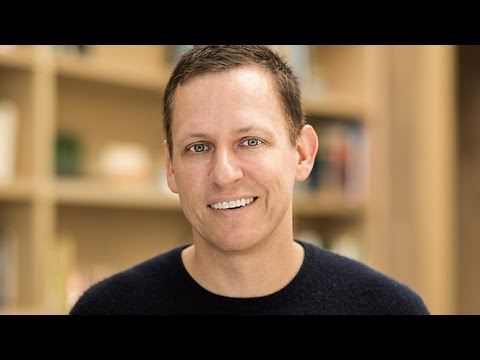
Peter Thiel · 50 min · 2.4M views · 2017
In short: Startups should aim for monopoly in a small market, because perfect competition drives profits to near zero and leaves nothing to capture.
This Y Combinator lecture is the clearest statement of Thiel's monopoly thesis. It answers why chasing big competitive markets destroys value and how starting small lets a company build lasting dominance.
Key takeaways
A valuable company must both create value for the world and capture a meaningful percentage of that value, and competition erodes the second part.
Thiel argues there are only two kinds of business, perfectly competitive and monopolistic, and most firms lie about which one they are.
Search engines earn far higher profits than airlines despite serving a smaller market, because lower competition lets them keep the value they create.
Startups should target small initial markets and aim for monopoly there first, then expand outward toward long-term dominance.
Watch on YouTube · Read the summary and Q&A
2. What Makes a Company Truly Unique?

Peter Thiel · 17 min · 1.3M views · 2015
In short: Every great company is one of a kind, built by finding a secret others overlooked and refusing to compete on a crowded path.
A tight seventeen-minute keynote on originality and contrarian thinking. It answers what separates a unique, monopoly-like business from the imitators, and why breaking from the crowd is psychologically hard.
Key takeaways
Thiel claims capitalism and competition are antonyms, because real capitalists seek to accumulate capital rather than compete their profits away.
Successful founders find secrets, undiscovered truths that others have not yet seen, and build companies around exploiting them.
People often disguise a monopoly to avoid scrutiny or inflate a competitive position to attract investment, hiding a company's true nature.
Society tends to imitate rather than innovate, and resisting that pull is the psychological barrier to original ideas.
Watch on YouTube · Read the summary and Q&A
3. How Do Secrets Drive Great Businesses?

Peter Thiel · 55 min · 278K views · 2014
In short: Secrets, or undiscovered truths, sit at the core of successful ventures, so founders should pursue unique insights instead of competing in saturated markets.
Thiel returns to Stanford to share the business ideas behind Zero to One. It answers where breakthrough companies actually start and why conventional education pushes people toward competition instead.
Key takeaways
Monopoly-like businesses, not intense competition, are the goal, because saturated markets leave little value for any single participant to capture.
Great companies usually begin from a single secret or unique insight that the founder saw before anyone else did.
Thiel separates globalization from technology, arguing that technology drives vertical progress while copying existing methods only spreads them horizontally.
Conventional education emphasizes competition over innovation, and resisting societal pressure is required to protect rare original thinking.
Watch on YouTube · Read the summary and Q&A
4. Has Real Progress Actually Stalled?

Peter Thiel · 49 min · 321K views · 2022
In short: Scientific and technological progress has stagnated over roughly fifty years, and universities in both the humanities and sciences now face a real crisis.
This Stanford talk marks the shift from startup strategy to Thiel's stagnation thesis. It answers whether the story of steady progress is true and what role universities play in the slowdown.
Key takeaways
Thiel argues that scientific and technological progress has largely stagnated over the past fifty years, contrary to the popular sense of acceleration.
The dual-use nature of technology, such as nuclear power, has fueled societal fear and driven regulatory stagnation that slows innovation.
He critiques the education system for failing to prepare students for the future outside of computer science.
Thiel warns against totalitarianism as a response to technological risk, and urges reclaiming progress through measurable growth and innovation.
Watch on YouTube · Read the summary and Q&A
5. Why Did We Stop Progressing?

Peter Thiel · 80 min · 812K views · 2025
In short: Physical-world progress slowed since the 1960s as fear of catastrophe, bureaucratic red tape, and a turn toward digital abstraction stalled tangible innovation.
In conversation with Jordan Peterson, Thiel diagnoses the cultural roots of stagnation. It answers why the digital realm advanced while the physical world did not, and what that cost society.
Key takeaways
Technological progress in the physical world has slowed since the 1960s, while significant advances concentrated mostly in the digital realm.
Fear of apocalyptic outcomes from science pushed culture toward risk aversion and digital abstraction rather than external exploration.
Bureaucratic red tape and over-specialization have stifled innovation and made societies less ambitious about tangible achievements.
Mimetic envy and status games have grown pervasive, undermining social cohesion and contributing to cultural and economic malaise.
Watch on YouTube · Read the summary and Q&A
6. What Caused Our Institutional Failure?

Peter Thiel and Eric Weinstein · 172 min · 1.2M views · 2019
In short: Institutions turned pathological because they were built on false growth expectations, and stagnation since the 1970s left them unable to deliver real progress.
The debut episode of The Portal is a long, wide-ranging exchange on stagnation and broken institutions. It answers how false growth assumptions warped the systems we rely on.
Key takeaways
Economic stagnation has persisted since the 1970s, and institutions became pathological once they were built on false expectations of continued growth.
The disparity between rapid progress in bits and slow progress in atoms is a central concern of the conversation.
Higher education is criticized for loading students with debt while failing to deliver proportional value in return.
Both speakers argue political and economic systems are at risk without renewed growth, and warn against institutional complacency.
Watch on YouTube · Read the summary and Q&A
7. Can Classical Liberalism Renew Progress?

Peter Thiel · 67 min · 303K views · 2023
In short: A renewed commitment to classical liberal values can help overcome the cultural and bureaucratic barriers that have stalled scientific progress since the early 1970s.
At the Oxford Union, Thiel frames stagnation as a cultural problem rather than a resource limit. It answers what classical liberalism offers as a way out of the slowdown.
Key takeaways
Thiel argues scientific and technological progress has stagnated since the early 1970s, driven by cultural fears rather than natural limits on resources.
He contends that cultural anxiety about technology's dangers, not a lack of resources, is the main cause of the slowdown.
Thiel criticizes universities for failing to foster genuine scientific advancement despite their central role in research.
He calls for a balance between healthy skepticism of technology and a willingness to embrace its potential benefits.
Watch on YouTube · Read the summary and Q&A
8. What Are the Risks in US-China Ties?
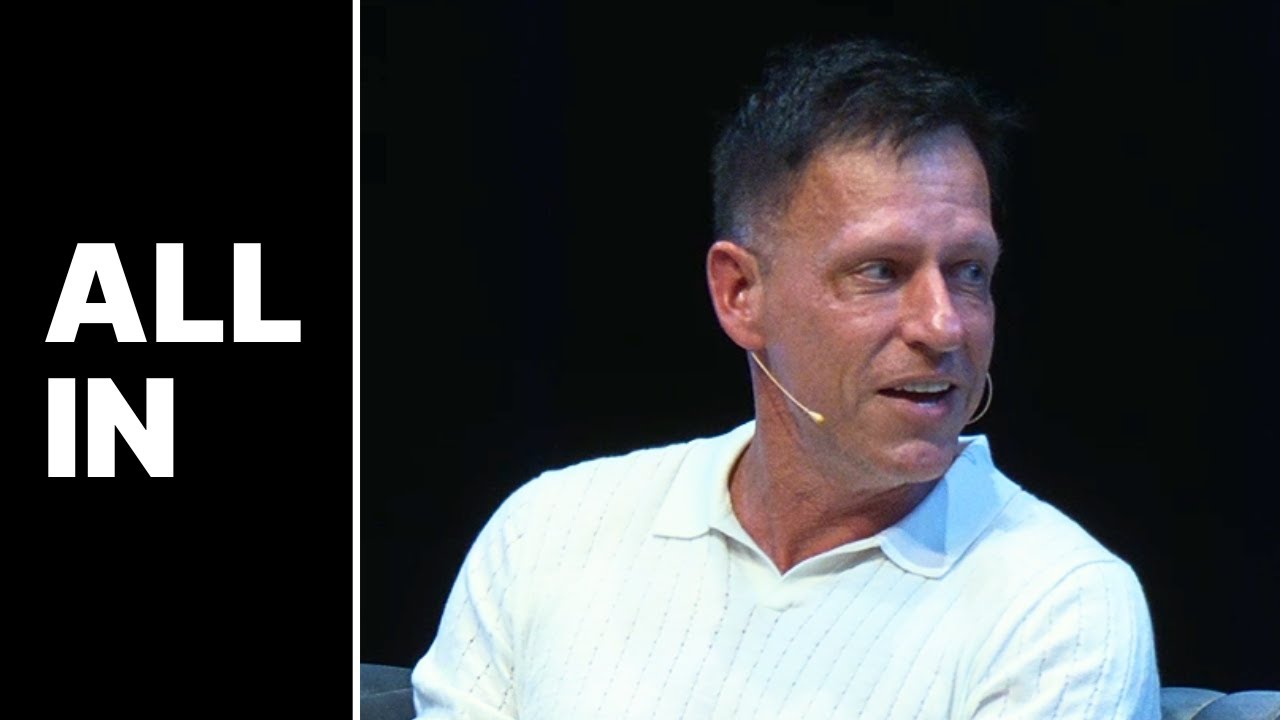
Peter Thiel · 45 min · 898K views · 2024
In short: US-China relations could lead to conflict, especially over Taiwan, while AI's rapid rise and US innovation stagnation compound the economic uncertainty.
On the All-In Podcast, Thiel connects geopolitics, AI, and the debt-heavy US economy. It answers where the biggest structural risks sit and why he thinks refusing risk is itself dangerous.
Key takeaways
Thiel believes the biggest risk in a fast-changing world is taking no risk at all, since standing still carries its own cost.
He views the US-China relationship as potentially leading to conflict, particularly over the defense of Taiwan.
Thiel compares AI to the internet in 1999, seeing large potential but unclear paths to monetization.
He points to the higher education bubble, with student debt surpassing two trillion dollars and many graduates unable to pay it down.
Watch on YouTube · Read the summary and Q&A
9. Are We Dreaming Big Enough on AI?
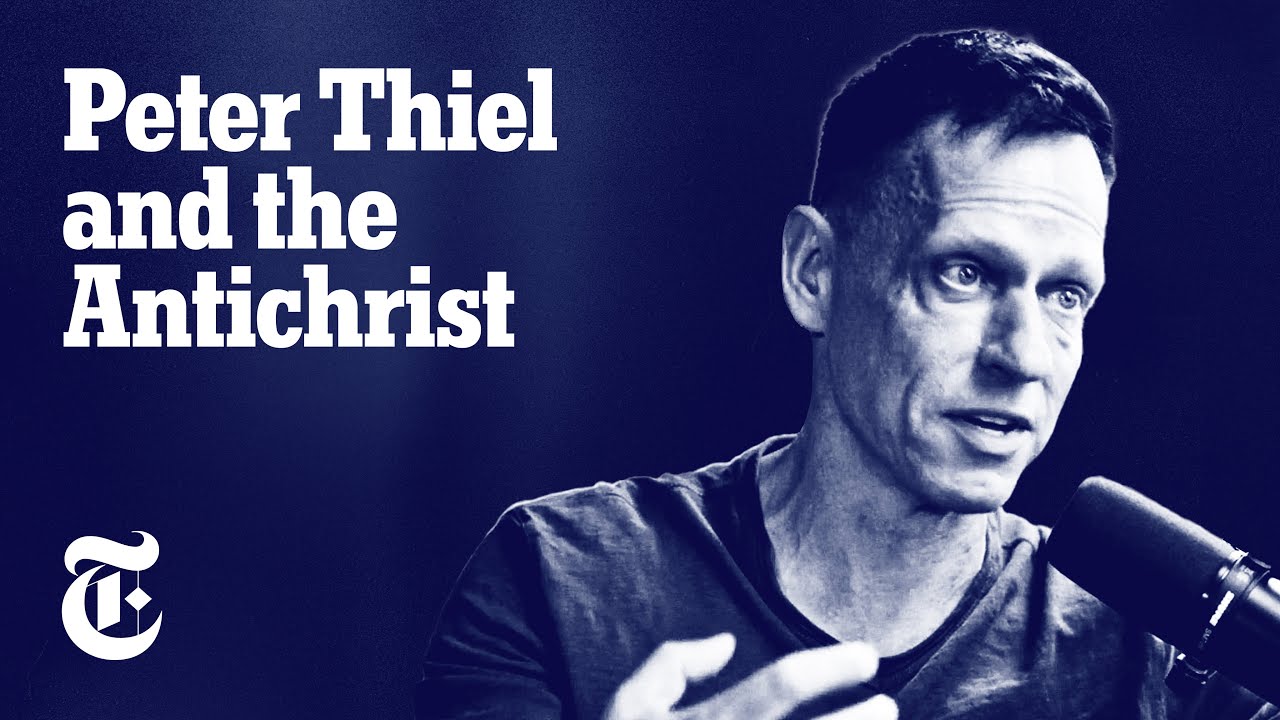
Peter Thiel · 62 min · 1.1M views · 2025
In short: Technological progress has stagnated since the 1970s, and even AI, though significant, has not been enough to offset the broader slowdown in growth.
In this interview with Ross Douthat, Thiel weighs AI, biotech, and space against decades of slow growth. It answers whether current ambitions are large enough to break the stagnation.
Key takeaways
Thiel argues progress has slowed significantly since the 1970s, with only digital advances like AI showing notable growth against a flat backdrop.
He suggests taking more scientific risk, especially in biotech and anti-aging research, could help counteract the broader stagnation.
Thiel sees AI as a significant but insufficient breakthrough, comparable to the internet's impact in the late 1990s.
He warns that a lack of progress could drive society toward a one-world totalitarian state justified by fear of existential risk.
Watch on YouTube · Read the summary and Q&A
10. How Is Technology Reshaping Society?

Peter Thiel · 210 min · 2.5M views · 2024
In short: Technology reshapes society in tangled ways, driving down birth rates and raising hard, unresolved questions about artificial intelligence and human agency.
This long-form Joe Rogan conversation ties the whole set together, moving across birth rates, AI, fiscal debt, and stagnation. It answers how technology's second-order effects reach into everyday life.
Key takeaways
Thiel argues technology has significantly altered societal structures, including contributing to declining birth rates across much of the world.
He frames birth rate trends as the product of interconnected cultural, economic, and psychological factors rather than any single cause.
US interest on the debt peaked near 3.1 percent of GDP in 1991, fell to about 1.5 percent in the mid-2010s, and has crept back to 3.1 to 3.2 percent.
Discussions of AI stress the need for ethical frameworks to govern how it is developed and deployed.
Watch on YouTube · Read the summary and Q&A
Frequently asked questions
What is Peter Thiel's most famous startup advice?
Thiel argues that competition is for losers and that startups should aim to build a monopoly in a small market, because perfect competition drives profits toward zero.
What does Peter Thiel mean by secrets?
Secrets are undiscovered truths about the world that others have overlooked, and Thiel says finding and exploiting one sits at the core of every great business.
What is Peter Thiel's stagnation thesis?
Thiel argues that scientific and technological progress in the physical world has largely stalled since the 1970s, even as the digital realm advanced quickly.
What does Peter Thiel think about AI?
Thiel sees AI as a significant breakthrough comparable to the internet in the late 1990s, but says it is not enough on its own to offset broader stagnation.
Which Peter Thiel talk should a founder watch first?
Start with 'Competition is for Losers,' his Y Combinator lecture, which gives the clearest version of his monopoly strategy for building a valuable startup.
Who are Peter Thiel's talks and interviews best suited for?
This collection of 10 Peter Thiel talks and interviews suits founders and operators thinking about competition and differentiation, but also readers interested in technological progress, institutions, and how technology is reshaping society. Anyone curious about why Thiel argues startups should avoid competition will find the core of his thinking here.
Do I need a business or startup background to follow Peter Thiel's ideas?
No specialist background is required, since the talks build from plain questions such as what makes a company truly unique and whether real progress has stalled. A general interest in technology, business, and society is enough to follow the arguments.
What does Peter Thiel say about the relationship between the US and China?
Peter Thiel treats US and China ties as a source of real risk, and one of the talks in this collection is devoted to that question. It sits alongside his broader arguments about institutional failure and stalled progress rather than standing apart from them.
Are Peter Thiel's talks only about startups and investing?
Only part of Peter Thiel's work is about startups: alongside competition, uniqueness, and secrets, he argues that progress has stalled, examines institutional failure, asks whether classical liberalism can renew progress, and looks at how technology is reshaping society. Treating him purely as a startup thinker misses roughly half of what these talks cover.
How to use this list
Work through this list in order and it doubles as a course: start with the startup mechanics of monopoly and secrets, then follow Thiel into his larger argument about stagnation, institutions, and where AI and geopolitics take us next. If you only have time for one, watch 'Competition is for Losers' first, since it packs the most usable strategy into fifty minutes. Save the Joe Rogan and Portal episodes for when you can give the long-form conversations your full attention.
Related lists
💡 Want summaries and transcripts for any YouTube video? Try YouTube Summary with ChatGPT & Claude.