What Is the Future of US-China Relations and AI?
TL;DR
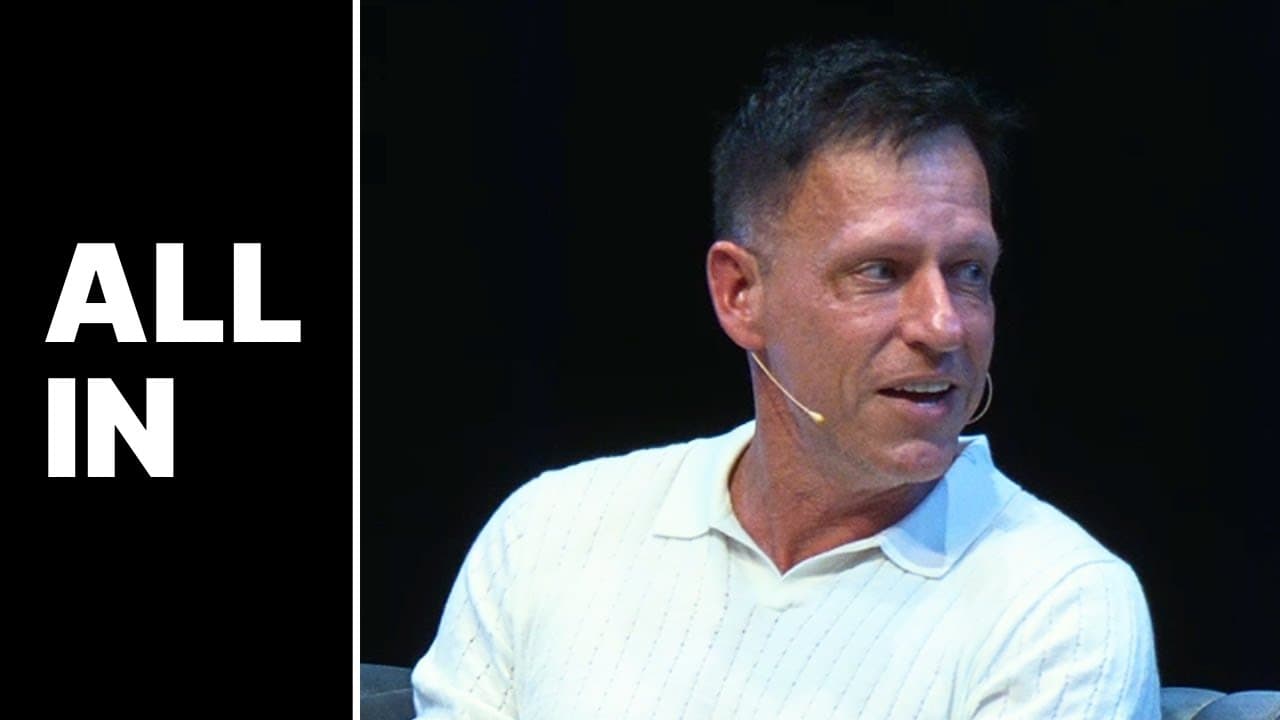
Peter Thiel discusses the potential geopolitical and economic impacts of US-China relations, emphasizing the uncertainty surrounding Taiwan's defense and the implications of AI's rapid development. He highlights the stagnation in US innovation and the challenges facing the economy, while also discussing the higher education bubble and Nvidia's dominant position in AI technology.
Transcript
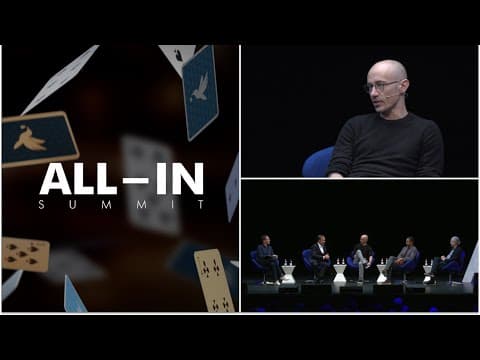
Peter was the person who told me this really pithy quote in a world that's changing so quickly the biggest risk you can take is not taking any risk this guy is a tough nut to try to sort of explain changed money with PayPal was the first outside investor in Facebook uh back paler which is I believe they helped find Osama Bin Laden almost certainly ... Read More
Key Insights
- Peter Thiel believes the biggest risk in a rapidly changing world is not taking any risk.
- He is not financially participating in the 2024 election due to its unpredictability and potential for disappointment.
- Thiel views the US-China relationship as potentially leading to conflict, particularly over Taiwan.
- AI is compared to the internet in 1999, with significant potential but unclear paths to monetization.
- There is a perceived stagnation in US innovation, particularly in applied engineering fields.
- Thiel criticizes the current state of the US economy, citing excessive government spending and debt.
- The higher education bubble is highlighted, with student debt surpassing $2 trillion and many graduates unable to pay it down.
- Nvidia is currently the dominant player in AI technology, making significant profits while others struggle.
Install to Summarize YouTube Videos and Get Transcripts
Explore YouTube Video Summarizer or Get YouTube Transcript Extractor
Questions & Answers
Q: Why is Peter Thiel not financially participating in the 2024 election?
Peter Thiel is not financially participating in the 2024 election due to its unpredictable nature and the potential for disappointment. He believes the election may not be close, and if it is, he expects significant controversy and potential manipulation. Thiel has decided to support candidates in non-financial ways instead.
Q: What is Peter Thiel's view on US-China relations concerning Taiwan?
Peter Thiel views the US-China relationship as potentially leading to conflict, particularly over Taiwan. He suggests that the US should not explicitly state its intentions regarding Taiwan's defense to avoid provoking China. Thiel believes that maintaining strategic ambiguity is the best approach to prevent an escalation into a larger conflict.
Q: How does Peter Thiel compare AI to the internet in 1999?
Peter Thiel compares AI to the internet in 1999, suggesting that it has significant potential to transform the world but lacks clear paths to monetization. He highlights the uncertainty in determining which businesses will succeed and gain pricing power, emphasizing the importance of identifying profitable opportunities amidst the hype.
Q: What are Peter Thiel's thoughts on innovation stagnation in the US?
Peter Thiel believes there is a stagnation in US innovation, particularly in applied engineering fields like chemical, mechanical, and aerospace engineering. He attributes this to regulatory burdens, the depletion of low-hanging fruit, and a societal shift towards risk aversion following the development of nuclear weapons and the world wars.
Q: What concerns does Peter Thiel have about the US economy?
Peter Thiel criticizes the current state of the US economy, highlighting excessive government spending and debt as major concerns. He points out that the deficit is increasing even at the top of the economic cycle, which is unsustainable. Thiel emphasizes the need for technological innovation to drive sustainable growth.
Q: How does Peter Thiel view the higher education bubble?
Peter Thiel views the higher education bubble as a significant issue, with student debt surpassing $2 trillion and many graduates unable to pay it down. He criticizes the universities for becoming bloated and inefficient, suggesting the need for broad debt forgiveness and reform to address the systemic issues in higher education.
Q: Why is Nvidia considered dominant in AI technology?
Nvidia is considered dominant in AI technology because it is currently making significant profits while other companies in the industry struggle. Thiel notes that Nvidia's position is akin to a monopoly, with its hardware and chips being essential for AI development. This dominance raises questions about the sustainability and potential challenges to its market position.
Q: What is Peter Thiel's perspective on optimism and pessimism about the future?
Peter Thiel believes that extreme optimism and extreme pessimism are both detrimental attitudes, as they excuse inaction. He advocates for a balanced perspective that acknowledges human agency and the ability to shape the future. Thiel emphasizes the importance of being proactive and not relying on fate or external factors to determine outcomes.
Summary & Key Takeaways
-
Peter Thiel emphasizes the importance of risk-taking in a fast-changing world, expressing concerns about the unpredictability of the 2024 election and its potential outcomes. He discusses the geopolitical tensions between the US and China, particularly regarding Taiwan, and the implications of AI's rapid development, comparing it to the internet's early days.
-
Thiel highlights the stagnation in US innovation, particularly in applied engineering fields, and criticizes the current state of the economy, citing excessive government spending and debt. He also addresses the higher education bubble, with student debt surpassing $2 trillion and graduates struggling to pay it down.
-
Nvidia is recognized as the dominant player in AI technology, making significant profits while others in the industry face challenges. Thiel stresses the importance of human agency and the need for a balanced perspective between optimism and pessimism regarding the future.
Read in Other Languages (beta)
Share This Summary 📚
Summarize YouTube Videos and Get Video Transcripts with 1-Click
Try YouTube Summary with ChatGPT & Claude or YouTube Transcript Generator
Explore More Summaries from All-In Podcast 📚
Summarize YouTube Videos and Get Video Transcripts with 1-Click
Try YouTube Summary with ChatGPT & Claude or YouTube Transcript Generator