Peter Thiel on Future Challenges for Universities
TL;DR
Peter Thiel discusses the challenges facing modern universities, emphasizing the stagnation in scientific and technological progress. He critiques the current state of higher education, arguing that both the humanities and sciences face significant issues. Thiel suggests that a shift in focus is necessary to foster true progress and warns against the dangers of totalitarianism as a response to technological risks.
Transcript
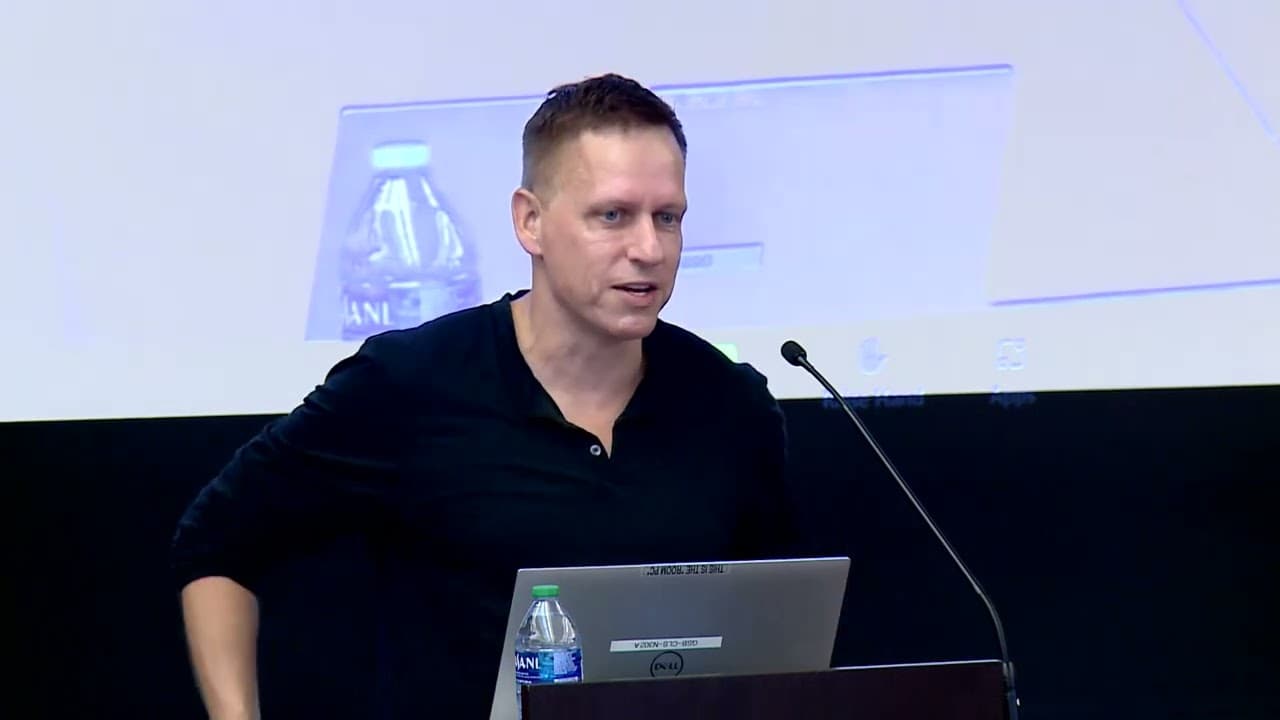
foreign my name is Russell Berman I'm the faculty at Stanford and uh I'm uh I've been asked to introduce Peter it's a privilege to introduce Peter Thiel a privilege but also a considerable challenge to introduce someone as well known as Peter a leading entrepreneur with a high public and political profile He's Surely familiar to very many of you Pa... Read More
Key Insights
- Peter Thiel argues that modern universities are facing a crisis, with both humanities and sciences experiencing significant challenges.
- Thiel believes that scientific and technological progress has stagnated over the past 50 years, contrary to popular belief.
- He suggests that the dual-use nature of technology, such as nuclear power, has contributed to societal fears and regulatory stagnation.
- Thiel critiques the current educational system for not adequately preparing students for the future, especially outside of computer science.
- He warns against the dangers of totalitarianism as a response to the potential risks posed by technological advancements.
- Thiel highlights the importance of reclaiming the concept of progress and focusing on measurable growth and innovation.
- He expresses concern over the increasing entanglement of the U.S. with China's surveillance state model.
- Thiel advocates for a balance between optimism and pessimism, emphasizing individual agency and the potential for meaningful progress.
Install to Summarize YouTube Videos and Get Transcripts
Explore YouTube Video Summarizer or Get YouTube Transcript Extractor
Questions & Answers
Q: What challenges do modern universities face according to Peter Thiel?
Peter Thiel argues that modern universities face significant challenges in both the humanities and sciences. He believes that there is a stagnation in scientific and technological progress, contrary to popular belief. Thiel suggests that universities are not adequately preparing students for the future, particularly outside of computer science, and that a shift in focus is necessary to foster true innovation and progress.
Q: Why does Peter Thiel believe scientific and technological progress has stagnated?
Peter Thiel believes that scientific and technological progress has stagnated due to several factors, including the dual-use nature of technology, such as nuclear power, which has led to societal fears and regulatory stagnation. He also points to the narrow focus on information technology and the lack of significant breakthroughs in other fields as indicators of stagnation. Thiel argues that this stagnation challenges the notion of exponential progress often associated with STEM fields.
Q: What are Thiel's views on the dual-use nature of technology?
Peter Thiel suggests that the dual-use nature of technology, where advancements can be used for both beneficial and harmful purposes, has contributed to societal fears and regulatory stagnation. He uses nuclear power as an example, where the fear of nuclear war was conflated with nuclear power plants, leading to a halt in their development. Thiel argues that this dual-use aspect presents a significant challenge to technological advancement and requires careful consideration.
Q: How does Thiel view the relationship between the U.S. and China's surveillance state model?
Peter Thiel expresses concern over the increasing entanglement of the U.S. with China's surveillance state model. He warns that as rivals, the U.S. may inadvertently adopt similar surveillance and totalitarian tactics, which poses a significant threat to individual freedoms. Thiel emphasizes the importance of maintaining a distinction between the two countries' approaches to governance and technology to avoid the pitfalls of a surveillance state.
Q: What is Thiel's stance on the importance of reclaiming the concept of progress?
Peter Thiel advocates for reclaiming the concept of progress by focusing on measurable growth and innovation. He argues that the term 'progress' has been hijacked and that it is essential to quantify advancements in areas such as science, technology, and per capita GDP. Thiel believes that by emphasizing tangible progress, society can better prepare for future challenges and foster true innovation.
Q: Why does Thiel warn against totalitarianism as a response to technological risks?
Peter Thiel warns against totalitarianism as a response to technological risks because he believes it poses a far greater danger than the risks themselves. He argues that while science and technology have inherent dangers, a one-world totalitarian state would be far more harmful to individual freedoms and societal progress. Thiel emphasizes the importance of balancing technological advancement with safeguarding personal liberties to avoid the pitfalls of totalitarian governance.
Q: How does Thiel suggest universities should prepare students for the future?
Peter Thiel suggests that universities should focus on fostering true innovation and preparing students for the future by emphasizing measurable growth and progress. He critiques the current educational system for not adequately preparing students, particularly outside of computer science, and advocates for a shift in focus towards areas that lead to tangible advancements. Thiel believes that by doing so, universities can better equip students to address future challenges and contribute meaningfully to society.
Q: What is Thiel's perspective on balancing optimism and pessimism in addressing future challenges?
Peter Thiel advocates for a balance between optimism and pessimism in addressing future challenges. He argues that extreme optimism and pessimism both lead to inaction, as they either promote denial or acceptance of negative outcomes. Thiel emphasizes the importance of individual agency and the indomitability of the human spirit, suggesting that a balanced perspective encourages proactive efforts to navigate and overcome challenges without succumbing to complacency or despair.
Summary & Key Takeaways
-
Peter Thiel critiques the stagnation in scientific and technological progress, arguing that universities are not adequately addressing these challenges. He highlights the dual-use nature of technology as a factor in regulatory stagnation and societal fears. Thiel warns against the dangers of totalitarianism as a response to technological risks, advocating for a focus on measurable growth and innovation.
-
Thiel discusses the inadequacies of the current educational system, particularly outside of computer science, and emphasizes the need to reclaim the concept of progress. He suggests that universities should focus on fostering true innovation and preparing students for the future, warning against the adoption of China's surveillance state model.
-
Emphasizing individual agency, Thiel argues for a balance between optimism and pessimism in addressing future challenges. He critiques the increasing entanglement of the U.S. with China's surveillance state model and advocates for reclaiming the concept of progress through measurable growth and innovation.
Read in Other Languages (beta)
Share This Summary 📚
Summarize YouTube Videos and Get Video Transcripts with 1-Click
Try YouTube Summary with ChatGPT & Claude or YouTube Transcript Generator