Peter Thiel on the Future of Classical Liberalism and Technology
TL;DR
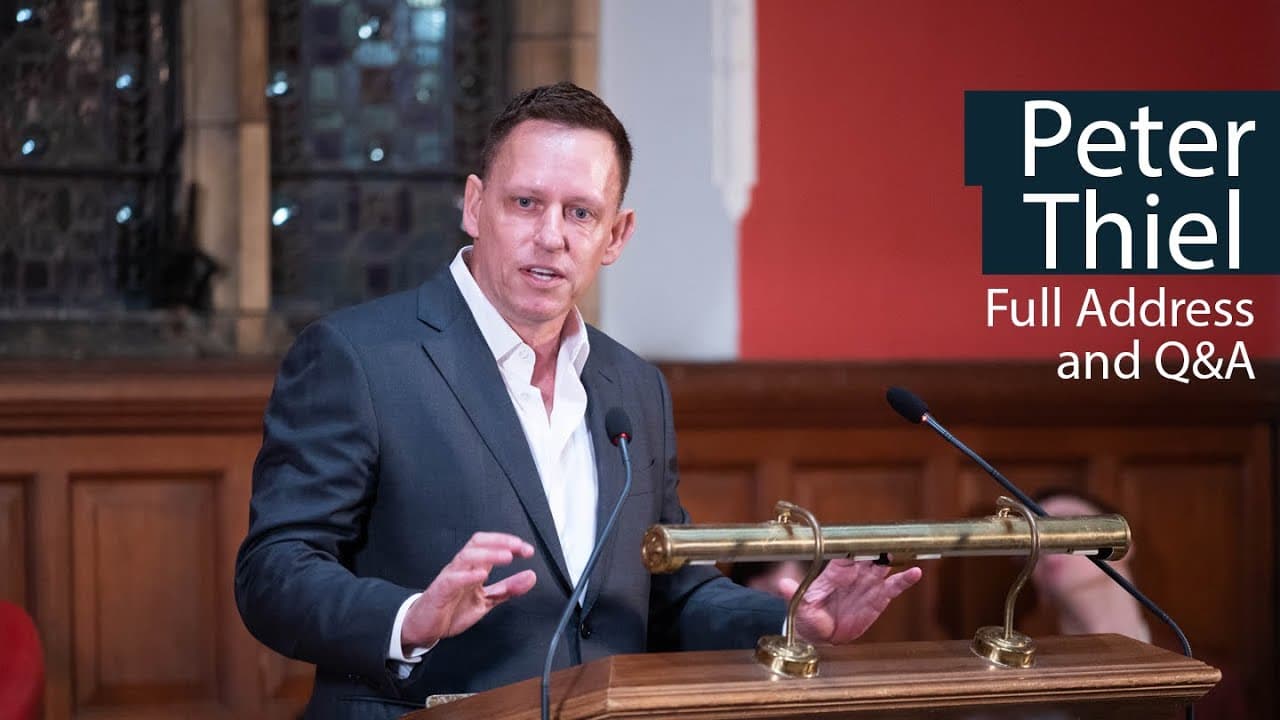
Peter Thiel discusses the challenges facing classical liberalism and technological progress, emphasizing the stagnation in scientific advancements due to cultural and bureaucratic barriers. He argues that fear of technology's potential dangers has hindered innovation and calls for a renewed commitment to classical liberal values to overcome these obstacles.
Transcript
foreign members honored guests good evening and welcome to the first event of Hillary term 2023 and the first event of the 200th anniversary year of the Oxford Union 200 years ago a group of students met in a small room in Christchurch determined to have discussion free from the restrictions of the university and two centuries later we proudly cont... Read More
Key Insights
- Peter Thiel argues that scientific and technological progress has stagnated since the early 1970s.
- He believes that cultural fears about technology's dangers have contributed to this stagnation.
- Thiel criticizes the universities for not fostering genuine scientific advancements.
- He suggests that the fear of a one-world totalitarian state is an existential risk.
- Thiel emphasizes the importance of classical liberal values in addressing modern challenges.
- He views the stagnation as a cultural issue rather than a natural limitation of resources.
- Thiel argues that the current political and cultural climate discourages technological innovation.
- He calls for a balance between skepticism of technology and embracing its potential benefits.
Install to Summarize YouTube Videos and Get Transcripts
Explore YouTube Video Summarizer or Get YouTube Transcript Extractor
Questions & Answers
Q: What is Peter Thiel's view on the stagnation of scientific progress?
Peter Thiel believes that scientific and technological progress has stagnated since the early 1970s, primarily due to cultural fears about the potential dangers of technology and bureaucratic barriers. He argues that this stagnation is not due to a lack of resources but rather a cultural issue that needs to be addressed by renewing commitment to classical liberal values.
Q: Why does Peter Thiel criticize universities in his talk?
Peter Thiel criticizes universities for failing to foster genuine scientific advancements. He argues that universities have become complacent and are not encouraging the kind of innovative thinking needed to drive technological progress. Instead, they are caught up in ideological debates that distract from meaningful scientific inquiry.
Q: What existential risk does Peter Thiel highlight in his speech?
Peter Thiel highlights the fear of a one-world totalitarian state as an existential risk. He argues that while it is important to address various existential risks, such as climate change and nuclear weapons, it is equally crucial to consider the dangers of totalitarian governance, which could stifle individual freedoms and innovation.
Q: How does Peter Thiel propose to overcome the stagnation in technology?
Peter Thiel proposes overcoming the stagnation in technology by renewing commitment to classical liberal values and addressing the cultural fears that hinder innovation. He suggests that embracing technological progress while being mindful of its potential risks can lead to a more dynamic and prosperous society.
Q: What role does Peter Thiel believe politics plays in technological stagnation?
Peter Thiel believes that politics plays a significant role in technological stagnation by creating an environment that discourages innovation. He argues that the current political and cultural climate is overly focused on regulation and control, which stifles creativity and technological advancement.
Q: What is Peter Thiel's stance on artificial intelligence?
Peter Thiel expresses misgivings about artificial intelligence, particularly its potential for misuse in surveillance and totalitarian control. While he is generally pro-technology and pro-acceleration, he highlights AI as a technology that requires careful consideration due to its potential implications for society.
Q: How does Peter Thiel view the relationship between technology and existential risks?
Peter Thiel views technology as both a potential solution to and a source of existential risks. He argues that while technology can help address challenges like climate change, it also poses risks such as the development of bioweapons or AI. Thiel calls for a balanced approach that embraces technology's benefits while mitigating its dangers.
Q: What advice does Peter Thiel offer to students at the Oxford Union?
Peter Thiel advises students at the Oxford Union to engage in debates and discussions as a first step but emphasizes the importance of combining talk with action. He encourages students to pursue meaningful change by applying their ideas and knowledge to real-world challenges, thus bridging the gap between discussion and implementation.
Summary & Key Takeaways
-
Peter Thiel discusses the stagnation in scientific and technological progress, attributing it to cultural fears and bureaucratic barriers. He argues that the fear of technology's potential dangers has hindered innovation and emphasizes the need for a renewed commitment to classical liberal values to overcome these obstacles.
-
Thiel critiques the role of universities in perpetuating this stagnation, suggesting that they have failed to foster genuine scientific advancements. He stresses the importance of addressing existential risks, including the fear of a one-world totalitarian state, while promoting technological progress.
-
He argues that the current political and cultural climate discourages innovation and calls for a balance between skepticism of technology and embracing its potential benefits. Thiel advocates for a cultural shift to reinvigorate scientific and technological advancements.
Read in Other Languages (beta)
Share This Summary 📚
Summarize YouTube Videos and Get Video Transcripts with 1-Click
Try YouTube Summary with ChatGPT & Claude or YouTube Transcript Generator
Explore More Summaries from OxfordUnion 📚

Summarize YouTube Videos and Get Video Transcripts with 1-Click
Try YouTube Summary with ChatGPT & Claude or YouTube Transcript Generator