Is Technological Progress Stagnating in 2025?
TL;DR
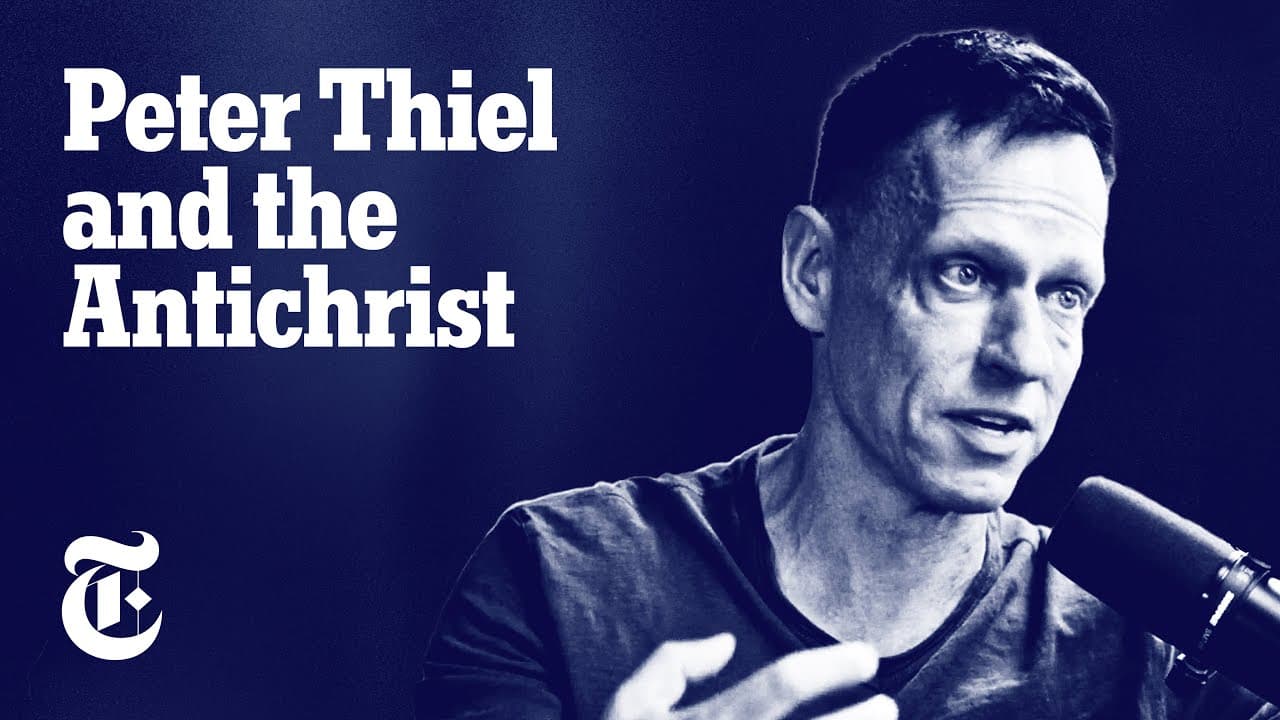
Peter Thiel argues that technological progress has stagnated since the 1970s, with advancements in areas like AI not compensating for overall slow growth. He suggests that society's risk aversion and regulatory frameworks have hindered innovation, potentially leading to economic and societal stagnation. Thiel also warns against a potential totalitarian future driven by fear of technological risks.
Transcript
Is Silicon Valley recklessly ambitious? What should we fear more: Armageddon or stagnation? Why is one of the world’s most successful investors worrying about the Antichrist? My guest today is the co-founder of PayPal and Palantir, and an early investor in the political careers of Donald Trump and JD Vance. Peter Thiel is the original tech right po... Read More
Key Insights
- Peter Thiel believes technological progress has slowed significantly since the 1970s, with only digital advancements like AI showing notable growth.
- Thiel argues that society's risk aversion and regulatory frameworks have hindered innovation, contributing to economic stagnation.
- He suggests that taking more scientific risks, especially in biotech and anti-aging research, could counteract stagnation.
- Thiel sees AI as a significant yet insufficient breakthrough, comparable to the internet's impact in the late 1990s.
- He warns that a lack of progress could lead to societal collapse, as middle-class expectations of upward mobility are unmet.
- Thiel discusses the potential for a one-world totalitarian state as a response to existential risks, framing it as a modern-day Antichrist scenario.
- He critiques Silicon Valley's focus on intelligence as the key to progress, suggesting cultural and institutional barriers are more significant.
- Thiel questions whether current AI advancements can truly lead to radical societal transformation, expressing skepticism about transhumanist ambitions.
Install to Summarize YouTube Videos and Get Transcripts
Explore YouTube Video Summarizer or Get YouTube Transcript Extractor
Questions & Answers
Q: What does Peter Thiel mean by technological stagnation?
Peter Thiel refers to technological stagnation as the slowdown in significant technological advancements since the 1970s. He believes that while digital technologies like AI have progressed, other areas such as space travel and biotech have not kept pace, leading to overall economic and societal stagnation.
Q: Why does Thiel believe taking more scientific risks is necessary?
Thiel argues that taking more scientific risks is necessary to overcome stagnation and drive innovation. He believes that regulatory frameworks and societal risk aversion have hindered progress, particularly in fields like biotech and anti-aging research, and that embracing risk could lead to breakthroughs that improve living standards and economic growth.
Q: How does Thiel compare AI to past technological advancements?
Thiel compares AI to the internet of the late 1990s, suggesting that while it is a significant breakthrough, it may not be enough to end the overall stagnation. He sees AI as potentially adding to GDP growth and productivity but questions whether it can lead to the kind of radical transformation needed to overcome broader societal and economic challenges.
Q: What are Thiel's views on the potential for a totalitarian future?
Thiel warns of the potential for a one-world totalitarian state as a political response to existential risks like nuclear war and environmental disasters. He frames this as a modern-day Antichrist scenario, where fear of technological risks leads to global governance that stifles innovation and enforces stagnation.
Q: Why does Thiel critique Silicon Valley's focus on intelligence?
Thiel critiques Silicon Valley's focus on intelligence as the key to progress, suggesting that the real barriers to innovation are cultural and institutional. He argues that simply having more intelligent individuals is not enough; society must also tolerate heterodox ideas and reduce conformity to enable meaningful advancements.
Q: What is Thiel's stance on transhumanism and AI's role in it?
Thiel expresses skepticism about transhumanist ambitions, questioning whether AI can truly lead to radical societal transformation. He believes that while AI represents progress, it may not fulfill the lofty goals of transhumanism, such as merging human consciousness with machines or achieving immortality.
Q: How does Thiel view the relationship between progress and societal expectations?
Thiel believes that progress is essential to meet societal expectations, particularly for the middle class, who expect their children to do better than themselves. He warns that without progress, these expectations will go unmet, leading to societal unrest and potential collapse of middle-class values.
Q: What are Thiel's thoughts on space exploration and its importance?
Thiel sees space exploration as a crucial area for progress, lamenting the lack of advancements since the Apollo missions. He argues that exploring and potentially colonizing other planets could provide new opportunities for innovation and growth, counteracting the stagnation he perceives in other technological fields.
Summary & Key Takeaways
-
Peter Thiel argues that technological progress has stagnated since the 1970s, with only digital advancements like AI showing significant growth. He attributes this stagnation to societal risk aversion and regulatory frameworks that hinder innovation. Thiel suggests that taking more scientific risks, especially in biotech and anti-aging research, could counteract this trend.
-
Thiel warns that continued stagnation could lead to societal collapse, as middle-class expectations of upward mobility are unmet. He discusses the potential for a one-world totalitarian state as a response to existential risks, framing it as a modern-day Antichrist scenario. Thiel critiques Silicon Valley's focus on intelligence as the key to progress, suggesting cultural and institutional barriers are more significant.
-
While acknowledging AI as a significant breakthrough, Thiel questions whether current advancements can truly lead to radical societal transformation. He expresses skepticism about transhumanist ambitions and emphasizes the need for a broader, multi-dimensional approach to progress, including space exploration and curing diseases like dementia.
Read in Other Languages (beta)
Share This Summary 📚
Summarize YouTube Videos and Get Video Transcripts with 1-Click
Try YouTube Summary with ChatGPT & Claude or YouTube Transcript Generator
Explore More Summaries from Interesting Times with Ross Douthat 📚

Summarize YouTube Videos and Get Video Transcripts with 1-Click
Try YouTube Summary with ChatGPT & Claude or YouTube Transcript Generator