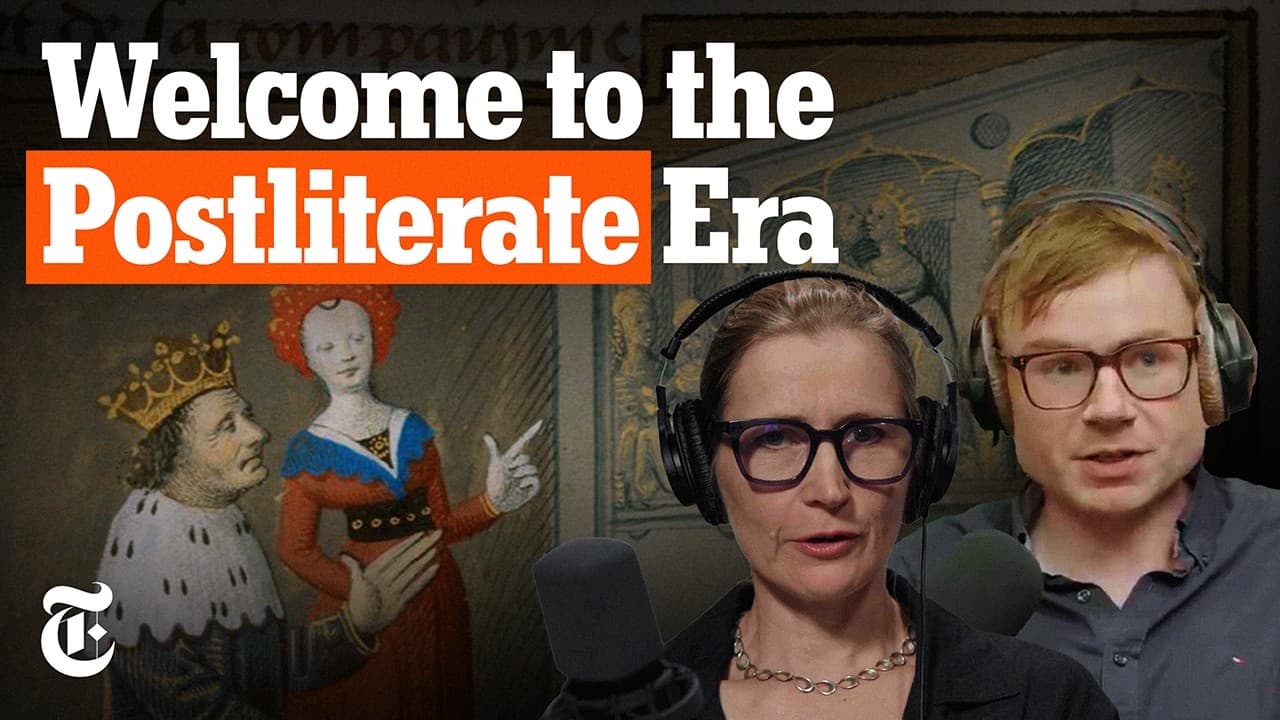
What Happens When We Become Post Literate?
TL;DR
Post literacy signals a shift from long form text to images and short videos, which correlates with decreased leisure reading and potential impacts on democratic deliberation. The trend is reinforced by smartphones and short form video, while society debates whether literacy still underpins political engagement and cultural authority. Reading remains a social norm even as its prominence fades.
Transcript
The the standard meme that gets posted in response to that is I ain't reading all of that. Um I'm happy for you or sorry that happened. >> Yes, the modern response to an English literature degree. >> I'm reading all that. >> Sorry, Dickens. >> From New York Times opinion. I'm Mary Harrington, guest hosting for Interesting Times. >> When is the last... Read More
Key Insights
- Post literacy is defined as a dominance of image and short form media over long text, not illiteracy.
- Leisure reading declined by about 40 percent in the American Time Use Survey, signaling a broad cultural shift.
- UK and OECD data show declines or stagnation in literacy and reading, aligning with the rise of visual media.
- Short form video is a major force in reducing concentration and sustained reading from longer texts.
- People increasingly experience texts in everyday surroundings yet engage less with deep, analytical reading.
- The 400 word wall is cited as a limit where students struggle to maintain focus, affecting academic reading routines.
- There is a historical parallel to the shift from print to TV and an ongoing move toward an image mediated understanding of politics.
- Medieval memory and storage practices offer potential lessons for handling information in a digital, post literate age
Install to Summarize YouTube Videos and Get Transcripts
Explore YouTube Video Summarizer or Get YouTube Transcript Extractor
Questions & Answers
Q: What is meant by post literacy and how does it differ from illiteracy?
Post literacy describes a cultural shift where long form text becomes less central to daily life and interpretation, while text as a medium remains prevalent in signs, screens, and writing. It does not mean people cannot read, but that the dominant mode of processing information is increasingly visual or auditory rather than sustained reading.
Q: How has leisure reading changed according to recent surveys?
Surveys cited indicate leisure reading fell by about 40 percent over two decades among Americans, with reading defined broadly to include books, magazines, and audiobooks. The trend is echoed in UK data suggesting a significant portion of adults have given up reading for pleasure, pointing to a broader shift in cultural habits.
Q: What role does short form video play in this shift?
Short form video is described as taking over attention and reducing the time people spend with long text. The format is linked to shorter attention spans and greater difficulty concentrating on lengthy passages, contributing to a culture where quick, visual content dominates daily media consumption.
Q: What is the 400 word wall and why is it relevant?
The 400 word wall refers to a perceived limit where students quickly reach a point of fidgetiness or distraction after about 400 words. This suggests a reduced tolerance for longer passages and a potential barrier to engaging deeply with complex texts in academic settings.
Q: What historical comparison is drawn to explain current literacy trends?
The discussion draws a parallel with Neil Postmans Amusing Ourselves to Death, which argued for a move from a textual culture to a TV culture, illustrating how media shifts alter political interpretation. The conversation extends that idea to the present dominance of image and video in shaping understanding.
Q: How could literacy affect democracy according to the host and guest?
Literacy is portrayed as an engine for democracy because deep reading supports deliberation and critical interpretation of political texts. A move toward post literacy risks weakening the public’s ability to engage with complex arguments, potentially undermining informed citizenry and self governance.
Q: What lessons might we draw from medieval culture for a post literate age?
Medieval literary culture is referenced to explore how societies stored and transmitted knowledge outside of the modern print-centric model. Lessons may include valuing alternative memory and information storage systems, which could inform how we preserve knowledge when traditional reading becomes less central.
Q: Is post literacy linked to political ideology, and can it be resisted?
There is discussion about whether post literacy is a right wing or broader cultural phenomenon, with arguments that resistance could involve valuing long form reading, critical inquiry, and diverse media literacy. The path to resistance would likely require deliberate cultural and educational efforts to sustain deep reading practices.
Summary & Key Takeaways
-
Post literacy describes a shift away from long form text toward images and short videos, raising concerns about our ability to engage deeply with complex ideas. It notes data from time use surveys and OECD suggesting reading proficiency and leisure reading have declined. The conversation links this trend to democratic health and cultural change.
-
The discussion ties historical shifts to modern media, comparing print culture to an image dominated era. It explores the role of reading in education, politics, and memory, while considering lessons from medieval and early modern literacy and storage of information in a digital age.
-
The episode probes can society resist the slide toward post literate culture, examining potential strategies from preserving long form reading to rethinking how information is stored and transmitted, while acknowledging the entrenchment of video in everyday life and its influence on attention and discourse.
Read in Other Languages (beta)
Share This Summary 📚
Summarize YouTube Videos and Get Video Transcripts with 1-Click
Try YouTube Summary with ChatGPT & Claude or YouTube Transcript Generator
Explore More Summaries from Interesting Times 📚

Summarize YouTube Videos and Get Video Transcripts with 1-Click
Try YouTube Summary with ChatGPT & Claude or YouTube Transcript Generator