10 Best History Videos on YouTube

Sep 15, 2026
16 min read
105 views
Last updated: September 2026
This is a ten-video history sequence, ordered as a path rather than a ranking. It is for students and curious viewers who want a route from major political conflicts to archaeology, social change, everyday life, and the stories used to explain the past.
The full set runs about four hours and seventeen minutes. The most enduring entries include OverSimplified on World War II, National Geographic on the lost Maya world, and CrashCourse on the Agricultural Revolution.
The videos on this list, in the order to watch them, are:
What Caused the Rise of Fascism in World War II? (OverSimplified)
What Caused the Cold War and Its Key Events? (OverSimplified)
How Did the American Revolution Begin? (OverSimplified)
How Does Lidar Technology Reveal the Lost Maya Civilization? (National Geographic)
How Did Rome Conquer Greece and Macedon? (Kings and Generals)
What Was the Impact of the Agricultural Revolution? (CrashCourse)
What Was Daily Life Like for a Teenager in Ancient Rome? (TED-Ed)
What Was a Day Like for a Roman Soldier in Germania? (TED-Ed)
What Is the Black Legend in US History? (CrashCourse)
Total: 10 videos, 257 minutes of watch time (4 hours 17 minutes), and 332.8M combined views.
1. What Caused the Rise of Fascism in World War II?
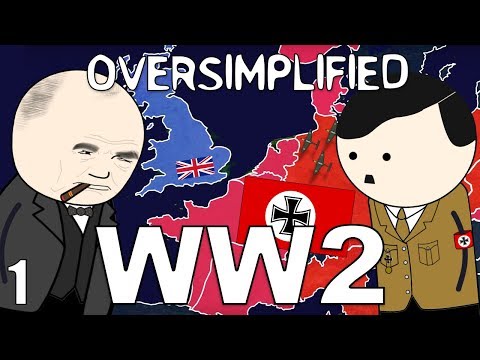
"WW2 - OverSimplified (Part 1)" · OverSimplified · 14 min · 88M views · 2018
In short: Political and economic instability helped fascist leaders turn nationalism, resentment, and demands for resources into expansion before World War II.
Start here because the video establishes how political ideas, economic pressure, and national ambition can combine before a global conflict. It follows Mussolini's move from socialism to fascism, Hitler's promise to undo the Treaty of Versailles, and Japan's turn toward militaristic expansion. Together, those cases frame World War II as the result of several expansionist powers rather than one isolated decision.
The clearest comparison is the different grievance each state converted into action. Mussolini used nationality as a basis for Italian unity and imperial ambition. Hitler drew on German anger at the Treaty of Versailles and promised restored power and honor. Japan, short of resources and struggling economically, sought territory and influence in East Asia, while Allied appeasement delayed decisive resistance to Hitler's aggression.
Key takeaways
Mussolini's disillusionment with socialism led him toward a fascism centered on Italian nationalism and national dominance.
Hitler gained support by promising to reverse the Treaty of Versailles and restore Germany's power and honor.
Japan pursued expansion in East Asia because of economic struggles, resource needs, and its aim to become a major power.
The Allies' policy of appeasement enabled further German aggression by postponing direct confrontation.
Watch on YouTube · Read the summary and Q&A
2. What Caused the Cold War and Its Key Events?
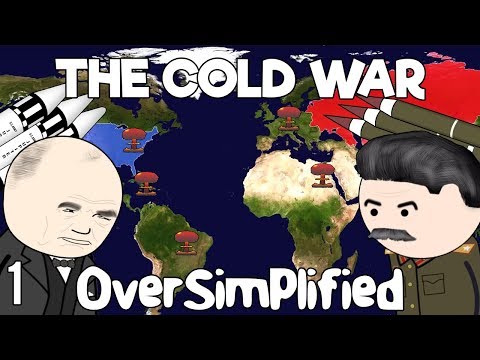
"The Cold War - OverSimplified (Part 1)" · OverSimplified · 16 min · 70M views · 2019
In short: The Cold War grew from the clash between capitalism and communism and unfolded through blockades, proxy war, repression, espionage, and technological competition.
After the rise of fascist powers and World War II, the sequence moves to the ideological conflict that followed. The video begins with Lenin's return to Russia and Stalin's rise, then traces how wartime cooperation among the Allies deteriorated. It argues that the Cold War became a contest between political and economic systems, even when the leading powers avoided fighting each other directly.
The Berlin Airlift, Korean War, and Berlin Wall make that contest concrete. The airlift answered Stalin's blockade and became a Western victory in the economic struggle. Korea became a proxy battle in which major powers backed opposing sides and reached a stalemate. Later, East Berliners fleeing west led to a wall that exposed the sharp contrast between the two systems.
Key takeaways
Stalin's Five-Year Plans transformed the Soviet economy while his reign of terror removed or killed opponents.
Cooperation among the Allies after World War II quickly gave way to political and economic rivalry.
The Korean War became a proxy conflict between communism and capitalism and ended in stalemate.
Espionage, the space race, and the nuclear arms race intensified tension between the competing blocs.
Watch on YouTube · Read the summary and Q&A
3. How Did the American Revolution Begin?

"The American Revolution - OverSimplified (Part 1)" · OverSimplified · 15 min · 60M views · 2018
In short: British taxation and control turned colonial protest into organized resistance, armed conflict, and finally a declaration of independence.
The third video shifts from global ideological conflict to the chain of events that can turn grievances into revolution. Britain emerged from the Seven Years' War in debt and imposed new taxes on its American colonies. The video argues that those policies, followed by protest, boycotts, and escalating confrontation, gradually moved the colonies from resistance within the empire toward a complete break from British rule.
The sequence runs through the Stamp Act, Boston Massacre, and Boston Tea Party before reaching organized political and military action. The First Continental Congress gathered to address colonial grievances and prepare for possible conflict. The battles of Lexington and Concord then marked the start of open fighting, followed by the siege of Boston and the Declaration of Independence that formalized the split.
Key takeaways
Britain's debt after the Seven Years' War prompted new taxes on the American colonies.
The Stamp Act and other taxes produced colonial protests and boycotts of British goods.
The Boston Massacre and Boston Tea Party intensified resistance to British control.
Lexington and Concord began the armed conflict, and the Declaration of Independence formalized the colonies' break from Britain.
Watch on YouTube · Read the summary and Q&A
4. How Does Lidar Technology Reveal the Lost Maya Civilization?
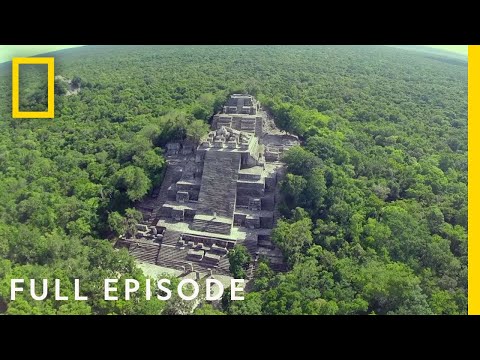
"Lost World of the Maya (Full Episode) | National Geographic" · National Geographic · 44 min · 27M views · 2020
In short: Lidar sees through forest canopy to reveal Maya cities, roads, temples, and palaces on a scale that changes earlier ideas about the civilization.
After three narratives of war and revolution, this video changes the method of inquiry. Instead of beginning with political events, it shows technology producing new historical evidence. Lidar and satellite work reveal structures hidden beneath dense forest, leading archaeologists toward thousands of ruins. The discoveries support a view of Maya society as more extensive, interconnected, and technically sophisticated than earlier assumptions allowed.
Lidar works by firing light pulses from an aircraft and measuring how long they take to return to a sensor. The resulting reconstruction exposes shapes below the canopy without touching a leaf. Those maps reveal road systems, temples, palaces, and cities. The video also connects decline to years of drought, water scarcity, political disarray, and tensions associated with the cult of Quetzalcoatl.
Key takeaways
Lidar scanning lets archaeologists map structures hidden below dense forest canopy.
Thousands of newly detected ruins point to a sprawling and sophisticated Maya society.
Maya engineering included complex roads, temples, palaces, and underground rainwater cisterns called chiltuns.
Prolonged drought, political disorder, and ideological conflict contributed to the abandonment and collapse of Maya centers.
Watch on YouTube · Read the summary and Q&A
5. How Did Rome Conquer Greece and Macedon?

"How Rome Conquered Greece - Roman History DOCUMENTARY" · Kings and Generals · 125 min · 20M views · 2020
In short: Rome's conquest of Greece grew from Adriatic security interventions into a long series of wars, settlements, alliances, and informal control.
The longest video comes after the archaeology episode because it reconstructs expansion at a much finer political and military scale. Rome did not begin with a single plan to conquer Greece. Its involvement east of the Adriatic started when Illyrian piracy and expansion harmed merchants and Roman interests, then widened through repeated intervention in Macedon and the surrounding Greek world.
The numbers show the scale of Rome's first response. After a Roman envoy was killed, Rome sent 22,000 troops and 200 ships in 229 BC, defeated Queen Teuta, restricted piracy, and fragmented her kingdom. When Demetrius of Pharos later violated the settlement, Rome captured Dimallum in seven days. The larger conquest eventually involved four Macedonian Wars plus the Seleucid, Aetolian, and Achaean Wars.
Key takeaways
Roman intervention began with Illyrian piracy and Adriatic security concerns, not an immediate plan to conquer Greece.
Rome's settlement after defeating Teuta turned friendly states into informal clients while Roman troops withdrew.
Demetrius of Pharos moved from Roman partner to enemy, then escaped to become an adviser to Philip V of Macedon.
Control emerged through separate conflicts involving Macedon, the Seleucid Empire, the Aetolian League, and the Achaean League.
Watch on YouTube · Read the summary and Q&A
6. What Is the History of the British Royal Family?
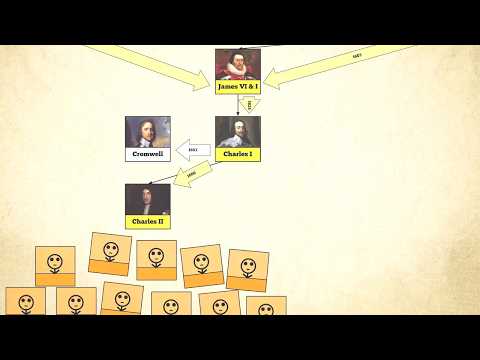
"Brief History of the Royal Family" · CGP Grey · 9 min · 18M views · 2015
In short: The British royal line developed through uncertain succession, civil wars, disputed claims, marriages, and eventually more formal inheritance rules.
After Rome's expansion across many states and wars, this compact video follows power through one family tree. It starts with William the Conqueror in 1066, while acknowledging that kings and smaller countries existed earlier. The central argument is that succession was not always governed by settled rules, so rival claims repeatedly produced conflict before inheritance became clearer and transitions became smoother.
William's children William II, Henry I, and Adela all mattered to the later line, and the absence of a simple succession process helped produce a decades-long civil war between Empress Matilda and Stephen. The War of the Roses brought another dispute among Edward III's great-grandsons. Henry VIII later wrote inheritance rules that put the oldest boys first and girls next when there were no boys.
Key takeaways
The video's family tree begins with William the Conqueror and the Norman Conquest in 1066.
Empress Matilda was meant to inherit, but Stephen was crowned first, producing a decades-long civil war.
Henry VIII formalized inheritance rules, though succession still faced challenges and controversies.
James VI of Scotland becoming James I of England brought the Scottish line into the royal family tree.
Watch on YouTube · Read the summary and Q&A
7. What Was the Impact of the Agricultural Revolution?

"The Agricultural Revolution: Crash Course World History #1" · CrashCourse · 11 min · 17M views · 2012
In short: Farming created controllable food surpluses, cities, and specialized labor, but it also increased work, inequality, and environmental damage.
The sequence now steps back from dynasties and conquests to a change that reshaped human society itself. The video examines the transition from hunting and gathering to farming, but does not treat it as one coordinated revolution. Agriculture spread through many independent choices to increase food availability, and its surpluses made complex societies, cities, and specialized forms of work possible.
That development came with costs. Early agriculture required people to manipulate environments and helped establish social hierarchies, including patriarchy and slavery. Foragers often had healthier diets and more leisure than early farmers. Herding offered meat and wool as an alternative, but required constant movement and depended on the limited animals that could be domesticated. The result is a mixed account of human progress.
Key takeaways
Agriculture created a more controllable food supply and surpluses that supported cities and specialized labor.
Farming spread through independent community decisions rather than through one singular event.
Early agriculture increased environmental change, labor demands, and inequalities such as patriarchy and slavery.
Foragers often had healthier diets and more leisure time than early agriculturalists.
Watch on YouTube · Read the summary and Q&A
8. What Was Daily Life Like for a Teenager in Ancient Rome?
"A glimpse of teenage life in ancient Rome - Ray Laurence" · TED-Ed · 7 min · 12M views · 2012
In short: One festival day in the life of 17-year-old Lucius connects Roman education, family duty, coming-of-age ritual, public memory, leisure, and ambition.
After the broad consequences of farming, the list narrows to one person and one day. Lucius Popidius Secundus is 17 and living in Rome in 73 AD, nearly finished with his education and considering becoming a military tribune. Following him through the Liberalia shows how family ritual, schooling, civic history, and future expectations fitted together in an ordinary young Roman's life.
Lucius begins with duties connected to his brother's coming of age and watches a family ritual before protective deities. His education includes public speaking, Latin and Greek literacy, plus training from his father in running, swimming, and fighting. At the Forum Augustus, stories and statues of warriors connect the family to Rome's past, before baths and a celebratory dinner close the day.
Key takeaways
The Liberalia marked an important coming-of-age milestone through family duties, prayer, and ritual.
At 17, Lucius was proficient in public speaking and in reading and writing Latin and Greek.
Fathers and guardians used the Forum Augustus and its statues to teach young Romans about past warriors.
The Baths of Agrippa and a family dinner show the role of relaxation, social life, and celebration.
Watch on YouTube · Read the summary and Q&A
9. What Was a Day Like for a Roman Soldier in Germania?

"A day in the life of a Roman soldier - Robert Garland" · TED-Ed · 5 min · 11M views · 2018
In short: A Roman legionary's day combined long marches, camp construction, discipline, danger, remembered defeat, and hope for a life after service.
The second daily-life story follows naturally from Lucius because it shows what one possible Roman military future demanded. Servius Felix enlisted at 18 and has served for eight years under Germanicus by 15 CE. Through him, the video argues that imperial success rested on legionaries who endured strict orders, limited sleep, hard physical work, and the constant possibility of ambush.
Servius may march as far as 36 kilometers, help build camp, and remain alert in Germania. Each legion contains close to 5,000 men divided into cohorts and centuries under strict discipline. He remembers the Teutoburg Forest ambush, where Germanic tribes destroyed three Roman legions. Yet he saves his wages and hopes to survive 17 more years, marry his beloved, and retire to a small farm.
Key takeaways
Roman legionaries endured marches of up to 36 kilometers, limited sleep, camp building, and strict discipline.
Legions of close to 5,000 men were organized into cohorts and centuries.
The destruction of three legions in the Teutoburg Forest haunted both Servius and the Roman Empire.
Servius saved his wages and hoped to retire to a small farm with his beloved after 17 more years.
Watch on YouTube · Read the summary and Q&A
10. What Is the Black Legend in US History?
"The Black Legend, Native Americans, and Spaniards: Crash Course US History #1" · CrashCourse · 11 min · 11M views · 2013
In short: The Black Legend described real Spanish cruelty toward Native Americans but also served other European powers as a justification for their own colonization.
The list closes by asking who constructs the historical account. The Black Legend portrays Spanish colonizers as uniquely brutal toward Native Americans, a narrative grounded in documented mistreatment but later used by other Europeans to defend their own colonial projects. The video also redirects attention toward diverse Native societies whose political, social, agricultural, and trade systems are often obscured by Eurocentric histories.
Spanish explorers brought diseases that devastated Indigenous populations, and colonization through military bases and missions faced resistance. The Pueblo Revolt of 1680 was a major uprising against Spanish rule in New Mexico. Bartolomé de las Casas documented Spanish mistreatment, contributing to the Black Legend. Those records expose cruelty, while their later political use shows why historical narratives must be read alongside the interests of their tellers.
Key takeaways
The Black Legend emphasizes Spanish cruelty toward Native Americans and rests on real records of mistreatment.
Other European powers used that narrative to justify their own colonial ambitions.
Native American societies had diverse cultures and complex social, political, agricultural, and trade systems.
The Pueblo Revolt of 1680 was a significant act of resistance to Spanish colonization in New Mexico.
Watch on YouTube · Read the summary and Q&A
Frequently asked questions
What are the best history videos on YouTube?
Three strong starting points are OverSimplified's "What Caused the Rise of Fascism in World War II?", National Geographic's "How Does Lidar Technology Reveal the Lost Maya Civilization?", and CrashCourse's "What Was the Impact of the Agricultural Revolution?" Together they cover political conflict, archaeological evidence, and a social transformation that enabled cities and specialized labor.
How long does it take to watch all ten history videos?
The full list takes 257 minutes, or 4 hours 17 minutes. The five-minute TED-Ed video about a Roman soldier is the shortest, while the 125-minute Kings and Generals documentary about Rome's conquest of Greece and Macedon is the longest. The remaining eight videos range from seven to 44 minutes.
Why did fascist powers expand before World War II?
The causes differed by country but shared nationalism and instability. Mussolini moved from socialism toward a fascism based on Italian unity and dominance. Hitler drew strength from resentment over the Treaty of Versailles and promised to restore Germany. Japan's economic difficulties and need for resources encouraged expansion in East Asia, while Allied appeasement delayed firm opposition to Hitler.
How can lidar find Maya ruins beneath a forest?
Lidar fires streams of light pulses from an aircraft and measures the time they take to bounce back to a sensor. Researchers use those measurements to reconstruct shapes below dense forest canopy. The resulting maps have revealed thousands of ruins, including roads, temples, palaces, and cities, without requiring archaeologists to remove or touch the covering vegetation.
Did the Agricultural Revolution improve human life?
It produced both gains and costs. A controllable food supply and surplus supported cities, specialized labor, and complex societies. Farming also required environmental manipulation, more labor, and social hierarchies that included patriarchy and slavery. The video notes that foragers often had healthier diets and more leisure, so it presents agriculture as consequential progress rather than an uncomplicated improvement.
How did Rome's involvement in Greece begin?
It began with Adriatic security rather than a declared plan to conquer Greece. Illyrian piracy, territorial expansion, and harm to merchants led Rome to intervene. After an envoy was killed, Rome sent 22,000 troops and 200 ships in 229 BC. The resulting settlements and later wars gradually extended Roman influence into Macedon and the wider Greek world.
Which history video should I watch first?
Start with OverSimplified's video on the rise of fascism before World War II. Its 14-minute account shows how economic trouble, political resentment, nationalism, resource demands, and appeasement can interact before conflict begins. That cause-and-effect framework prepares you for the next videos on the Cold War, revolution, imperial expansion, and the construction of historical narratives.
Which video works best if I have less than ten minutes?
Watch TED-Ed's five-minute account of a Roman soldier in Germania for military life, or its seven-minute account of the teenager Lucius for family, education, and ritual. CGP Grey's nine-minute royal family history is another option if you want a compact explanation of succession, disputed claims, civil wars, and inheritance rules.
Are the older history videos still worth watching?
Yes. The oldest entries, CrashCourse on the Agricultural Revolution and TED-Ed on teenage life in ancient Rome, date to 2012. Their focus is historical: the transition to farming, Roman education, family ritual, and public memory. The 2013 Black Legend video also raises a lasting question about whose interests shape the stories told about colonization.
How to use this list
Watch in the order listed to move from modern wars and revolution into the evidence and institutions behind older societies, then from broad social change to individual Roman lives and the politics of historical storytelling. If you only have twenty minutes, start with OverSimplified on the rise of fascism, then continue to the American Revolution when you have another fifteen minutes. If you want the single video that most clearly shows new evidence changing an established picture of the past, choose National Geographic on lidar and the Maya.
Related lists
💡 Want summaries and transcripts for any YouTube video? Try YouTube Summary with ChatGPT & Claude.