What Is the Black Legend in US History?
TL;DR
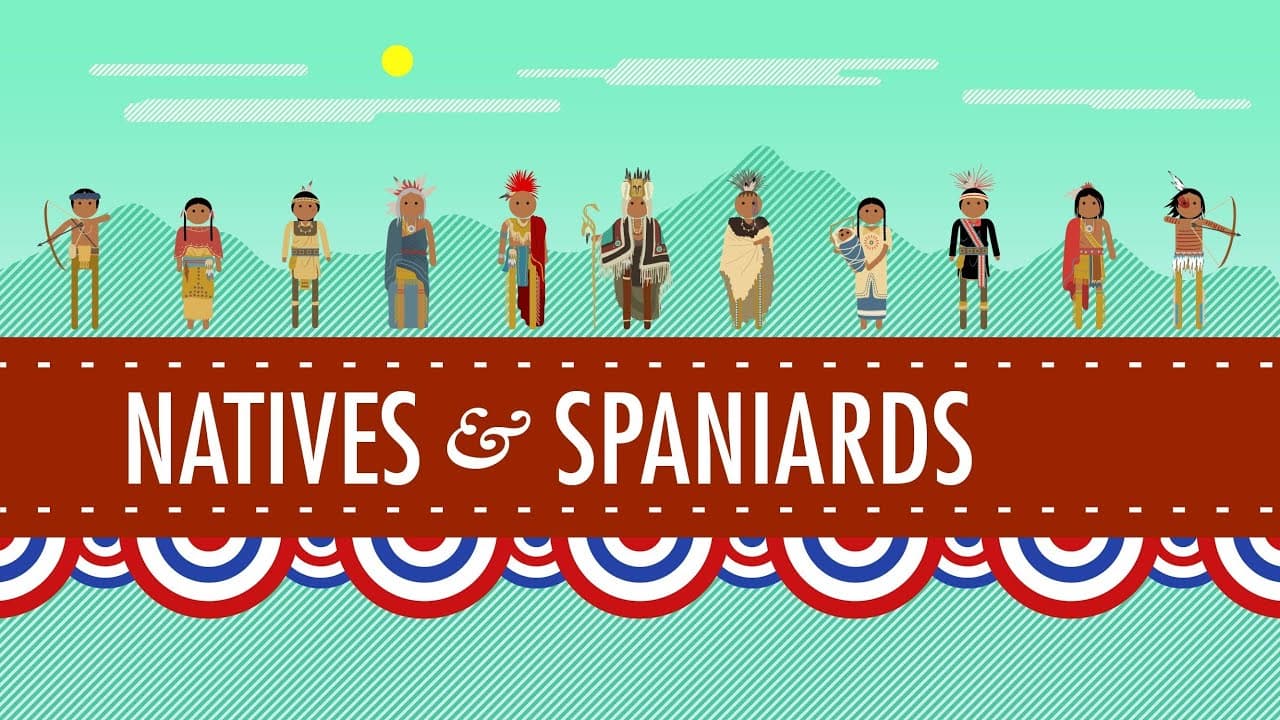
The Black Legend refers to the portrayal of Spanish colonizers as uniquely brutal in their treatment of Native Americans. While this narrative is grounded in truth, it was also used by other European powers, like the English, to justify their own colonial endeavors. Native American societies were diverse and complex, but their histories are often told through a Eurocentric lens.
Transcript
Hi I'm John Green, and this is Crash Course U.S. History! No, Stan. That's not gonna work, actually. I mean, we're talking about the 16th century today, when this was neither united nor states. By the way, this globe reflects the fact that I believe that Alaskan statehood is illegitimate! In fact, we're going to call this whole show "U.S. History" ... Read More
Key Insights
- The Black Legend is a narrative that emphasizes the cruelty of Spanish colonizers toward Native Americans.
- Native American societies were diverse, with complex social, political, and trade networks.
- Pre-Columbian Native Americans did not have metalwork or written languages but had agriculture and trade.
- Spanish colonization efforts included military bases and missions but faced resistance and uprisings.
- The Pueblo Revolt of 1680 was a significant uprising against Spanish colonization in New Mexico.
- Bartolomé de las Casas was a Spanish critic who documented the mistreatment of Native Americans.
- The narrative of the Black Legend was used by other Europeans to justify their colonial actions.
- Historical accounts often reflect the perspectives of European colonizers, overlooking Native American voices.
Install to Summarize YouTube Videos and Get Transcripts
Explore YouTube Video Summarizer or Get YouTube Transcript Extractor
Questions & Answers
Q: What is the Black Legend in US history?
The Black Legend is a narrative that portrays Spanish colonizers as exceptionally brutal in their treatment of Native Americans. This view, while based on historical events, was also used by other European powers to justify their own colonial actions, suggesting that their presence was needed to protect indigenous populations from Spanish cruelty.
Q: How did Native American societies function before European contact?
Before European contact, Native American societies were diverse, with complex social and political structures. They engaged in widespread trade networks and practiced agriculture. However, they did not have metalworking, written languages, or domesticated animals like the Europeans. Their societies were organized into tribes, often forming loose confederacies based on available natural resources.
Q: What was the Pueblo Revolt of 1680?
The Pueblo Revolt of 1680 was a significant uprising by Native Americans in present-day New Mexico against Spanish colonizers. Led by a religious leader named Popé, around 2,000 Pueblo warriors attacked Spanish settlements, killing 400 colonists and driving the rest out of Santa Fe. This revolt temporarily ended Spanish control in the region, although it was later reestablished.
Q: Who was Bartolomé de las Casas and what was his role?
Bartolomé de las Casas was a Spanish priest and historian who became an outspoken critic of the brutal treatment of Native Americans by Spanish colonizers. He documented the atrocities in works like 'A Short Account of the Destruction of the Indies,' highlighting the need for reform and advocating for the rights and humane treatment of indigenous peoples.
Q: How did Spanish colonization impact Native American populations?
Spanish colonization had a devastating impact on Native American populations, primarily through the introduction of European diseases like smallpox and influenza, which decimated indigenous communities. Additionally, Spanish settlers imposed harsh labor systems and sought to convert Native Americans to Christianity, leading to cultural disruption and resistance, such as the Pueblo Revolt.
Q: What were the main features of Native American religious beliefs?
Native American religious beliefs were diverse and often centered around a vibrant spiritual world. Tribes conducted ceremonies related to their lifestyles, such as hunting or agriculture. Many tribes believed in a single creator god above other deities, though their beliefs were not monotheistic like Christianity. Religion was closely tied to their understanding of nature and communal life.
Q: How did European colonizers justify their actions towards Native Americans?
European colonizers often justified their actions towards Native Americans by viewing them as 'heathens' or 'savages' in need of conversion to Christianity. The Black Legend narrative, which highlighted Spanish brutality, was used by other Europeans, particularly the English, to rationalize their own colonial ambitions, claiming they were saving indigenous peoples from Spanish cruelty.
Q: Why is it important to consider different perspectives in historical narratives?
Considering different perspectives in historical narratives is crucial because it provides a more comprehensive understanding of events. Many historical accounts are written from the viewpoint of European colonizers, often overshadowing the voices and experiences of Native Americans. Recognizing who is speaking and why helps uncover biases and ensures a more balanced representation of history.
Summary & Key Takeaways
-
The Black Legend highlights Spanish brutality towards Native Americans, a narrative later used by other Europeans to justify their colonization. Native American societies were diverse, with agriculture, trade, and complex social structures, but lacked written records and metalwork. Spanish colonization faced resistance, notably the Pueblo Revolt, and figures like Bartolomé de las Casas documented these abuses.
-
Native American tribes had diverse cultures and social structures, often misunderstood by Europeans. Spanish explorers brought diseases that devastated indigenous populations. The Pueblo Revolt in 1680 was a significant resistance against Spanish rule. Bartolomé de las Casas criticized Spanish cruelty, contributing to the Black Legend narrative used by other Europeans to justify their colonial ambitions.
-
Spanish colonization in North America was marked by brutality, leading to the Black Legend narrative. Native American societies were complex, with varied cultures and economies. The Pueblo Revolt exemplified resistance against Spanish oppression. European narratives often overshadow Native perspectives, emphasizing the need to consider who tells historical stories and why.
Read in Other Languages (beta)
Share This Summary 📚
Summarize YouTube Videos and Get Video Transcripts with 1-Click
Try YouTube Summary with ChatGPT & Claude or YouTube Transcript Generator
Explore More Summaries from CrashCourse 📚


Summarize YouTube Videos and Get Video Transcripts with 1-Click
Try YouTube Summary with ChatGPT & Claude or YouTube Transcript Generator