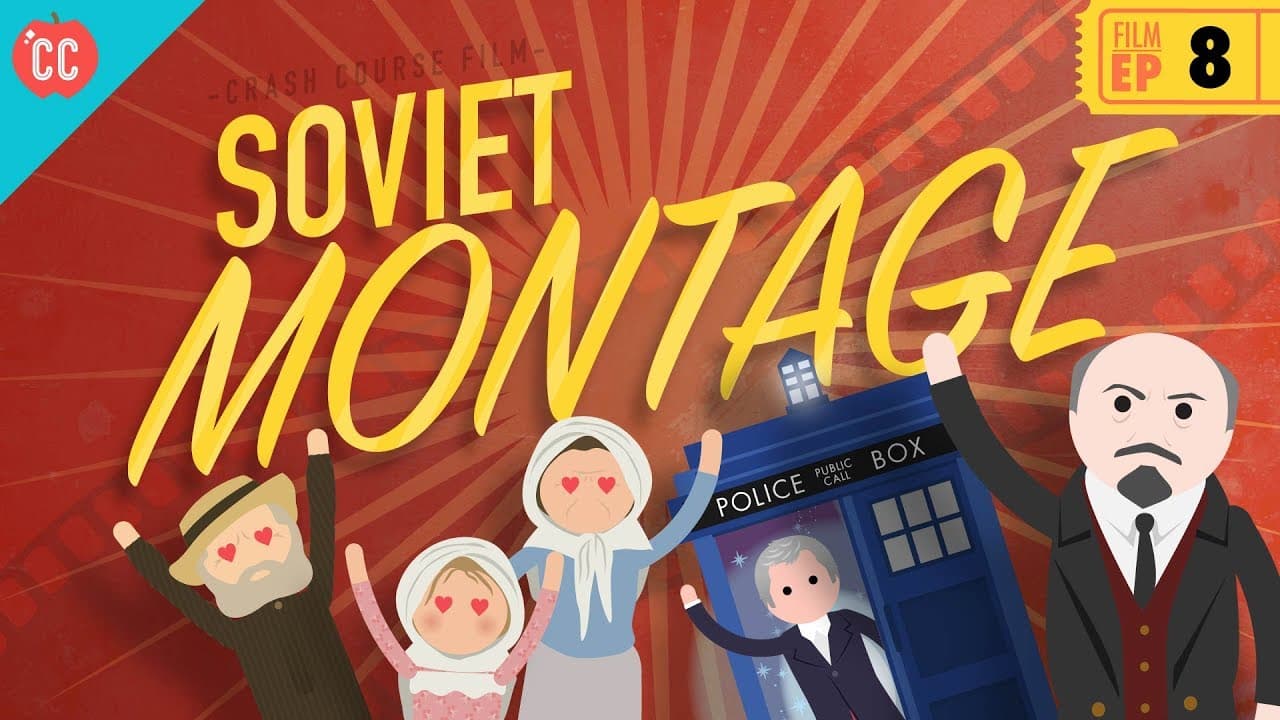
Soviet Montage: Crash Course Film History #8
TL;DR
Soviet Montage transformed cinema through innovative editing techniques.
Transcript
The Russian Revolution marked the first major civil war fought in the age of cinema. And the big winners in that struggle understood the unique ability of film to change minds and inflame hearts. Today, we’ll meet a bunch of filmmakers who spent as much time studying films as they did making them. We’ll see the founding of the world’s first film sc... Read More
Key Insights
- The Russian Revolution led to the recognition of cinema as a powerful tool for social and political influence, prompting the Bolshevik government to centralize the film industry.
- The Soviet government founded the world's first film school, VGIK, in 1919, encouraging experimentation and the study of film as a means of understanding its potential for influence.
- Lev Kuleshov's experiments led to the discovery of the Kuleshov Effect, demonstrating that viewers derive more meaning from two juxtaposed shots than from individual shots.
- Soviet Montage filmmakers believed that editing was the most foundational element of film technique, using various montage styles to convey meaning and evoke emotions.
- Sergei Eisenstein's 'Battleship Potemkin' exemplified the use of intellectual montage to create powerful propaganda and influence public opinion through film.
- Dziga Vertov and the 'Kinoki' group focused on documentaries, using montage to create pure meaning and articulate a point of view, despite the inherent constructed nature of film.
- The Soviet Montage movement eventually declined as Socialist Realism became the state-supported style, focusing on relatable stories that promoted communist values.
- The techniques developed by Soviet Montage filmmakers continue to influence modern cinema, evident in various film genres and media, including music videos and trailers.
Install to Summarize YouTube Videos and Get Transcripts
Explore YouTube Video Summarizer or Get YouTube Transcript Extractor
Questions & Answers
Q: What was the significance of the Russian Revolution for cinema?
The Russian Revolution marked a pivotal moment for cinema as the Bolshevik government recognized film as a powerful tool for social and political influence. This led to the centralization of the film industry and the establishment of the world's first film school, VGIK, fostering experimentation and the study of film techniques to shape public opinion and promote communist values.
Q: What is the Kuleshov Effect and why is it important?
The Kuleshov Effect, discovered by Lev Kuleshov, demonstrates that viewers derive more meaning from two juxtaposed shots than from individual shots. This effect highlights the power of editing in cinema, as it allows filmmakers to create new meanings and evoke emotions by strategically combining images, which became a foundational concept in Soviet Montage theory.
Q: How did Soviet Montage filmmakers use editing to influence audiences?
Soviet Montage filmmakers believed that editing was the most foundational element of film technique. They used various montage styles, such as intellectual, tonal, metric, rhythmic, and overtonal montage, to convey meaning, evoke emotions, and influence audiences. By juxtaposing images, they aimed to create new meanings and provoke thought, often using film as a tool for propaganda.
Q: What role did Sergei Eisenstein play in the Soviet Montage movement?
Sergei Eisenstein was a key figure in the Soviet Montage movement, known for his innovative use of intellectual montage in films like 'Battleship Potemkin.' His work demonstrated how juxtaposing images could create powerful propaganda, influencing public opinion by dramatizing events and evoking strong emotional responses. Eisenstein's techniques became influential in the development of cinematic language.
Q: How did Dziga Vertov's approach to filmmaking differ from others in the movement?
Dziga Vertov, a prominent Soviet Montage filmmaker, focused on documentaries, believing that only non-fiction films could convey true and honest meaning. His approach emphasized capturing reality through the camera and using montage to create pure meaning, rather than telling a story. Vertov's work, like 'The Man with the Movie Camera,' highlighted the constructed nature of film while exploring the process of filmmaking itself.
Q: What led to the decline of the Soviet Montage movement?
The decline of the Soviet Montage movement was largely due to the rise of Socialist Realism as the state-supported style of cinema. As film stock became more available and Western films re-entered the USSR, audiences sought more relatable and emotional stories. Socialist Realism focused on realistic narratives that promoted communist values, moving away from the abstract theories of Soviet Montage filmmakers.
Q: In what ways do Soviet Montage techniques influence modern cinema?
Soviet Montage techniques continue to influence modern cinema through their innovative approach to editing and storytelling. The use of juxtaposition, rhythm, and montage styles can be seen in various film genres, music videos, and trailers. These techniques help create emotional impact, convey complex ideas, and engage audiences, demonstrating the lasting legacy of the Soviet Montage movement in shaping cinematic language.
Q: What is the significance of 'Battleship Potemkin' in film history?
'Battleship Potemkin,' directed by Sergei Eisenstein, is significant for its pioneering use of intellectual montage, which became a blueprint for incorporating Soviet Montage theories into fiction films. The film's powerful imagery and editing techniques dramatize the events of a mutiny, creating a compelling piece of propaganda that influenced filmmakers worldwide. Its Odessa Steps Sequence remains an iconic example of effective montage in cinema.
Summary & Key Takeaways
-
The Russian Revolution catalyzed a cinematic revolution, recognizing film as a powerful tool for influence. The Bolshevik government centralized the film industry and founded the world's first film school, VGIK, to encourage experimentation and study of film techniques.
-
Lev Kuleshov's experiments led to the Kuleshov Effect, highlighting the power of juxtaposed shots in creating meaning. Soviet Montage filmmakers, including Sergei Eisenstein, used various montage styles to convey emotions and influence public opinion through propaganda films like 'Battleship Potemkin.'
-
Dziga Vertov's documentaries emphasized the use of montage to articulate a point of view, despite the constructed nature of film. The Soviet Montage movement declined with the rise of Socialist Realism, but its techniques continue to influence modern cinema.
Read in Other Languages (beta)
Share This Summary 📚
Summarize YouTube Videos and Get Video Transcripts with 1-Click
Try YouTube Summary with ChatGPT & Claude or YouTube Transcript Generator
Explore More Summaries from CrashCourse 📚




Summarize YouTube Videos and Get Video Transcripts with 1-Click
Try YouTube Summary with ChatGPT & Claude or YouTube Transcript Generator