How Did the American Revolution Begin?
TL;DR
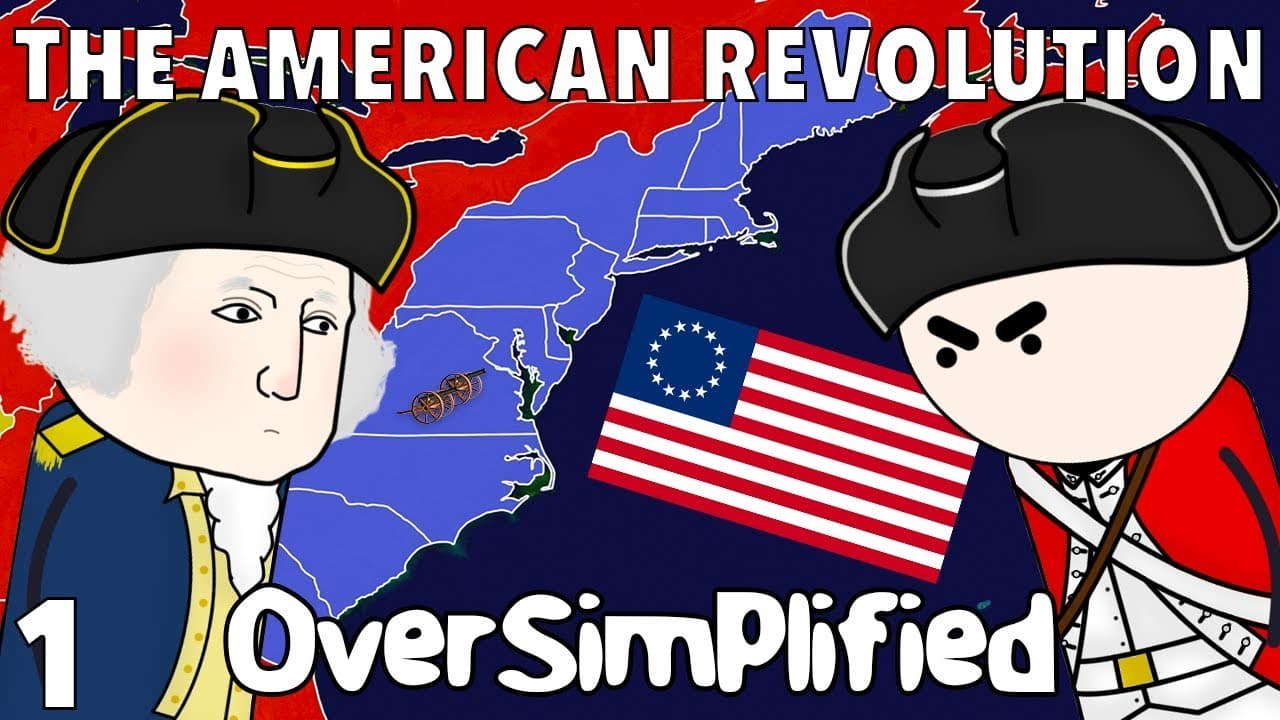
The American Revolution began due to escalating tensions over British taxes and control. Key events included the Boston Massacre, the Boston Tea Party, and the formation of the Continental Congress. Armed conflict started with the battles of Lexington and Concord, leading to the siege of Boston and the Declaration of Independence.
Transcript
Fancy music "Hooooooly smokes!" Christopher Columbus! That is no way to address the King and Queen of Spain! What is wrong with you?" "Ok. Ok!" "So you know how we're looking for a new trade route to India, right?" "Right" "And the earth is round, right?" "Right." "So I'm thinking we can just sail the oooother way around the planet, right?" "Yeah... Read More
Key Insights
- Christopher Columbus mistakenly discovered America while searching for a new trade route to India.
- The British victory in the Seven Years' War left them in debt, prompting new taxes on American colonies.
- The Stamp Act and other taxes led to widespread colonial protest and boycotts of British goods.
- The Boston Massacre intensified anti-British sentiment, leading to further unrest.
- The Boston Tea Party was a direct protest against the British tax on tea.
- The First Continental Congress gathered to address colonial grievances and prepare for potential conflict.
- The battles of Lexington and Concord marked the start of armed conflict between British forces and American colonists.
- The Declaration of Independence formalized the colonies' break from British rule, igniting the Revolutionary War.
Install to Summarize YouTube Videos and Get Transcripts
Explore YouTube Video Summarizer or Get YouTube Transcript Extractor
Questions & Answers
Q: How did the British taxes lead to the American Revolution?
The British imposed taxes like the Stamp Act to recover debts from the Seven Years' War, angering colonists who had no representation in Parliament. This led to widespread protests and boycotts of British goods, uniting the colonies against perceived British tyranny and setting the stage for the American Revolution.
Q: What was the significance of the Boston Massacre?
The Boston Massacre was a turning point that intensified anti-British sentiment among colonists. British soldiers killed five civilians during a confrontation, which was used as propaganda by colonial leaders to rally support against British rule, contributing to the growing call for independence.
Q: Why did the Boston Tea Party occur?
The Boston Tea Party was a protest against the British tax on tea, which was seen as an unfair imposition without colonial representation. The Sons of Liberty, disguised as Native Americans, dumped tea into Boston Harbor, symbolizing colonial resistance and escalating tensions with Britain.
Q: What was the First Continental Congress?
The First Continental Congress was a gathering of delegates from 12 American colonies in 1774 to address grievances against British policies. It marked a unified colonial response, advocating for a boycott of British goods and preparing for potential military action, laying the groundwork for revolution.
Q: How did the battles of Lexington and Concord start the Revolutionary War?
The battles of Lexington and Concord were the first military engagements of the American Revolutionary War. British troops aimed to seize colonial arms, but were met by armed militias. The 'shot heard around the world' signaled the start of open conflict, uniting the colonies in their fight for independence.
Q: What role did the Declaration of Independence play in the American Revolution?
The Declaration of Independence, adopted on July 4, 1776, formally announced the colonies' break from British rule. It articulated the colonies' grievances and their right to self-governance, rallying support for the revolutionary cause and solidifying the colonies' commitment to achieving independence.
Q: How did the British respond to the American Revolution's early stages?
Initially, the British underestimated the colonial rebellion, but as tensions escalated, they sent a large military force to New York and engaged in several battles. Despite early victories, the British faced logistical challenges and growing international support for the American cause, complicating their efforts to suppress the revolution.
Q: What was the impact of Thomas Paine's 'Common Sense' on the revolution?
Thomas Paine's 'Common Sense' was a pivotal pamphlet that argued for American independence from Britain. It was widely read and influential, shifting public opinion towards supporting a complete break from British rule. Its clear and persuasive arguments helped galvanize colonial support for the revolutionary cause.
Summary & Key Takeaways
-
The American Revolution began as a response to British taxation and control over the colonies. Events like the Boston Massacre and Tea Party fueled resentment, leading to the First Continental Congress and the arming of militias. The battles of Lexington and Concord marked the start of open conflict, with the colonies eventually declaring independence.
-
Tensions rose between Britain and the American colonies due to taxes like the Stamp Act. Protests and boycotts ensued, culminating in events like the Boston Tea Party. The First Continental Congress formed to address these issues, and armed conflict began with the battles of Lexington and Concord.
-
The American Revolution was sparked by British attempts to tax and control the colonies. Key events included the Boston Massacre and Tea Party, leading to the First Continental Congress. Armed conflict began with the battles of Lexington and Concord, and the colonies declared independence, starting the Revolutionary War.
Read in Other Languages (beta)
Share This Summary 📚
Summarize YouTube Videos and Get Video Transcripts with 1-Click
Try YouTube Summary with ChatGPT & Claude or YouTube Transcript Generator
Explore More Summaries from OverSimplified 📚




Summarize YouTube Videos and Get Video Transcripts with 1-Click
Try YouTube Summary with ChatGPT & Claude or YouTube Transcript Generator