What Was the Impact of the Agricultural Revolution?
TL;DR
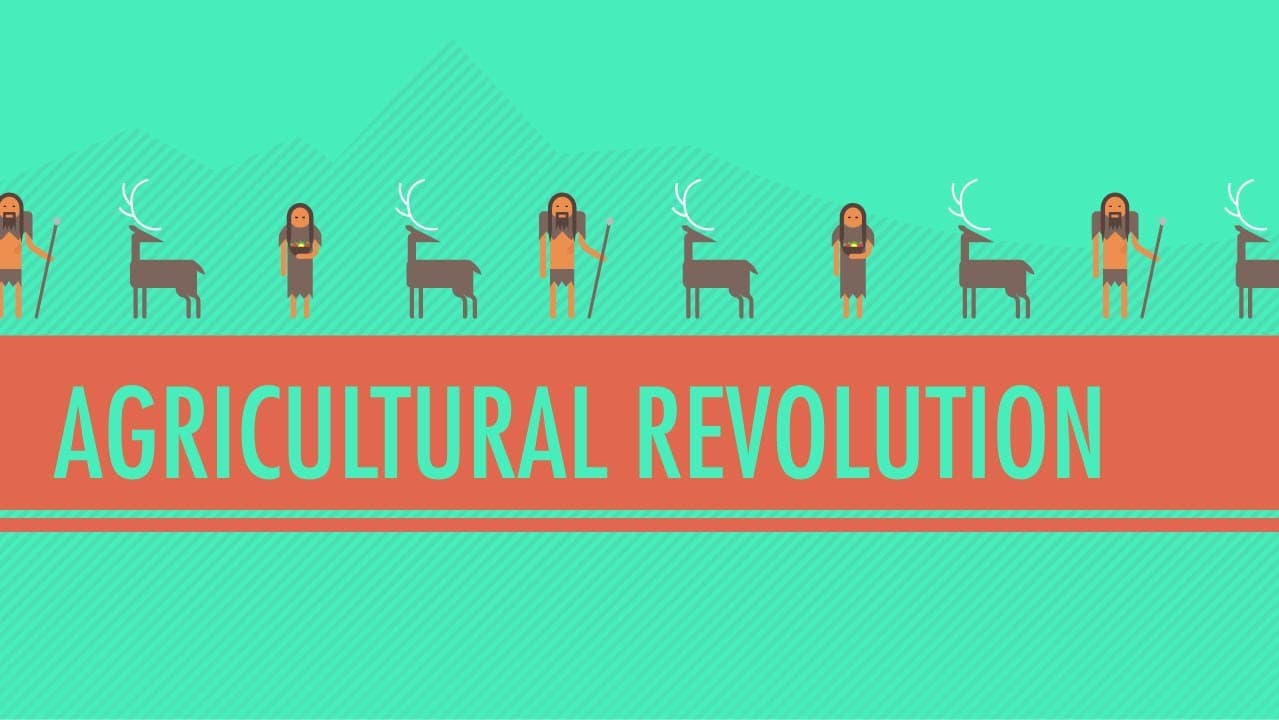
The Agricultural Revolution transformed human society by transitioning from foraging to farming, enabling cities and specialized labor. While it allowed for a controllable food supply and societal advancements, it also caused environmental challenges and inequalities, raising questions about whether it was the right choice for humanity.
Transcript
Hello, learned and astonishingly attractive pupils. My name is John Green and I want to welcome you to Crash Course World History. Over the next forty weeks together, we will learn how in a mere fifteen thousand years humans went from hunting and gathering... Mr. Green, Mr. Green! Is this gonna be on the test? Yeah, about the test: The test will me... Read More
Key Insights
- The Agricultural Revolution marked a pivotal shift from hunting and gathering to farming, enabling the development of complex societies.
- Agriculture allowed for a controllable food supply and surplus, facilitating the growth of cities and labor specialization.
- Despite its benefits, agriculture necessitated significant environmental changes and introduced social inequalities like patriarchy and slavery.
- Foragers, contrary to popular belief, often had healthier diets and more leisure time compared to early agriculturalists.
- Herding emerged as an alternative to agriculture, providing resources like meat and wool, but required constant movement and was limited by available domesticable animals.
- The spread of agriculture was not a singular event but a series of independent choices by different communities to increase food availability.
- Domestication of plants and animals was driven by a desire for more food, not a conscious effort to start an agricultural revolution.
- The Agricultural Revolution's long-term effects include both the advancement of human civilization and environmental degradation.
Install to Summarize YouTube Videos and Get Transcripts
Explore YouTube Video Summarizer or Get YouTube Transcript Extractor
Questions & Answers
Q: What is the main focus of the video?
The video primarily focuses on the Agricultural Revolution, exploring how humans transitioned from hunting and gathering to agriculture. It examines the impacts of this shift on human societies, including the development of cities, labor specialization, and the introduction of social inequalities. The video also considers the environmental changes brought about by agriculture.
Q: What are the advantages of agriculture mentioned in the video?
Agriculture provides a controllable food supply and can produce a surplus, allowing for the growth of cities and specialization of labor. It can be practiced globally, though it often requires environmental manipulation. These advantages contributed to the development of complex societies and technological advancements.
Q: What are the disadvantages of agriculture according to the video?
The video highlights several disadvantages of agriculture, including the need for significant environmental changes and the introduction of social inequalities such as patriarchy and slavery. Agriculture is labor-intensive, and its practice has led to environmental degradation. These factors have had long-term negative impacts on both human societies and the planet.
Q: How does the video describe the life of foragers compared to early agriculturalists?
The video suggests that foragers had healthier diets and more leisure time compared to early agriculturalists. Fossil evidence indicates that foragers had better bone and dental health. Anthropological studies of remaining forager communities show they spent less time working and more time on cultural activities like art, music, and storytelling.
Q: What role did herding play as an alternative to agriculture?
Herding served as an alternative to agriculture by providing resources like meat, milk, wool, and leather. However, it required constant movement to find new grazing areas, making it difficult to establish permanent settlements. Herding was limited by the availability of domesticable animals, which were not native to all regions, particularly the Americas.
Q: Why did agriculture spread independently in different regions?
Agriculture spread independently as communities sought to increase food availability. This was driven by various factors, including population pressure, leisure time for experimentation, and possibly even the desire to produce more alcohol. The spread was not a single revolutionary event but a series of decisions made by different groups to enhance food production.
Q: What does the video suggest about the long-term effects of the Agricultural Revolution?
The video suggests that the Agricultural Revolution had both positive and negative long-term effects. While it enabled societal advancements and technological progress, it also led to environmental degradation and social inequalities. The video questions whether the shift to agriculture was the right choice, given its complex consequences for human societies and the planet.
Q: Why is it important to study history according to the video?
Studying history is important because it helps us understand the processes that have shaped our world. The video emphasizes that revolutions, like the Agricultural Revolution, are not singular events but ongoing processes. Understanding historical decisions and their impacts can provide insights into the choices we make today and their potential future consequences.
Summary & Key Takeaways
-
The video discusses the Agricultural Revolution, highlighting the transition from hunting and gathering to agriculture. This shift enabled the development of cities and specialization of labor but also led to environmental changes and social inequalities. It emphasizes that agriculture spread through independent decisions to increase food availability rather than a single revolutionary event.
-
John Green explores the advantages and disadvantages of agriculture, noting its role in creating a controllable food supply and surplus. However, it also introduced new challenges, such as environmental manipulation and social hierarchies. The video suggests that while agriculture brought progress, it also had significant downsides.
-
The content highlights how agriculture allowed for societal advancements but at the cost of increased labor and environmental impact. It questions whether the Agricultural Revolution was the right choice, given its long-term consequences, and underscores the importance of studying history to understand the processes that shape our world.
Read in Other Languages (beta)
Share This Summary 📚
Summarize YouTube Videos and Get Video Transcripts with 1-Click
Try YouTube Summary with ChatGPT & Claude or YouTube Transcript Generator
Explore More Summaries from CrashCourse 📚


Summarize YouTube Videos and Get Video Transcripts with 1-Click
Try YouTube Summary with ChatGPT & Claude or YouTube Transcript Generator