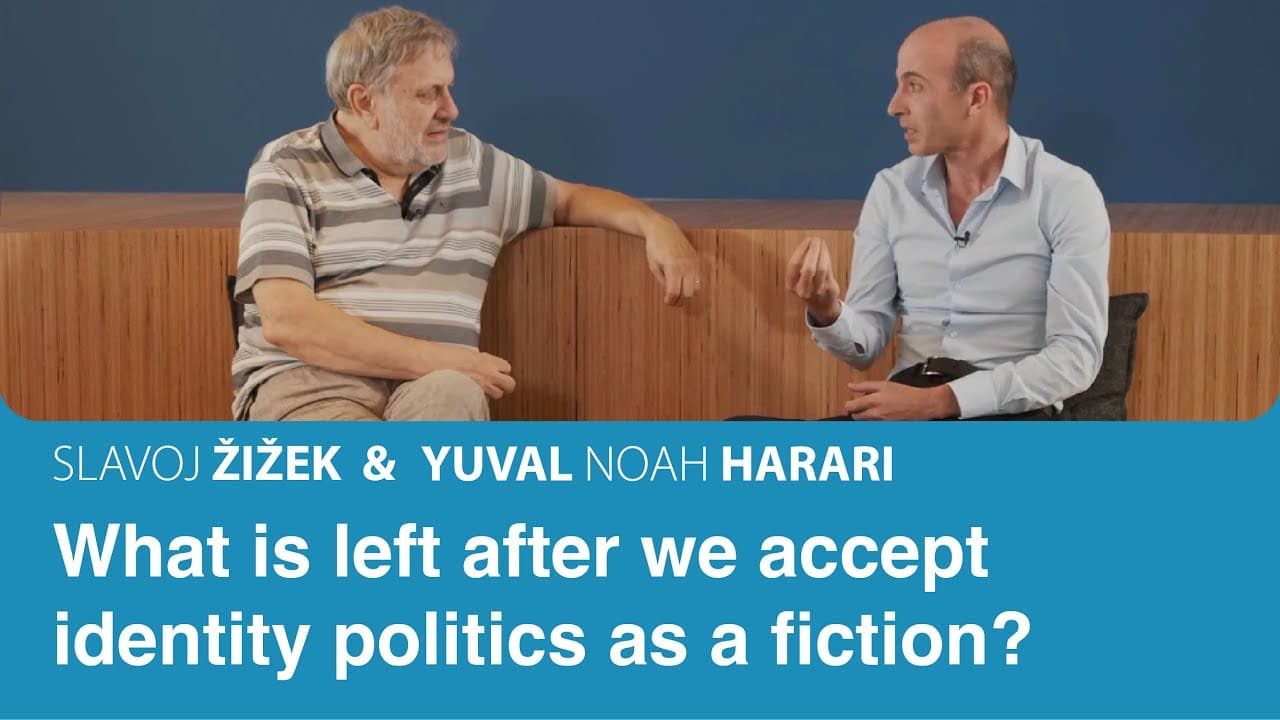
What Comes After Accepting Identity Politics as Fiction?
TL;DR
After accepting that all identities are social fictions, it is essential to take them seriously in order to navigate societal issues effectively. Recognizing the constructed nature of identity allows for a deeper understanding of political correctness and its implications. This acceptance can help us address the complexities of societal narratives without falling into the trap of manipulation by false presuppositions.
Transcript
so maybe building on this this connects to my philosophical question I wanted to ask that what comes after identity in everybody today all the culture of politically correctness but so much of politics is this obsession with identity and basically we all know the answer already everybody knows at least everybody who who really thinks knows that all... Read More
Key Insights
- 👷 Identity is a social and political construct, and all identities are understood to be fictions.
- 🉑 Accepting fictional identities seriously is crucial for understanding and addressing societal issues.
- ❓ Objective truth and neutrality are not always applicable when discussing identity and societal perspectives.
- 🎙️ More videos with Yuval Noah Harari:
Install to Summarize YouTube Videos and Get Transcripts
Explore YouTube Video Summarizer or Get YouTube Transcript Extractor
Questions & Answers
Q: What is the connection between identity and political correctness?
The content suggests that while politics often revolves around identity and the obsession with it, true thinkers understand that all identities are fictions. However, the question remains about what comes after this realization.
Q: How should one approach understanding and accepting fictional identities?
According to the speaker, it is crucial to accept the fictional nature of identities while also taking them seriously. This means acknowledging their existence and impact, even if they are not objectively true.
Q: What is the relevance of truth and objectivity in relation to identity?
The speaker argues that even if some aspects or claims about identities are objectively true, such as in the case of anti-Semitism, it does not negate the fact that identity is constructed and can be used as a means of projecting societal issues onto others.
Q: How does this discussion relate to storytelling and narratives?
The content suggests that storytelling and narratives play a crucial role in shaping our understanding of identity and society. False presuppositions and narratives can be used to sustain dangerous ideologies, even if they are backed by factual evidence.
Summary & Key Takeaways
-
The content discusses the concept of identity and how it is constructed socially and politically.
-
It questions what comes after identity is understood to be fictional and explores the implications of this realization.
-
It emphasizes the importance of accepting fictional identities seriously, even if they are not objectively true.
Read in Other Languages (beta)
Share This Summary 📚
Summarize YouTube Videos and Get Video Transcripts with 1-Click
Try YouTube Summary with ChatGPT & Claude or YouTube Transcript Generator
Explore More Summaries from Yuval Noah Harari 📚






Summarize YouTube Videos and Get Video Transcripts with 1-Click
Try YouTube Summary with ChatGPT & Claude or YouTube Transcript Generator