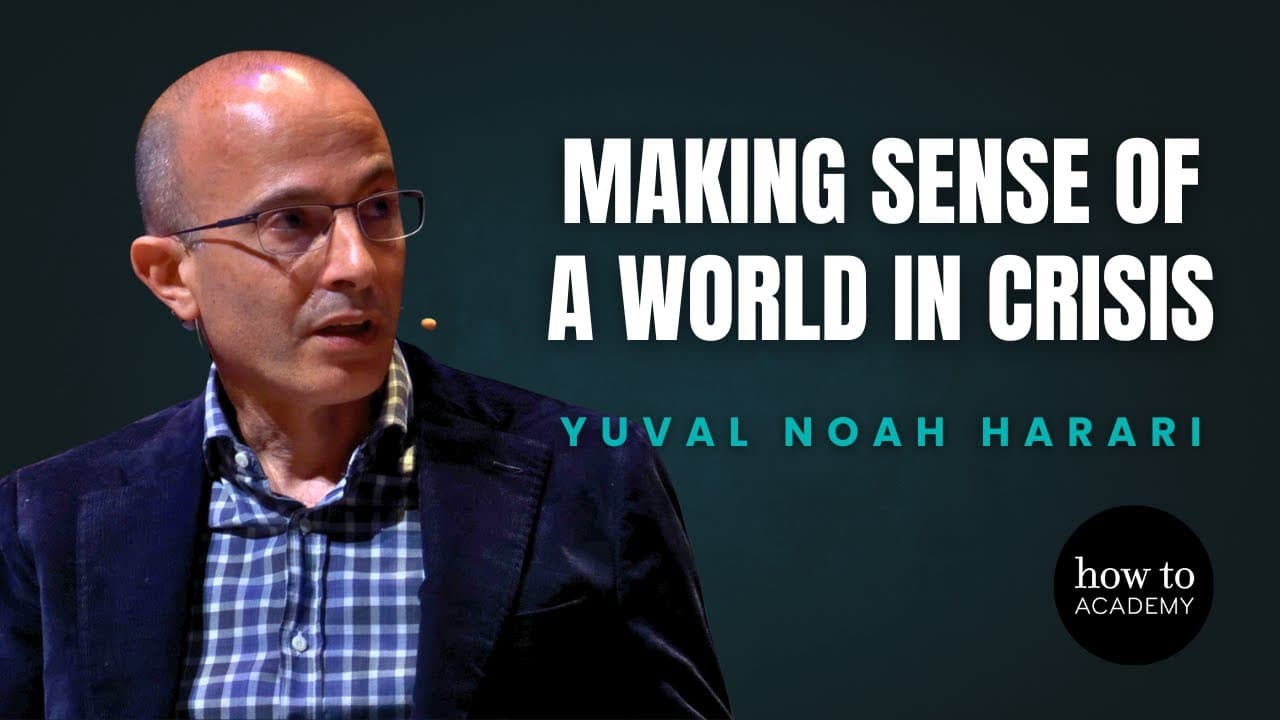
How does AI affect democracy and public talk?
TL;DR
AI and nonorganic systems are accelerating the pace of global change and reshaping public conversation. The talk argues that algorithms harvest our weaknesses to boost engagement, fragment dialogue, and escalate polarization, so banning bots and safeguarding human-led discussion could help restore meaningful discourse.
Transcript
Good evening and welcome everyone. It's wonderful to see the Barbin Hall packed tonight when we're going to be discussing the state of the world, ideas, politics, history with a man who I think has given us all a fair bit to chew on over time. Who hasn't read sapiens in this hall? I bet there's not many of you. Um, Professor Uval Noah Harrari is a ... Read More
Key Insights
- AI and nonorganic systems are responsible for the accelerating pace of global events and the erosion of cycles in society.
- Algorithms act as the new editors by shaping what questions are talked about, not just what is said, influencing public discourse.
- Public conversation is collapsing because platforms optimize engagement, often by exploiting human weaknesses like anger and fear.
- Bots and impersonation are a central threat to truthful online dialogue since they lack free speech rights and can mislead large audiences.
- Humans still drive conversations, but algorithms learn to exploit our biases and emotional triggers to maximize engagement.
- Banishing bots from impersonating humans is presented as a feasible and legitimate step to protect public discourse without banning human expression.
- There is a need to rethink free speech in the digital age, balancing protecting individuals with preventing algorithmic manipulation.
- The core problem identified is not just technology itself but how it is used to determine which questions people discuss and how.
- The speaker suggests that maintaining a focus on credible questions and a slower, more reflective approach to information can help stabilize discourse.
Install to Summarize YouTube Videos and Get Transcripts
Explore YouTube Video Summarizer or Get YouTube Transcript Extractor
Questions & Answers
Q: A real search query question about the video (e.g. 'How to...', 'What is...', 'Why does...', 'When should...'). Question 1
What drives the shift from human to algorithm mediated conversation and why does it matter for democracy? The talk explains that nonorganic agents like algorithms do not need rest and can continuously engage, which pushes public life into an always on mode. This undermines traditional cycles of political and social life, eroding the space for reflection and dialogue that democracy relies on.
Q: Question 2
How do algorithms influence what counts as important in public discourse? The speaker notes that editors decide which questions to discuss and that algorithms are the new editors, determining which topics rise to prominence by boosting engagement rather than presenting balanced coverage. This shifts public attention toward potentially sensational or polarizing issues.
Q: Question 3
Why are bots and impersonation a concern for free speech online? The discussion asserts that bots do not have free speech rights, and when they impersonate humans, they can amplify misinformation and conspiracy theories to vast audiences. Limiting bot impersonation could reduce the spread of harmful content without censoring legitimate human speech.
Q: Question 4
What is the proposed remedy to bot driven manipulation of conversations? The text proposes banning bots from impersonating humans as a technically feasible and legal step. This would separate human communication from automated influence, helping ensure that online discourse remains rooted in human accountability and reducing algorithmic amplification of hate and fear.
Q: Question 5
How does engagement optimization affect the quality of public dialogue? Engagement focused optimization compels platforms to maximize time spent and sharing, which often increases exposure to anger and fear. This dynamic can turbocharge polarization and reduce the likelihood of listening and constructive discussion among users.
Q: Question 6
What is the role of civility and restraint in leadership when facing digital disruption? The speaker emphasizes that if people cannot talk, they resort to fighting, making civil discourse more dangerous. Leaders and public intellectuals should promote dialogue, condemn violence, and foster spaces where facts and questions can be discussed calmly and honestly.
Q: Question 7
What difference does recognizing the question make in public conversation? The key to improving discourse lies in identifying the central questions everyone should be talking about. This awareness helps steer conversations toward meaningful topics rather than chaotic debates driven by sensational content.
Q: Question 8
What is the broader implication for democracy in the age of AI and social media? The talk suggests liberal democracy faces tests from rising extremism and algorithmic mediation. To survive and flourish, humanity must stay rooted in physical reality and avoid overreliance on digital escapes, using technology to enhance, rather than undermine, democratic deliberation.
Summary & Key Takeaways
-
Public dialogue is being eroded as technology moves conversations away from human editors to algorithms that optimize engagement, which can undermine shared understanding.
-
The speaker argues that bots and nonhuman agents distort discourse by impersonating humans and spreading polarizing content, requiring policy actions to protect the integrity of public conversation.
-
A practical path is to separate humans from bots online and to ensure conversations remain grounded in human accountability, while recognizing free speech protections and the limits of censorship.
Read in Other Languages (beta)
Share This Summary 📚
Summarize YouTube Videos and Get Video Transcripts with 1-Click
Try YouTube Summary with ChatGPT & Claude or YouTube Transcript Generator
Explore More Summaries from Yuval Noah Harari 📚
Summarize YouTube Videos and Get Video Transcripts with 1-Click
Try YouTube Summary with ChatGPT & Claude or YouTube Transcript Generator