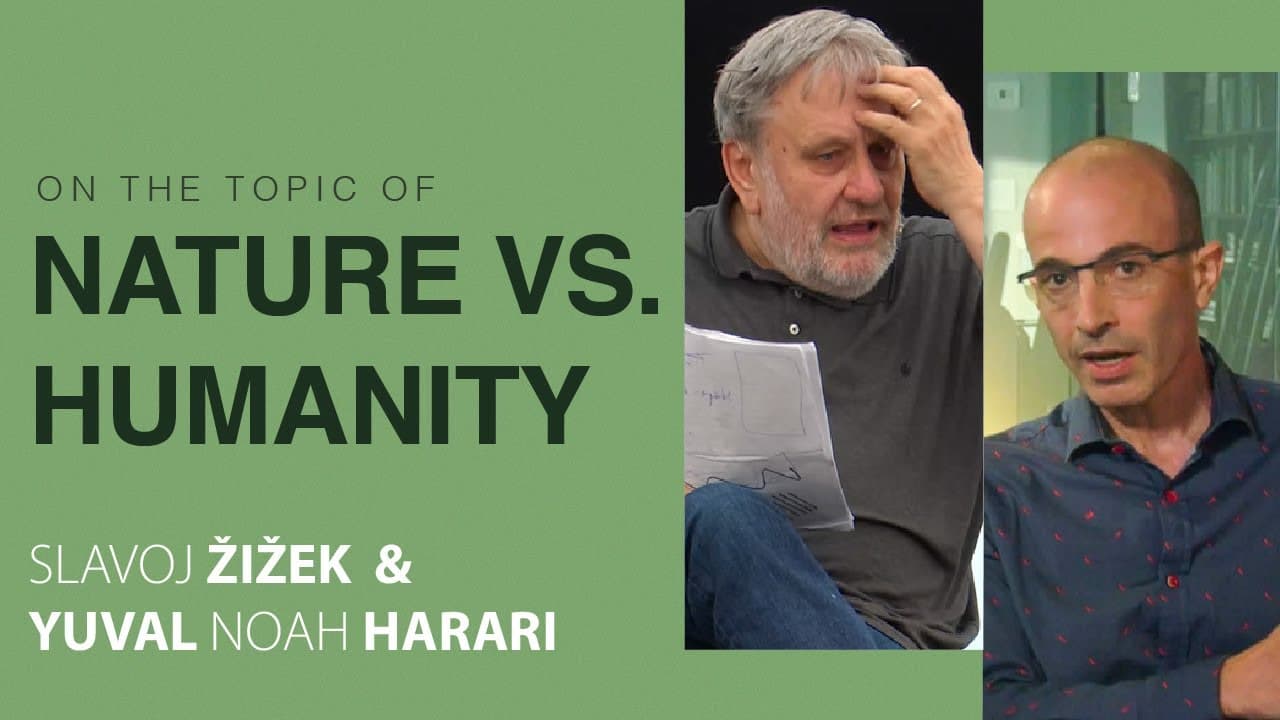
Slavoj Žižek & Yuval Noah Harari | Should We Trust Nature More than Ourselves?
TL;DR
Slavoj Žižek and Yuval Noah Harari argue that neither nature nor humanity deserves automatic trust; actions should instead be judged by the harm and suffering they cause. Harari rejects the natural-versus-artificial divide because genetic engineering, the internet, and vaccinations cannot violate nature’s laws, while Žižek challenges the belief that humans disrupt an otherwise regular natural order. Read on for their reasoning about natural disasters, technology, and ecology.
Transcript
we are here today to discuss nature friend or foe so most think of nature as good while humans and human interventions are often seen as public problematic and even on occasion evil from eradicating e numbers from our diet to refusing vaccines many are motivated by the idea that nature knows best and yet malaria is natural the malaria vaccine is no... Read More
Key Insights
- 🛟 Nature does not have a personal interest in humans and can be deadly, but human actions can save lives from natural disasters.
- ➗ The binary division between humans and nature is false, as everything that is possible is natural.
- ☸️ It is important to be skeptical of both humans and nature and focus on actions that minimize harm and suffering.
- ❓ Moderation and considering the consequences are crucial when utilizing natural resources.
- 🤨 The potential creation of inorganic life forms raises ethical questions about responsibility and unintended consequences.
- 🤯 Manipulating nature can have unintended consequences due to the complexity of ecosystems and the human mind.
- 🎮 Enslavement by technology and the division between those who control and those who are controlled is a potential consequence.
Install to Summarize YouTube Videos and Get Transcripts
Explore YouTube Video Summarizer or Get YouTube Transcript Extractor
Questions & Answers
Q: Should we trust nature more than ourselves?
No, Harari says we should be suspicious of both humans and nature. Instead of asking whether something is natural, he argues that we should ask whether it causes harm or suffering.
Q: Why does Yuval Noah Harari say nature does not care about humans?
Harari says nature has no particular concern for humanity. If an asteroid destroyed all life on Earth, planets, stars, and physics would simply continue.
Q: Is there a real distinction between natural and artificial things?
Harari rejects this binary distinction because humans cannot violate the laws of nature. Anything possible, including genetic engineering, the internet, and vaccinations, is therefore natural by definition.
Q: How are the laws of nature different from laws made by governments?
A government may set a speed limit of 90 kilometers per hour, while a driver can still travel at 120 and receive a fine. Harari says natural laws do not work that way: people cannot break them and then be punished by nature for the violation.
Q: Why is something natural not necessarily good?
The discussion cites malaria, hurricanes, and tsunamis as natural but deadly. Harari also notes that wars are natural while still being bad, showing that naturalness is not a moral standard.
Q: How should human interventions such as vaccines be judged?
They should be judged by whether they cause harm or suffering, not by whether they are labeled natural or unnatural. The discussion contrasts natural malaria with a non-natural malaria vaccine and notes that human action can extend and save lives.
Q: Why does Slavoj Žižek reject the idea of a balanced natural order?
Žižek argues that people commonly imagine nature as following a regular pattern or rhythm that excessive human exploitation disrupts. He rejects that picture and points to coal and oil as products of enormous natural catastrophes.
Q: Why does Harari consider climate change bad?
Harari says climate change is bad because it could cause immense suffering to humans and other sentient beings. He does not condemn it for being against nature, since he maintains that everything possible is natural.
Summary & Key Takeaways
-
Nature does not care about humans and can be deadly, but humans can also save lives from natural disasters.
-
The binary division between humans and nature is false, as everything that is possible is natural.
-
The focus should be on whether actions cause harm or suffering, rather than whether they are natural or unnatural.
Read in Other Languages (beta)
Share This Summary 📚
Summarize YouTube Videos and Get Video Transcripts with 1-Click
Try YouTube Summary with ChatGPT & Claude or YouTube Transcript Generator
Explore More Summaries from Yuval Noah Harari 📚

Summarize YouTube Videos and Get Video Transcripts with 1-Click
Try YouTube Summary with ChatGPT & Claude or YouTube Transcript Generator