The return of wars, explained | Yuval Noah Harari
TL;DR
Wars are returning because the global liberal order that made the early 21st century the most peaceful era in history is collapsing, according to Yuval Noah Harari. Built by the US after World War II through alliances and institutions promoting human rights and free trade, that order now shows three fatal flaws and is being pulled apart by populism and a shift to a multipolar world. Read on for how each force turns cooperation back into chaos.
Transcript
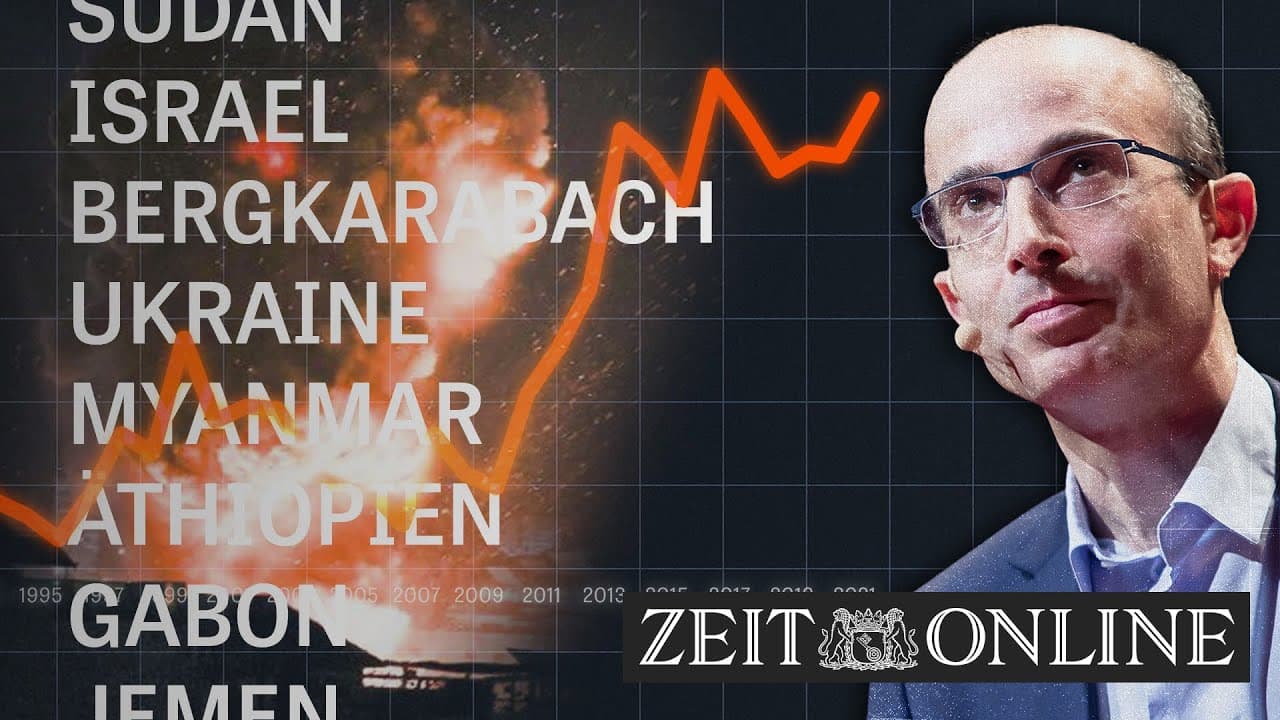
the number of escalating conflicts worldwide is increasing even though 10 years ago the Israeli historian je Noah Harari wrote never before has peace been so prevalent that people could not even imagine War in the early 21st century uh largely thanks to the global liberal order Humanity has experienced the most peaceful and prosperous era in histor... Read More
Key Insights
- 🥶 The global liberal order, established after World War II, aimed to promote peace, human rights, and free trade.
- 🪈 The order's fatal flaws include the invasions of Iraq and Afghanistan, nationalism in Western democracies, and economic inequality.
- 🌐 Populism attacks the global order by prioritizing national interests and restricting international cooperation.
- ✊ The shift towards multipolar power dynamics has led to a less stable global order, with emerging powers challenging the influence of traditional superpowers.
- ™️ The decline of the global liberal order is marked by the collapse of free trade deals, fragmentation of alliances, and decreasing indexes for globalization, free trade, and democratization.
- 🌐 Global cooperation is essential to addressing challenges such as regional conflicts, climate change, and technological disruptions.
- 🎙️ More videos with Yuval Noah Harari:
Install to Summarize YouTube Videos and Get Transcripts
Explore YouTube Video Summarizer or Get YouTube Transcript Extractor
Questions & Answers
Q: Why are wars returning around the world?
Harari argues the global liberal order that kept great powers from fighting is being attacked and destroyed, and when there is no order the result is chaos, violence, and spreading conflict. Experts describe a cascade of wars in places like Ukraine, Sudan, and Israel, with worldwide war casualties increasing. Two theories, populism and polarity, dominate the debate over why the system stopped working.
Q: What is the global liberal order?
After the Second World War the US set up a complex system of alliances and institutions, using its strongest military and economy to safeguard global stability. Member states committed to universal liberal values, cooperated on human rights and free trade, and stopped fighting wars of conquest. It was so successful that people take for granted that great powers no longer fight world wars.
Q: What are the three fatal flaws of the global liberal order?
First, the invasions of Iraq and Afghanistan proved that even US military might cannot enforce sustainable regime change. Second, growing parts of Western populations reacted with nationalism to refugees from North Africa and the Middle East. Third, a globalized economy brought job losses and income inequality to the US and Europe as China rose. All three led to a rise in populism.
Q: How does populism attack the world order?
Populism centers on a strong leader who supposedly must protect the nation from outsiders, which requires restricting civil society, the justice system, and the media. In the populist mind, any global cooperation is almost like treason. Harari warns that dividing society and dismantling the state creates danger, because when you need the state most it will no longer be there.
Q: What is the difference between multipolar, bipolar, and unipolar systems?
In a multipolar system three or more countries each pursue their own desires, and shifting alliances can plunge the system into chaos, as with the Thirty Years War and both World Wars. A bipolar system pits two roughly equal powers against each other, stable in theory but producing proxy wars like Korea, Vietnam, and Afghanistan during the Cold War. After the Cold War the US became the sole superpower in a unipolar system.
Q: Are we living in a multipolar world now?
Many experts say we have already lived in a less stable multipolar world for many years and are no longer in a unipolar one. They point to the trade influence of the EU, China's great power ambition, the potential of India's population, and forces like climate change and migration as poles. Harari notes that giving new powers like India and Brazil a greater say is not necessarily a bad thing.
Q: What signs show the global liberal order is declining?
The international system is fragmenting: free trade deals fail, autocrats like Turkey's Erdogan impede unity in NATO, and actual allies no longer vote alongside each other in the UN General Assembly. Worldwide indexes for globalization, free trade, and democratization are stagnating or falling. Harari says the order is in disarray if not collapse, replaced by chaos and violence.
Q: What does Harari say is the solution?
Harari stresses that humans control the planet not because individuals are especially smart or good, but because we know how to cooperate. He argues that global cooperation is essential to address regional conflicts, climate change, and technological disruption. Simply attacking universal liberal values and institutions without replacing them with an alternative set of universal norms is, in his words, a recipe for global disaster.
Summary & Key Takeaways
-
The global liberal order, established after World War II, aimed to promote peace, human rights, and free trade through alliances and institutions.
-
The order has been challenged by the invasions of Iraq and Afghanistan, nationalism in Western democracies, and economic inequality.
-
The rise of populism and the shift towards multipolar power dynamics have further destabilized the global order and led to increasing conflicts.
Read in Other Languages (beta)
Share This Summary 📚
Summarize YouTube Videos and Get Video Transcripts with 1-Click
Try YouTube Summary with ChatGPT & Claude or YouTube Transcript Generator
Explore More Summaries from Yuval Noah Harari 📚

Summarize YouTube Videos and Get Video Transcripts with 1-Click
Try YouTube Summary with ChatGPT & Claude or YouTube Transcript Generator