How did New Amsterdam become New York in the 1600s?
TL;DR
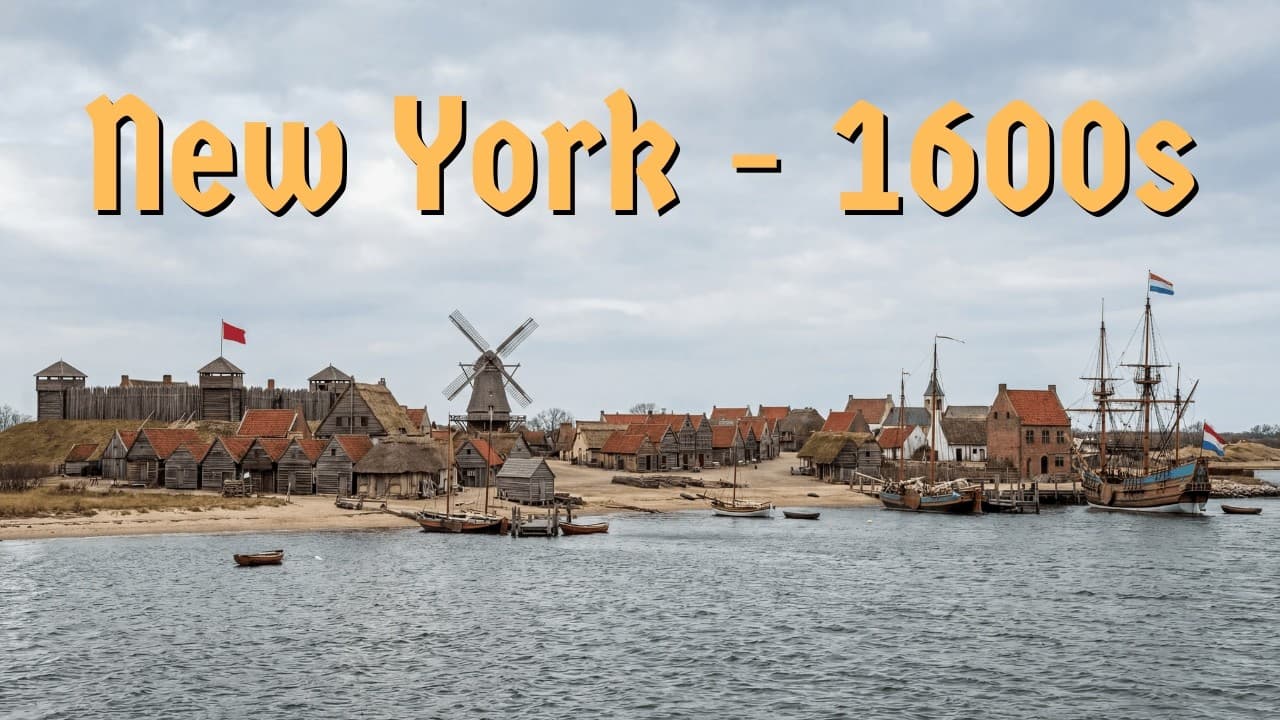
New York began as a Dutch trading post named New Amsterdam and transformed into English New York through a quiet series of exchanges and military moments. The video traces Fort Amsterdam, the growth of the dock, Wall Street, and the blending of Dutch, English, African, and Native residents as the city moved toward a major Atlantic port.
Transcript
In the 1600s, the island at the mouth of the Hudson shifted like a frontier wind. First a modest [music] Dutch trading post called New Amsterdam. Then a coveted foothold for rival empires. Wooden houses, [music] muddy lanes, and a stout little fort framed its early life. When English ships loomed offshore, the colony [music] changed hands without a... Read More
Key Insights
- New Amsterdam began as a modest Dutch foothold guarding the harbor and grew through labor and timber building.
- The 1664 takeover changed sovereignty from Dutch to English, rebranding the city as New York and shifting its geopolitical alignment.
- Treaties in the 1660s and 1670s swapped control multiple times, yet the English identity began to solidify while Dutch influence lingered in the streets and structures.
- Fort Amsterdam acted as the colony's shield and boundary, symbolizing early authority and the intent to sustain settlement.
- The Wall mentioned in the descriptions marks a northern edge later known as Wall Street, indicating the evolving urban plan and defense strategy.
- Enslaved Africans were brought into New Amsterdam, becoming part of the labor system tied to the docks, farms, and households, shaping early economy.
- By 1680 the city showed a blend of Dutch architectural traits with English additions, indicating a gradual cultural transition while remaining a cosmopolitan port.
- The population growth and the development of a busy Great Dock reflect New York expanding into a major Atlantic trade hub as rule shifted between empires.
Install to Summarize YouTube Videos and Get Transcripts
Explore YouTube Video Summarizer or Get YouTube Transcript Extractor
Questions & Answers
Q: How did New Amsterdam become New York under English rule?
New Amsterdam became New York after English ships arrived, the fort surrendered with little resistance, and the colony transferred to English control. The Treaty of Brada in 1667 confirmed the transfer, ending Dutch hopes of reclaiming the settlement and establishing English governance, laws, and identity while Dutch influences persisted in the built environment.
Q: What structures defined early New Amsterdam and its defense?
Fort Amsterdam stood as the colony's shield at the southern tip of Manhattan, a timber and earth palisade guarding the harbor. This early fortification defined the town's defensive posture and its intended permanence, guiding settlement growth and trade routes while signaling imperial ambitions to rival powers.
Q: What role did Wall Street play in the 1600s settlement?
The defensive wall along the northern edge of the settlement marked the line between defended port and wilderness, later transforming into a street that would become Wall Street. This boundary influenced urban planning, trade access, and the evolution of the port economy as the town expanded.
Q: How did treaties influence control of the colony in the 17th century?
Treaties in 1667 and subsequent agreements formalized shifts of control between Dutch and English authorities. These diplomatic arrangements redirected sovereignty without major conflict, enabling a smoother transition of governance while reshaping the colony’s laws, loyalty, and future under new imperial leadership.
Q: Who comprised the population of New Amsterdam in the 1600s?
The population was diverse, including Dutch settlers, English administrators, enslaved Africans, Native peoples, and a growing mix of merchants, laborers, and families. This diverse demographic contributed to the city’s labor force, cultural exchanges, and the evolving social and economic dynamics of an emerging port.
Q: What economic activities defined New Amsterdam’s early growth?
Early growth centered on harbor trade, the West India Company warehouses, and a growing dock system that handled sugar, furs, and tobacco. Labor, logging, and building with timber supported a bustling port economy, while European and African labor underpinned daily life and commerce in the frontier settlement.
Q: How did architecture reflect cultural transition in 17th century New York?
Even under English rule, Dutch architectural influence persisted with steep gables and brick facades, while English elements like sash windows and broader chimneys began appearing. This architectural blend signaled a cultural transition, where the city retained its Dutch roots while gradually adopting English styles and urban planning.
Q: What is the significance of Fort Amsterdam and its later transformations?
Fort Amsterdam was central to early defense and trade in the settlement, symbolizing Dutch authority and the strategic aim to control the harbor. Its transformation and replacement by English governance marked the transition of power and identity, illustrating how the city adapted to changing imperial control while preserving its commercial core.
Summary & Key Takeaways
-
The early settlement started as New Amsterdam, a Dutch trading post defending its harbor and expanding through backbreaking labor and timber construction.
-
The English takeover in 1664 and subsequent treaties redirected control, naming the city New York and embedding English rule while Dutch influence persisted in architecture and street patterns.
-
By the late 17th century, the city was growing under English rule with ports, docks, and a mixed population forming the basis of a bustling Atlantic port.
Read in Other Languages (beta)
Share This Summary 📚
Summarize YouTube Videos and Get Video Transcripts with 1-Click
Try YouTube Summary with ChatGPT & Claude or YouTube Transcript Generator
Explore More Summaries from Matt Reconstructs History 📚

Summarize YouTube Videos and Get Video Transcripts with 1-Click
Try YouTube Summary with ChatGPT & Claude or YouTube Transcript Generator