How to Build a Bulletproof Mindset with 10 Habits
TL;DR
Belief comes from evidence gathered through real experiences, not just positive thinking. You build it by recording hard things you survived, taking small deliberate steps toward discomfort, and testing predictions to reduce fear. This creates a growing file that helps you withstand pressure without breaking.
Transcript
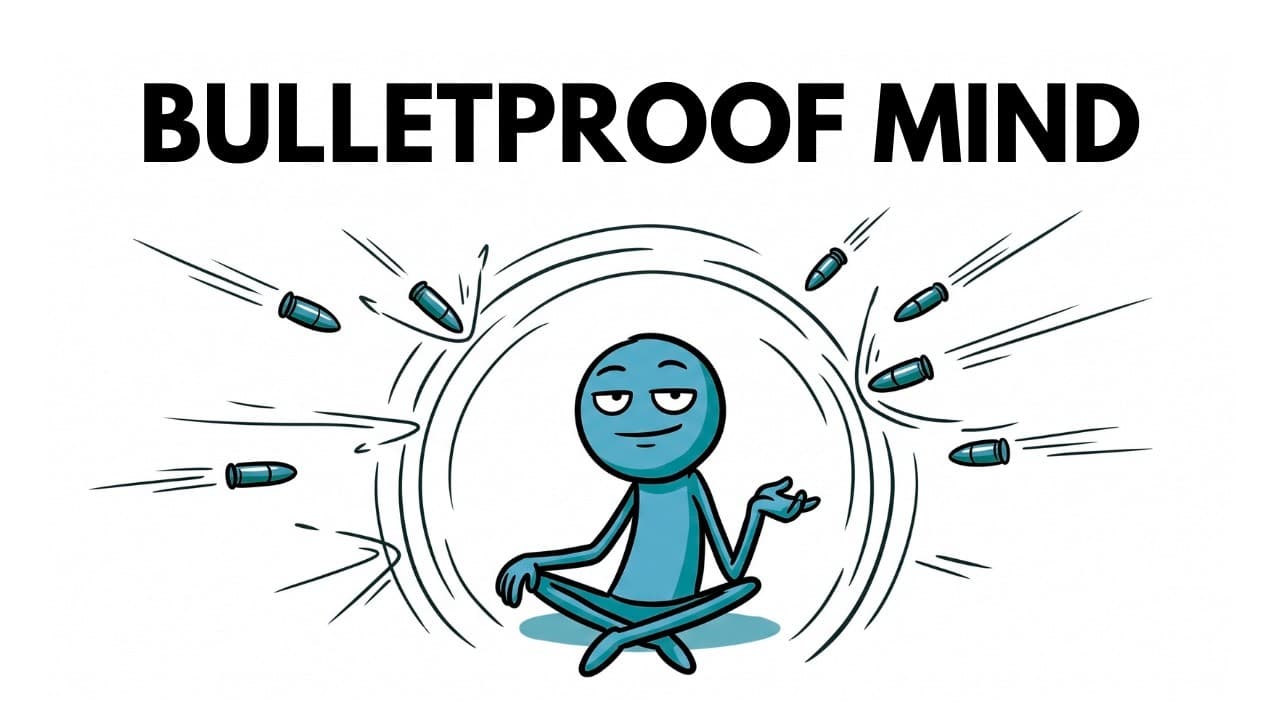
Everybody wants a bulletproof mindset, but almost nobody knows what the word actually means. A bulletproof mindset does not stop bullets. Nothing does. What it does instead is take the force that was about to arrive at one small point and spread it across a wide plate, so instead of a hole, you get a bruise. The energy still shows up. You still fee... Read More
Key Insights
- Evidence is the foundation of confidence, not mere belief.
- Bulletproof mindsets rely on recording hard things survived to build a usable file.
- Small, consistent challenges beat waiting for a big catastrophe for mastery.
- Worries are testable predictions when written with dates to audit outcomes.
- Pre-mortems turn fear into a concrete action plan with countermeasures.
- Seeking feedback helps revise worst case assumptions and improves self view.
- Naming bodily sensations separates physiology from mental verdicts and reduces misinterpretation.
- Spreading the load prevents a single hit from collapsing the entire system.
Install to Summarize YouTube Videos and Get Transcripts
Explore YouTube Video Summarizer or Get YouTube Transcript Extractor
Questions & Answers
Q: How can I start building a bulletproof mindset today
Begin by writing down one hard thing you survived this week or month. This creates your first entry in a personal file of evidence. Then pick a small task you have been avoiding, such as making one difficult call or sending one message, and complete it. These tiny steps add up to a growing record that audits your beliefs with real results.
Q: What makes mastery experience more powerful than belief
Mastery experience is powerful because it is earned through actually doing the thing, not just thinking you can. Albert Bandura identified it as the strongest source of self efficacy, and the video explains that evidence, not belief alone, shapes how you respond to pressure. Repeated successful experiences reinforce your capacity to handle future challenges.
Q: Why is it important to record hard things you survived
Recording hard things creates a tangible file your mind can consult at 3:00 am when doubt arises. It prevents negative predictions from becoming permanent beliefs by providing concrete data of what you handled. This makes your self narrative evidence based rather than fear based, strengthening resilience over time.
Q: How should I approach small daily discomforts
Focus on the smallest real rep of a difficult thing you have been avoiding. Ten minutes on the task, one message sent, or a small habit completed still adds a data point to your file. Consistency matters more than scale because the file records progress toward discomfort, not perfection.
Q: What is a pre mortem and how does it help
A pre mortem asks you to imagine a future failure as if it happened, then identifies reasons and countermeasures. This shifts thinking from fear to action, producing a concrete list of steps you can take. It improves decision making by turning uncertainty into a plan you can execute by Friday.
Q: How can feedback improve my mental model under pressure
Seeking feedback under pressure challenges your worst assumptions and updates your file with external perspectives. Studies show that a stress minded approach makes people more open to feedback, which clarifies where you are really standing and how to adjust your actions to perform better in the moment.
Q: Why use your own name when talking about stress
Processing stressful situations with your own name or you instead of I lowers emotional reactivity and creates distance. This practice helps you articulate a clearer plan rather than spiraling, enabling faster, calmer responses under pressure and a quicker return to productive action.
Q: How do I interpret bodily sensations without overreacting
Name the sensation in physical terms, such as fast heartbeat or tight chest, and avoid turning it into a story about your worth. This creates a neutral data point in your file, which reduces the risk that physiology becomes a verdict about your abilities and lets you act despite the jitters.
Summary & Key Takeaways
-
A practical framework is presented that reframes belief as an output drawn from a file of past experiences. It emphasizes three groups of work: collecting evidence, testing predictions, and spreading the load to avoid a single point of failure. The core idea is to earn conviction through proven results.
-
The video highlights four sources of evidence for self efficacy and explains why mastery experiences matter more than belief alone. It also introduces concrete habits for recording wins, shrinking promises, and using distance self talk to lower physiological reactivity under stress.
-
The message is to audit your mental model regularly, collect small wins, and test what your mind predicts. By doing so, you convert fear into actionable steps and strengthen resilience over time.
Read in Other Languages (beta)
Share This Summary 📚
Summarize YouTube Videos and Get Video Transcripts with 1-Click
Try YouTube Summary with ChatGPT & Claude or YouTube Transcript Generator
Explore More Summaries from PsychToons 📚
Summarize YouTube Videos and Get Video Transcripts with 1-Click
Try YouTube Summary with ChatGPT & Claude or YouTube Transcript Generator