How AI Helps Lawyers Research and Draft Documents
TL;DR
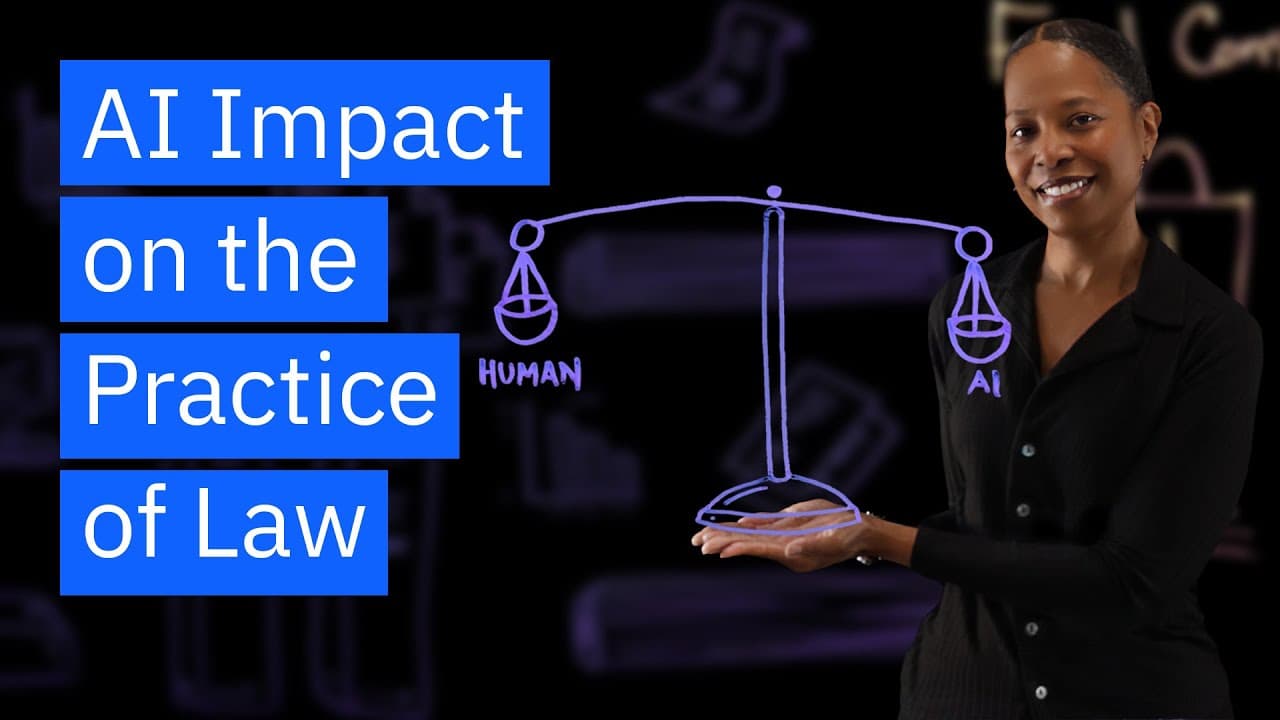
AI assists lawyers by extracting facts from digital data, performing targeted legal research, and drafting initial documents, while human lawyers review and ensure confidentiality. It speeds information gathering, clarifies how statutes, regulations, and case law apply, and helps predict case strengths, but must be used with professional responsibility and client privacy in mind.
Transcript
As a lawyer, I deal with a lot of information from the facts related to a client's case, to statutes and regulations and case law. It can be really overwhelming. But it's not just lawyers, it's all of us. As we live in this digital age, more and more information is accumulating. Whether you're a teacher or a we're all dealing with information overl... Read More
Key Insights
- AI helps gather facts from electronically stored information more efficiently, aiding lawyers in the discovery process.
- Generative AI tools improve search precision and offer nuanced interpretations of law, including potential arguments and counterarguments.
- AI should augment, not replace, lawyers; human judgment remains essential at every step and ethical rules must be observed.
- Lawyers must review AI outputs to ensure accuracy and alignment with client objectives before using them in practice.
- Privacy and confidentiality are critical when using AI tools, requiring vigilance over governance and model safeguards.
- Lawyers need to understand the limitations of AI and be prepared to validate outputs against reliable sources.
- AI can aid in analyzing strengths and weaknesses of cases, including predicting outcomes under various factors like jurisdiction and judge, but should be used cautiously.
- The process of using AI in law involves gathering facts, researching law, analyzing the law and facts, and drafting documents, all under professional responsibility constraints.
- More videos from this channel:
- More from this channel: IBM Technology
Install to Summarize YouTube Videos and Get Transcripts
Explore YouTube Video Summarizer or Get YouTube Transcript Extractor
Questions & Answers
Q: What is the role of AI in gathering facts for legal cases
AI helps lawyers gather facts by processing large volumes of data from case files, client information, and electronically stored information. It can extract relevant details more efficiently, enabling faster issue spotting and better problem framing while ensuring that the information stays within the bounds of professional confidentiality and client protections.
Q: How does AI improve legal research for statutes, regulations, and cases
AI tools use natural language processing to provide more precise search results and nuanced analysis of the law, including statutes, regulations, and case law. They can suggest potential arguments and interpretations, but lawyers must verify accuracy because AI may hallucinate or produce non-existent authorities, which would violate professional obligations.
Q: Can AI replace lawyers in the practice of law
No, AI cannot replace lawyers. Generative AI should augment a lawyer’s work by handling repetitive tasks and data processing, while human judgment, professional responsibility, and client-specific needs must guide every step. The human lawyer remains essential to validate, refine, and ethically apply AI-generated outputs.
Q: What is the role of the lawyer in drafting documents when using AI
A lawyer uses AI for initial drafting of documents but must thoroughly review, refine, and tailor them to the client’s needs. The lawyer’s expertise, judgment, and ethical responsibilities cannot be delegated to AI, ensuring accuracy, compliance with rules, and appropriate client representation.
Q: Why are privacy and governance important when using AI in law
Privacy and governance are critical because lawyers have an ethical obligation to protect client confidentiality. Understanding AI governance systems and model safeguards helps ensure that sensitive information is handled securely and in accordance with professional standards, reducing the risk of data leaks or misuse.
Q: What limitations of AI should lawyers be aware of
Lawyers should be aware that AI tools may hallucinate, misrepresent authorities, or produce erroneous conclusions. They must independently verify the accuracy of AI outputs against reliable sources and apply professional judgment to determine whether the results are valid and useful for advising clients.
Q: How does AI analysis support case strategy and predictions
AI can help analyze strengths and weaknesses of cases by considering factors like case type, jurisdiction, and even the judge. This supports strategic planning and scenario testing, but predictions must be treated cautiously and always complemented by human expertise and ethical considerations.
Q: What are the key steps in using AI throughout a legal project
Key steps include gathering facts with AI tools, performing targeted legal research, identifying relevant law, analyzing the facts and law, and drafting documents with AI assistance. At each step, a lawyer reviews outputs, ensures confidentiality, and applies professional judgment to align with client needs.
Summary & Key Takeaways
-
AI accelerates fact gathering from electronic data and standard documents, enabling more efficient case preparation while maintaining client confidentiality under professional rules.
-
AI enhances legal research by providing precise search results and nuanced analysis of statutes, regulations, and case law, but requires careful validation to avoid hallucinations and unsupported arguments.
-
AI assists with initial drafting of documents, but final versions must be refined by a lawyer who applies judgment, ethics, and client-specific needs.
Read in Other Languages (beta)
Share This Summary 📚
Summarize YouTube Videos and Get Video Transcripts with 1-Click
Try YouTube Summary with ChatGPT & Claude or YouTube Transcript Generator
Explore More Summaries from IBM Technology 📚





Summarize YouTube Videos and Get Video Transcripts with 1-Click
Try YouTube Summary with ChatGPT & Claude or YouTube Transcript Generator