What Happened in the Tianjin Supercomputer Hack?
TL;DR
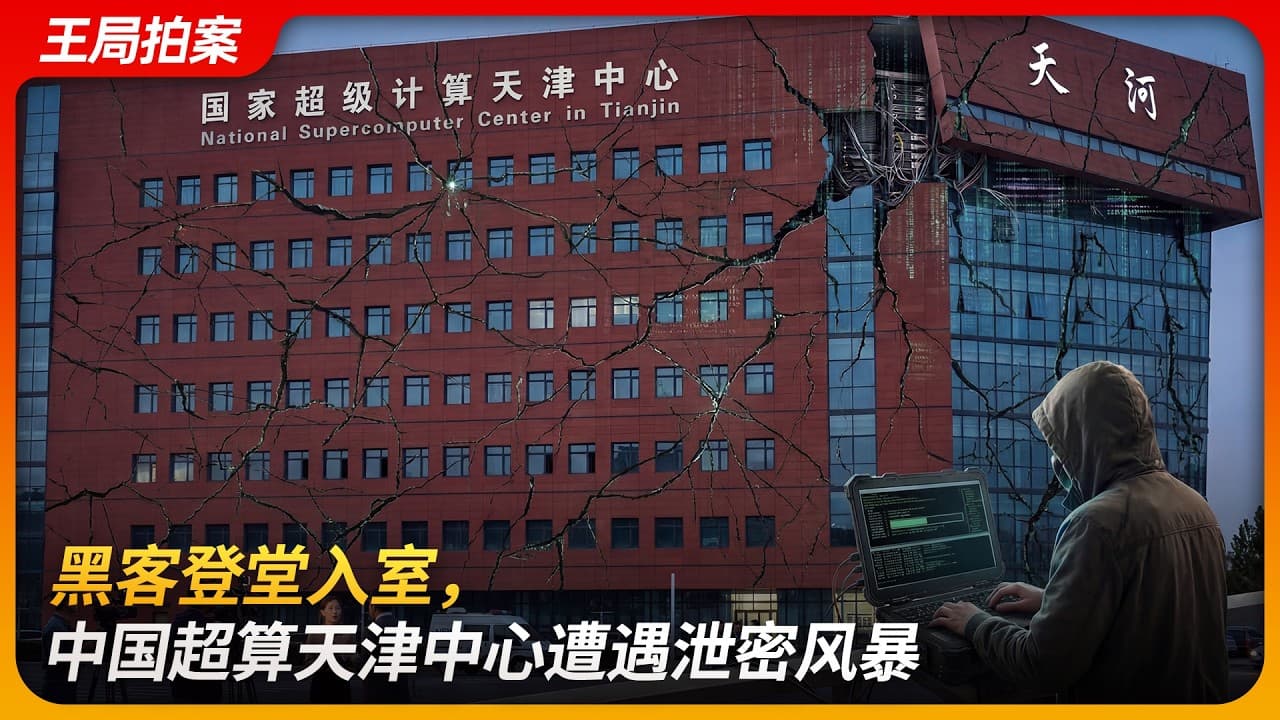
A hacker using the name BlazingChina claimed to have stolen 10 petabytes from the National Supercomputing Center in Tianjin and offered the material on a darknet forum. Circulating samples allegedly include a confidential military damage-assessment report and directories naming aviation, submarine, and weather organizations, but the transcript provides no independent verification of the full breach or its claimed scale.
Transcript
Another huge story just dropped. The National Supercomputing Center in Tianjin, China got hacked. Supposedly, hackers stole 10 petabytes of data and dumped it onto the outside internet. So here's how it started. On February 6th this year, a hacker calling himself BlazingChina posted an ad on a darknet forum. He claimed that he had completely breach... Read More
Key Insights
- The central allegation is that BlazingChina completely breached the National Supercomputing Center in Tianjin and removed 10 petabytes of information. The transcript treats circulated samples as strong evidence of unauthorized access, but it does not independently establish that the entire claimed collection exists.
- The alleged data sale began on February 6 through a specialized darknet forum. BlazingChina requested $3,000 for access to the directory listing and offered the full collection as a single package, with bidding starting at 10 monero and the highest bidder expected to win.
- The claimed collection would require extraordinary storage capacity because 10 petabytes equals 10,000 terabytes, or roughly 10 million gigabytes. The transcript cites an estimate of around $1 million merely to purchase enough hard drives, sharply limiting the plausible pool of buyers.
- The leaked directory allegedly names institutions involved in strategically important work, including COMAC, organizations under AVIC, submarine research departments, and weather forecasting units. Their presence suggests that the center may have held simulation data spanning civilian engineering, national infrastructure, and defense-related research.
- A circulated report is described as confidential for 10 years and dated December 2025. It reportedly concerns target-damage assessment models and tools, and the transcript identifies its author, Yang Kangkun, as both a National University of Defense Technology professor and director of the Tianjin center.
- The reported military research models missile effects against aircraft carriers and hardened concrete bunkers. According to the transcript, it describes seven carrier deck levels, a hull beneath them, a 25-millimeter steel warhead casing, 241 kilograms of explosives, impact locations, penetration, and resulting damage.
- The Tianjin center is presented as China's earliest national supercomputing center, established in 2009. It developed Tianhe-1 through a national high-technology research program, with the project reportedly costing 600 million yuan and using 103 equipment racks before later systems advanced toward exaflop-level computing.
- Supercomputers support engineering by calculating complex models before or alongside physical testing. The transcript describes applications including weather prediction, aircraft aerodynamics, material fatigue, stealth characteristics, radar cross-section, submarine hydrodynamics, acoustic properties, detection characteristics, and simulations of missile-strike damage.
Install to Summarize YouTube Videos and Get Transcripts
Explore YouTube Video Summarizer or Get YouTube Transcript Extractor
Questions & Answers
Q: What allegedly happened to the Tianjin supercomputing center?
A hacker calling himself BlazingChina claimed to have completely breached the National Supercomputing Center in Tianjin and extracted 10 petabytes of data. He advertised the collection on a darknet forum, and samples later circulated on Twitter. The transcript considers a confidential technical report persuasive evidence of unauthorized access, although it does not independently verify the entire 10-petabyte claim.
Q: How did BlazingChina try to sell the alleged stolen data?
BlazingChina posted an advertisement on February 6 in a specialized darknet forum. He reportedly asked buyers to pay $3,000 to inspect the directory listing, while offering the complete data collection as one package with bidding beginning at 10 monero. The seller promoted it for nearly two months, but the transcript says there appeared to be little buyer interest.
Q: Why would 10 petabytes of stolen data be difficult to sell?
Ten petabytes equals 10,000 terabytes, or approximately 10 million gigabytes, making the collection unusually expensive and difficult to store. The transcript cites an estimate of around $1 million for enough hard drives. It argues that ordinary buyers would have little reason or capacity to acquire it, leaving only extremely well-resourced organizations as plausible customers.
Q: What institutions allegedly appeared in the leaked directory?
The directory reportedly included COMAC, organizations under China's aviation industry conglomerate AVIC, departments involved in submarine research, and weather forecasting units. The transcript connects some aviation organizations to passenger aircraft and advanced fighter development. Because these institutions depend on computational modeling, their files could contain sensitive engineering parameters, simulation results, or research documentation.
Q: What was contained in the circulated confidential report?
The circulated document was described as a technical architecture report for research involving target-damage assessment models and tools. It reportedly modeled missile strikes against aircraft carriers and hardened concrete bunkers, including carrier deck structure, impact locations, penetration, and destructive effects. The transcript also mentions a 25-millimeter steel warhead casing containing 241 kilograms of explosives.
Q: Who reportedly authored the leaked military research document?
The transcript identifies the author as Yang Kangkun, describing him as a professor at the National University of Defense Technology and the director of the National Supercomputing Center in Tianjin. The document was reportedly written in December 2025 and marked confidential for 10 years. Its connection to the center's director is presented as important evidence supporting the leak allegation.
Q: What does the Tianjin supercomputing center do?
The center supplies large-scale computing power for complex scientific and engineering calculations. Examples in the transcript include weather models, aircraft aerodynamics, material fatigue, stealth characteristics, radar cross-section, submarine hydrodynamics, acoustic and detection characteristics, and military damage assessment. These calculations allow researchers to evaluate many parameters through simulation before or alongside expensive physical testing.
Q: Why could leaked supercomputer data affect aircraft projects?
Aircraft development relies on computational models covering aerodynamic layouts, material fatigue, stealth performance, radar cross-section, and other engineering characteristics. The transcript argues that competitors examining such data could identify design weaknesses or judge a project's prospects. For civilian aircraft such as the C919 and C929, disclosed flaws could also complicate efforts to obtain certification in Europe or the United States.
Summary & Key Takeaways
-
On February 6, BlazingChina advertised an alleged breach of the Tianjin supercomputing center on a specialized darknet forum. The hacker claimed to possess 10 petabytes, charged $3,000 to view a directory listing, and offered the complete collection with bidding beginning at 10 monero, but reportedly attracted little commercial interest.
-
Sample material later circulated on Twitter and reportedly showed directories connected to COMAC, AVIC organizations, submarine research, and weather forecasting. One widely shared document was described as a confidential December 2025 technical report by Yang Kangkun concerning computational models for assessing missile damage against aircraft carriers and hardened concrete bunkers.
-
The Tianjin center was established in 2009 by the National University of Defense Technology and Tianjin's Binhai New Area. Its supercomputers support intensive calculations for weather forecasting, aircraft engineering, military aviation, and submarine research, making any authentic disclosure of models, parameters, or simulation results potentially consequential for affected institutions.
Read in Other Languages (beta)
Share This Summary 📚
Summarize YouTube Videos and Get Video Transcripts with 1-Click
Try YouTube Summary with ChatGPT & Claude or YouTube Transcript Generator
Explore More Summaries from 王志安 📚

Summarize YouTube Videos and Get Video Transcripts with 1-Click
Try YouTube Summary with ChatGPT & Claude or YouTube Transcript Generator