How Amazon Grew From a Garage Bookstore to $1.6T
TL;DR
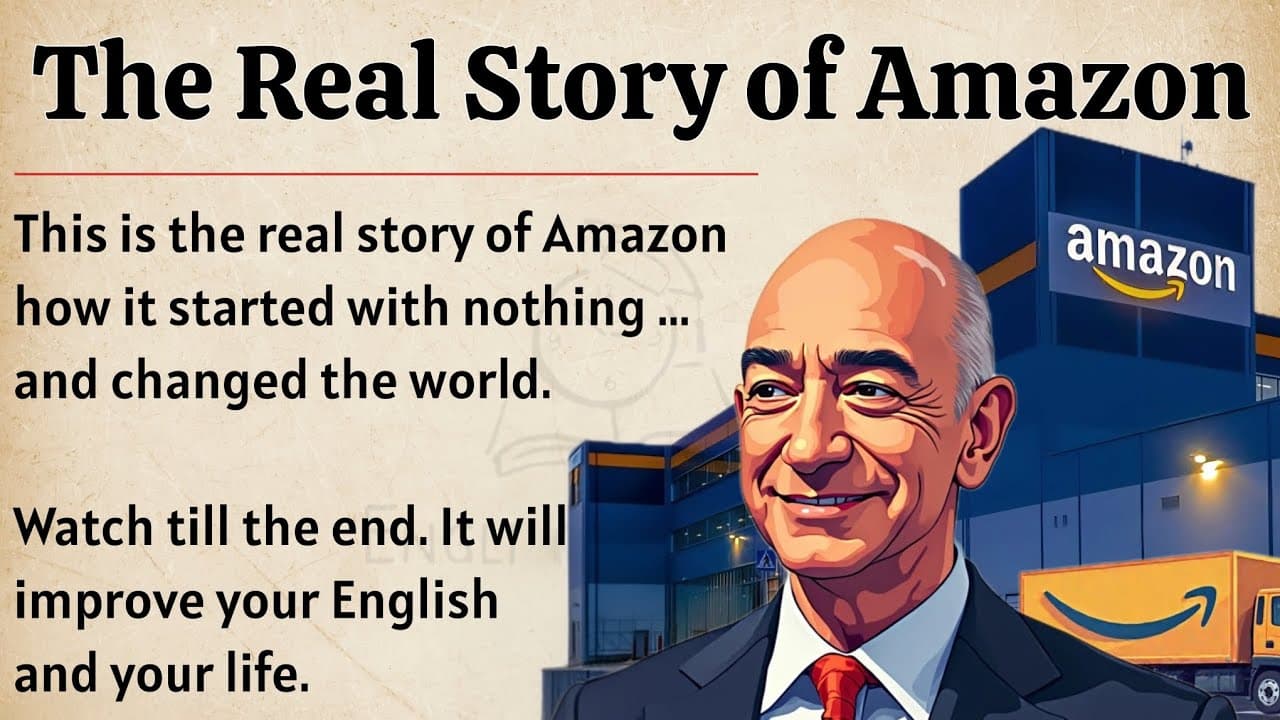
Amazon began in 1994 when Jeff Bezos, then earning $200,000 on Wall Street, saw internet usage growing 2,300% per year, quit, and sold books online from a Seattle garage. He prioritized customers and long-term growth over profit, survived the dot-com crash, opened a third-party marketplace, and built AWS, reaching over $1.6 trillion.
Transcript
Welcome to this video. If you came here looking for Jeff Bezos's biography, his personal life story, his habits, mindset, and how he became one of the richest men on earth. We've already made that. You can watch that in our biography playlist, and I highly recommend you do because it's filled with lessons about discipline, long-term thinking, and p... Read More
Key Insights
- The trigger for Amazon was a single statistic: Jeff Bezos read that internet usage was growing at 2,300% per year, which convinced him to leave a $200,000 Wall Street job and start an online company despite a 70% chance of failure.
- Books were chosen strategically because they offered huge variety, millions of shippable items, and no need to try before buying. A physical store could stock about 100,000 titles, but a website could offer millions.
- Amazon launched in July 1995 as 'Earth's biggest bookstore,' and within 30 days it was shipping to 50 states and 45 countries, with Bezos personally packing boxes and driving to the post office.
- Bezos's parents invested $300,000, their entire life savings, after he warned there was a big chance they would never see the money again, providing the capital that let Amazon begin.
- Bezos rejected short-term profit, telling questioners 'We're not here to be profitable right now. We're here to become essential in people's lives,' a philosophy captured in his 1997 'Day One' shareholder letter.
- During the 2000 dot-com crash Amazon's stock fell 90%, from over $100 to around $6 per share, but it survived by cutting costs and staying customer-focused while rivals like Pets.com and Web Van vanished.
- The Amazon Marketplace let third-party sellers list products, adding millions of items without buying inventory or hiring staff. Today more than 60% of items sold on Amazon come from third-party sellers.
- Bezos's principle 'Your margin is my opportunity' meant undercutting competitors' profits to win customer trust, aiming to build a company that lasts forever rather than getting rich fast.
Install to Summarize YouTube Videos and Get Transcripts
Explore YouTube Video Summarizer or Get YouTube Transcript Extractor
Questions & Answers
Q: Why did Jeff Bezos quit his job to start Amazon?
While reading a report about the internet, Bezos saw that internet usage was growing at 2,300% per year. That number convinced him the internet was the next big thing and that he would regret it forever if he did nothing. He was earning $200,000 per year on Wall Street but left it all, telling his parents there was a 70% chance he would fail but he needed to try.
Q: Why did Amazon start by selling books?
Bezos wanted something with huge variety, millions of items, easy to ship, and with no need to try before buying. Books fit perfectly. At that time a physical bookstore could carry maybe 100,000 titles, but online he could offer millions. This let him launch Amazon.com as 'Earth's biggest bookstore,' with an endless selection and cheaper prices that customers could order from home.
Q: How did Amazon get its early funding?
Bezos asked his parents for an investment, and they gave him $300,000, their entire life savings. He warned them there was a big chance they would never see the money again, and they said they believed in him. Later, on May 15, 1997, Amazon went public at $18 per share, opening the company to stock-market investors and giving it new money to expand beyond books.
Q: How did Amazon survive the dot-com crash?
In 2000 the dot-com bubble burst and thousands of internet companies shut down. Amazon lost 90% of its stock value, dropping from over $100 to around $6 per share, and the media said it was finished. Bezos told his team to ignore the stock price and focus on the customer. He cut costs, fired hundreds of employees, and closed weak departments, which was painful but saved the company while rivals like Pets.com and Web Van disappeared.
Q: What is the Amazon Marketplace and why did Bezos create it?
The Amazon Marketplace lets third-party sellers list and sell their products on Amazon's platform. Bezos launched it during the dot-com chaos, reasoning that Amazon did not have to sell everything itself. It added millions of new products without Amazon buying inventory, hiring more staff, or taking on risk, while Amazon earned a percentage of every sale. Today more than 60% of items sold on Amazon come from third-party sellers.
Q: What did Bezos mean by 'Your margin is my opportunity'?
It meant that if another company made 40% profit on a product, Amazon would come in and make just 2%, undercutting rivals to steal the customer. Bezos was not trying to get rich fast. He believed that once people trusted Amazon they would never leave, so he accepted short-term pain and thin margins in order to build a company designed to last forever.
Q: What was Bezos's 'Day One' letter about?
In 1997 Bezos wrote one of the most famous letters in business history to his shareholders, calling it 'It's Day One.' In it he promised to focus relentlessly on customers, make bold bets, and think long term even if it meant losing money. 'Day one' meant it was still the beginning of something huge. Every year afterward he wrote a new shareholder letter and always included the original Day One letter to remind everyone of the vision.
Q: How fast did Amazon grow in its early years?
Amazon grew rapidly from the start. By the end of 1996 it had 150 employees, sales reached $15.7 million, and it was growing 800% per year. On its 1997 IPO day it was valued around $438 million. By 2003 the strategy paid off with sales over $5 billion and profits finally appearing, and the company later grew into a global empire worth over $1.6 trillion.
Summary & Key Takeaways
-
In 1994 Jeff Bezos, earning $200,000 on Wall Street, saw internet usage growing 2,300% per year, quit his job, and moved to Seattle to start an online company from a garage, choosing to sell books for their variety and shippability.
-
Amazon.com launched in July 1995 and shipped to 50 states and 45 countries within 30 days. It went public on May 15, 1997 at $18 per share, valued around $438 million, while Bezos prioritized customers and long-term growth over profit.
-
Amazon survived the 2000 dot-com crash despite a 90% stock drop, launched a third-party marketplace, applied 'your margin is my opportunity,' reached over $5 billion in sales by 2003, and later built AWS on its way to a $1.6 trillion empire.
Read in Other Languages (beta)
Share This Summary 📚
Summarize YouTube Videos and Get Video Transcripts with 1-Click
Try YouTube Summary with ChatGPT & Claude or YouTube Transcript Generator
Explore More Summaries from English Avenue 📚
Summarize YouTube Videos and Get Video Transcripts with 1-Click
Try YouTube Summary with ChatGPT & Claude or YouTube Transcript Generator