How to Use 24 Hours for Focus and English
TL;DR
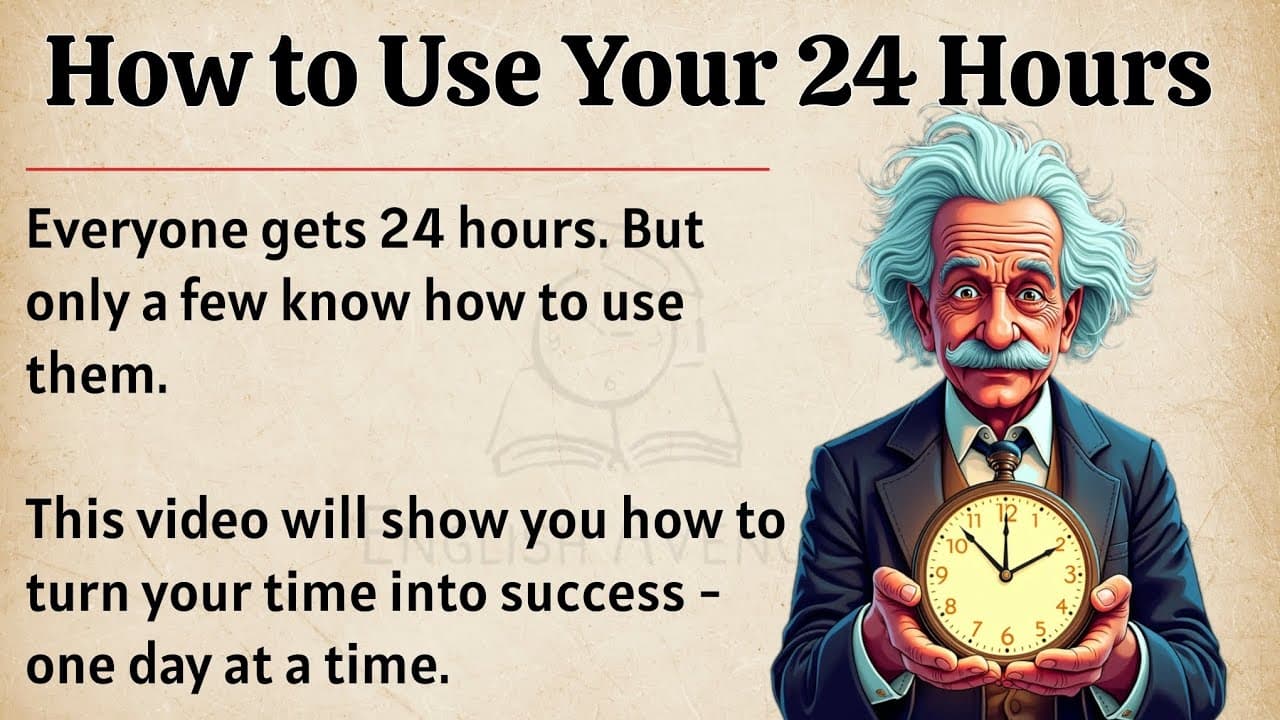
Plan three priorities before bed, protect the first hour after waking, and complete one high-impact task each day. Reserve your remaining growth hours for reading, building, practicing, health, or English instead of letting apps, messages, gossip, and unfocused activity consume the time that could improve your future.
Transcript
Hello everyone. I hope you're doing well today. But even if you're not, I want you to stay for this one because this video might be the most important, the most uncomfortable, and maybe even the most life-changing video you'll ever watch on this channel. Not because I'm special, not because this topic is new, but because of one brutal, inescapable ... Read More
Key Insights
- Tomorrow's direction is established the night before by writing three priorities, visualizing their completion, and keeping the list beside the bed. This five-minute routine reduces the need to make decisions after waking and helps replace morning confusion with immediate, intentional action.
- The first hour of the day is a protected period for shaping attention, energy, and identity. Avoiding phones, messages, news, and notifications during this hour prevents the outside world from filling the mind with distracting information before personal priorities have been established.
- A simple morning routine has three parts: 10 to 15 minutes of stillness, 10 to 20 minutes of movement, and 20 to 30 minutes of clarity. Breathing calmly, moving the body, and writing or learning create a deliberate start without requiring an extreme routine.
- Mental overload can feel like laziness when the day begins with notifications and scattered information. Starting quietly allows the brain to wake with awareness, while movement creates momentum and writing directs attention toward gratitude, one important action, and a useful sentence or lesson.
- One high-impact task is the activity that would make the future better if it were the only meaningful thing completed that day. Examples include speaking English for 30 minutes, finishing a script, recording a voice-over, or completing a 40-minute workout.
- Productivity is defined by meaningful progress, not the number of activities completed. Emails, cleaning, messages, and productivity videos can create exhaustion without advancement, while one focused hour on an important task can make a messy day feel successful and controlled.
- Growth hours are the time remaining after sleep, work, school, and essential responsibilities. These hours can support reading, language practice, health, creative work, a side business, or better routines, but they must be actively protected from apps, gossip, messages, and forgettable entertainment.
- English fluency practice becomes more effective when learners watch with subtitles, read along, pause to repeat sentences, record unfamiliar vocabulary, and watch again the next day. The graded-reader format uses simplified English to support reading speed, comprehension, fluency, and confidence for A2 to B2 learners.
Install to Summarize YouTube Videos and Get Transcripts
Explore YouTube Video Summarizer or Get YouTube Transcript Extractor
Questions & Answers
Q: How should I plan tomorrow before going to sleep?
Spend five minutes before bed writing down three priorities for the next day, rather than creating a long list. Visualize those tasks being completed and keep the written list beside your bed. This routine gives your mind a clear plan, reduces overthinking, and allows you to wake up ready to execute instead of spending the morning deciding what to do.
Q: Why should I avoid my phone during the first hour?
Checking messages, news, social media, and notifications immediately after waking exposes the mind to many pieces of information before the day has properly begun. The result can be distraction, mental overload, and a scattered feeling that resembles laziness. Giving the first 60 minutes to yourself helps you establish calm, energy, and direction before responding to the outside world.
Q: What should I do during the first hour of my day?
Divide the first hour into three intentional parts. Spend 10 to 15 minutes sitting quietly and breathing, then use 10 to 20 minutes for stretching, walking, jumping jacks, dancing, or another form of movement. Use the final 20 to 30 minutes to write, read, listen to an audiobook, or learn five new English words.
Q: How do I choose one high-impact task for the day?
Ask which single task would make your future better and move you closer to a long-term goal if it were the only important thing you completed that day. The answer might be speaking English for 30 minutes, finishing a YouTube script, recording a voice-over, or completing a 40-minute workout. Select it deliberately and finish it without distractions.
Q: Why is one important task better than staying busy?
Busy activity can consume energy without producing meaningful progress. Sending emails, cleaning, replying to messages, or watching productivity content may create exhaustion while leaving the main goal untouched. Completing one high-impact task provides a clear result, strengthens a sense of control, and makes the day productive even when the remaining hours are imperfect or filled with unavoidable responsibilities.
Q: What are growth hours and how should I protect them?
Growth hours are the portions of the day left after sleep, work, school, and basic responsibilities. The transcript describes them as time for reading, building, learning, practicing, improving English, working on health, creating a channel, starting a side business, or fixing a routine. Protect them by limiting messages, apps, gossip, and entertainment that does not improve your future.
Q: How can I use this graded reader to improve English?
Watch with subtitles turned on, read along with the narration, and pause to repeat sentences aloud. Write down unfamiliar vocabulary and watch the lesson again the next day to improve retention. The simplified graded-reader language is intended to build reading speed, comprehension, pronunciation, intonation, speaking confidence, and a consistent daily English habit for beginner to intermediate learners.
Q: How can I stay consistent with better time management?
Build consistency through small routines that repeat every day. Write three priorities each night, protect the first hour each morning, complete one high-impact task, and reserve available growth hours for meaningful practice. The approach does not require a perfect day or 10 perfect hours. It depends on intentional choices and repeated focused action, one day at a time.
Summary & Key Takeaways
-
Planning tomorrow before sleep reduces morning confusion and gives the day a clear direction. Spend five minutes writing only three priorities, visualize completing them, and keep the list beside your bed. Repeating this habit nightly can reduce overthinking, create mental peace, and help you begin each morning ready to act.
-
Protect the first hour after waking from phones, messages, news, and notifications. Divide it among stillness, physical movement, and clarity. Sit quietly and breathe, move your body, then write or study something meaningful. This intentional routine helps you begin with calm, momentum, direction, and control instead of mental overload.
-
Choose one high-impact task that moves you closer to a long-term goal, and complete it with focused effort. Protect additional growth hours for English, health, reading, creative work, or a side business. Progress comes from consistently doing what matters, rather than staying busy with messages, entertainment, and random low-value activities.
Read in Other Languages (beta)
Share This Summary 📚
Summarize YouTube Videos and Get Video Transcripts with 1-Click
Try YouTube Summary with ChatGPT & Claude or YouTube Transcript Generator
Explore More Summaries from English Avenue 📚



Summarize YouTube Videos and Get Video Transcripts with 1-Click
Try YouTube Summary with ChatGPT & Claude or YouTube Transcript Generator