How to gain energy from exercise and boost focus
TL;DR
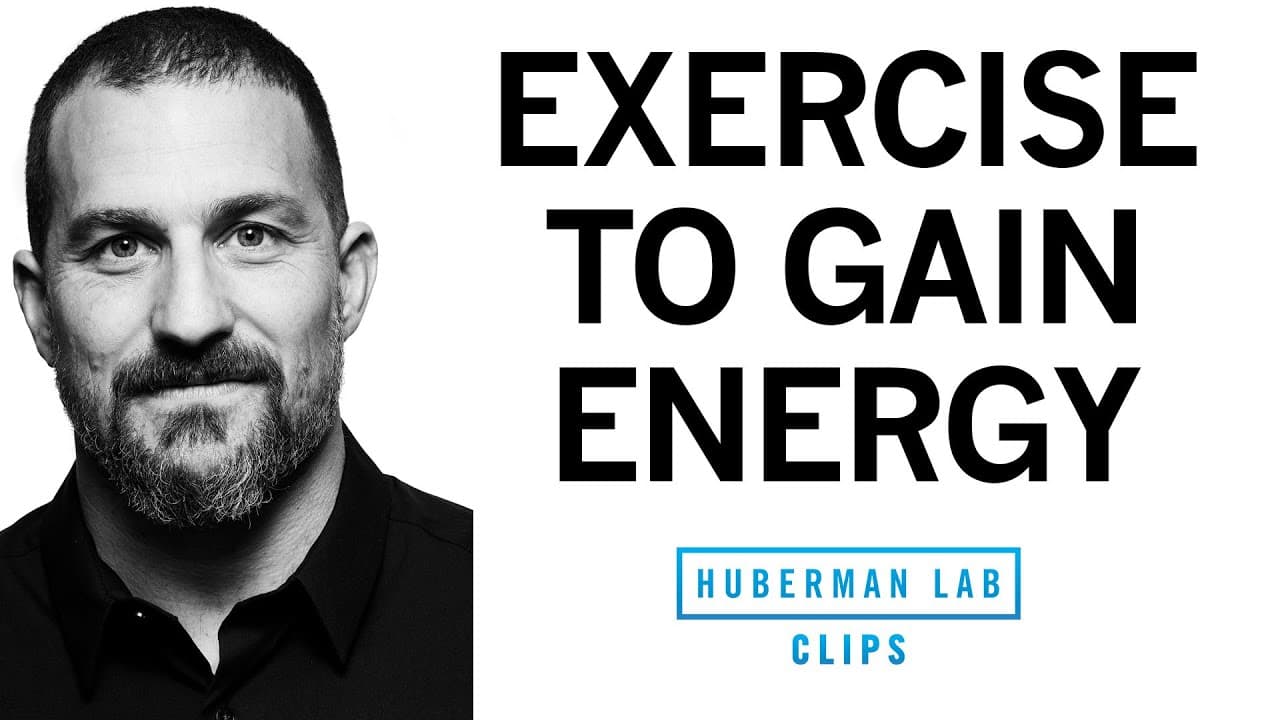
Exercise raises bodily and brain energy by triggering adrenaline and related signals. It works through motor, cognitive, and affective brain networks that activate the adrenals and release dopamine, improving arousal and attention. Focused, compound movements near the core maximize this energy boost and support learning and brain health.
Transcript
if you've ever heard that exercise can give you energy this is the basis of that statement right many people in fact myself for many years thought okay I definitely have to sleep well in order to have energy and focus that's absolutely true still true will always be true I should maybe have some caffeine be hydrated you know well-nourished all this... Read More
Key Insights
- Energy from exercise comes from adrenaline and related brain signaling triggered by movement, not just heart rate increase. The body uses two parallel pathways to raise both bodily energy and brain energy for focus and performance.
- Three brain categories communicate with the adrenals to release adrenaline: cognition related areas, emotion related areas, and motor networks that control core and multi joint movements, creating a coordinated arousal response.
- Engaging proximal core muscles and compound movements maximizes adrenal activation, leading to higher norepinephrine and dopamine during and after exercise, which fuels motivation, attention, and learning.
- The adrenal medulla releases adrenaline through motor circuit signaling that travels from the cortex and spinal cord to the adrenal glands, then to vagus and locus coeruleus for heightened alertness.
- Arousal from exercise supports brain health and longevity by pairing bodily energy with cognitive readiness, not only by improving physical fitness.
- The concept of adrenal burnout is a myth in the discussed context; the adrenals can handle normal stress and energy demands from regular movement and exercise.
- Trauma and psychosomatic considerations may involve brain adrenal pathways, illustrating how thoughts and movements can influence adrenaline release and physiological responses.
- To implement this, start with core focused movements and compound exercises like squats or rows to reliably trigger energy and focus benefits.
Install to Summarize YouTube Videos and Get Transcripts
Explore YouTube Video Summarizer or Get YouTube Transcript Extractor
Questions & Answers
Q: How does exercise increase energy in the body and brain?
Exercise increases energy by activating the adrenal medulla through motor and cognitive brain networks, which release adrenaline and norepinephrine. This signaling raises bodily arousal and enhances brain energy and focus. The process involves a loop where movement engages core and motor networks, triggering neurochemical changes that sharpen attention and support learning during and after activity.
Q: What are the key brain areas involved in energizing the adrenals during exercise?
The key brain areas are a set that includes cognitive regions involved in thinking, affective regions related to emotions and perception, and motor networks that control movement. These areas converge on the adrenal medulla, leading to the release of adrenaline and orchestrated changes in attention, arousal, and energy levels.
Q: Why are compound movements important for energy and focus?
Compound movements recruit multiple joints and large muscle groups, especially core muscles, which strongly activate the motor networks that communicate with the adrenals. This leads to a greater release of adrenaline and related neurochemicals, producing more robust arousal, heightened attention, and better cognitive performance during and after exercise.
Q: Is adrenal burnout a real risk from regular exercise?
Adrenal burnout as a consequence of normal exercise is not supported in the discussion. The adrenals have substantial capacity to handle stress from movement and activity, and consuming caffeine or heavy training without adequate recovery does not equate to adrenal burnout in the context described.
Q: How does dopamine relate to the energy and focus produced by exercise?
Dopamine is coordinated with norepinephrine during exercise, supporting motivation and movement. As adrenaline and norepinephrine rise to increase arousal, dopamine levels also contribute to drive and the ability to sustain effort, facilitating better learning and task engagement during physical activity.
Q: What practical tips can maximize energy from workouts?
To maximize energy, emphasize core engaging, compound exercises that move multiple joints, such as squats or rows, and plan workouts to activate motor networks. Begin with warm ups that target central muscles to prime the adrenal response, then ensure adequate recovery to sustain energy across sessions.
Q: How can exercise influence emotional regulation and energy storage?
Exercise can shape how effective, cognitive, and emotional brain networks communicate with the adrenals, influencing adrenaline release in response to thoughts and environmental cues. This provides a physiological mechanism for how bodily movement and mental states interact to regulate energy, mood, and resilience.
Q: What is the relationship between energy, learning, and brain health in this context?
Energy earned through exercise enhances both attention and learning by raising arousal via adrenal signaling and dopamine coordination. This heightened state supports better information processing, memory, and long term brain health and cognitive function, linking physical activity directly to cognitive performance and resilience.
Summary & Key Takeaways
-
Exercise increases energy by engaging the adrenals and central nervous system to raise arousal and focus, using a loop between movement, adrenaline release, and brain signaling.
-
The key mechanism involves motor and cognitive networks that connect to the adrenal medulla, producing norepinephrine and epinephrine, which elevate brain and body energy for better performance and learning.
-
Practically, compound movements that engage core muscles optimally trigger the energy cascade, so incorporating full body, multi joint exercises can improve immediate energy and long term brain health and resilience.
Read in Other Languages (beta)
Share This Summary 📚
Summarize YouTube Videos and Get Video Transcripts with 1-Click
Try YouTube Summary with ChatGPT & Claude or YouTube Transcript Generator
Explore More Summaries from Huberman Lab Clips 📚




Summarize YouTube Videos and Get Video Transcripts with 1-Click
Try YouTube Summary with ChatGPT & Claude or YouTube Transcript Generator