Hacking Humans - Yuval Noah Harari Roundtable at EPFL

TL;DR
Technology has the potential to both enhance and endanger humanity, with issues such as privacy, surveillance, and the arms race in AI and biotech needing careful consideration and regulation.
Transcript
(crowd applause) - Ladies and gentlemen, dear friends, on behalf of EPFL it's an immense pleasure to welcome you for this very special evening on our campus. 2019 is a very special year for EPFL. We celebrate our 50th birthday. And in the world of universities, 50 years old we can think of us as if we are still a little child. And for those of you ... Read More
Key Insights
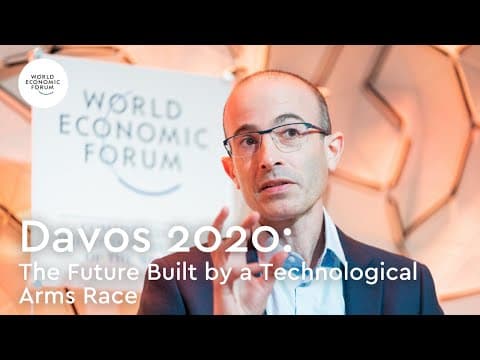
- ✊ The arms race mentality in technology poses significant risks, such as the erosion of privacy, increased surveillance, and the concentration of power.
- 👊 Populism, amplified by social media, threatens democratic institutions by demonizing minority groups and attacking checks and balances.
- 😑 Global cooperation is crucial in addressing pressing challenges, including climate change and the ethical implications of technological advancements.
- 🪡 Stricter regulation is needed to prevent societal inequalities and ensure equitable access to the benefits of technology.
Install to Summarize YouTube Videos and Get Transcripts
Explore YouTube Video Summarizer or Get YouTube Transcript Extractor
Questions & Answers
Q: How is technology changing the balance of power between governments, corporations, and individuals?
Technology gives governments and corporations the power to manipulate and control individuals, eroding privacy and potentially endangering human rights. It is crucial to address this power imbalance and establish regulations to protect individuals.
Q: How can individuals and civil society play a role in tackling environmental issues?
Individuals and civil society can become agents of change by raising awareness, advocating for stronger environmental policies, and mobilizing mass actions such as protests. They can put pressure on governments and corporations to take effective measures to combat climate change.
Q: What are the risks and benefits of human augmentation through biotech and AI?
Human augmentation has the potential to improve human lives, such as through better healthcare and enhanced physical abilities. However, it also raises ethical concerns about inequality and the possibility of creating separate biological castes. Stricter regulation is needed to ensure equitable access and prevent the concentration of power.
Q: How can we navigate the delicate balance between innovation and the preservation of human rights, such as privacy?
Striking the balance requires careful consideration and regulation. Innovation should not come at the expense of individuals' privacy and fundamental rights. Building a framework that ensures responsible use of technology is crucial.
Summary & Key Takeaways
-
Technology has become an integral part of our lives, creating new possibilities and posing new challenges.
-
The rise of populism, fueled by social media, threatens democratic institutions and human rights.
-
The dangerous potential of technology to manipulate and control human desires calls for global cooperation and regulation.
-
Augmented humans, through advancements in biotech and AI, open up new ethical dilemmas and potential inequalities.
-
The urgent need to address climate change requires individual and collective action, as well as strong international cooperation.
Read in Other Languages (beta)
Share This Summary 📚
Summarize YouTube Videos and Get Video Transcripts with 1-Click
Try YouTube Summary with ChatGPT & Claude or YouTube Transcript Generator
Explore More Summaries from Yuval Noah Harari 📚



Summarize YouTube Videos and Get Video Transcripts with 1-Click
Try YouTube Summary with ChatGPT & Claude or YouTube Transcript Generator