How to build a global mental wellness app from India
TL;DR
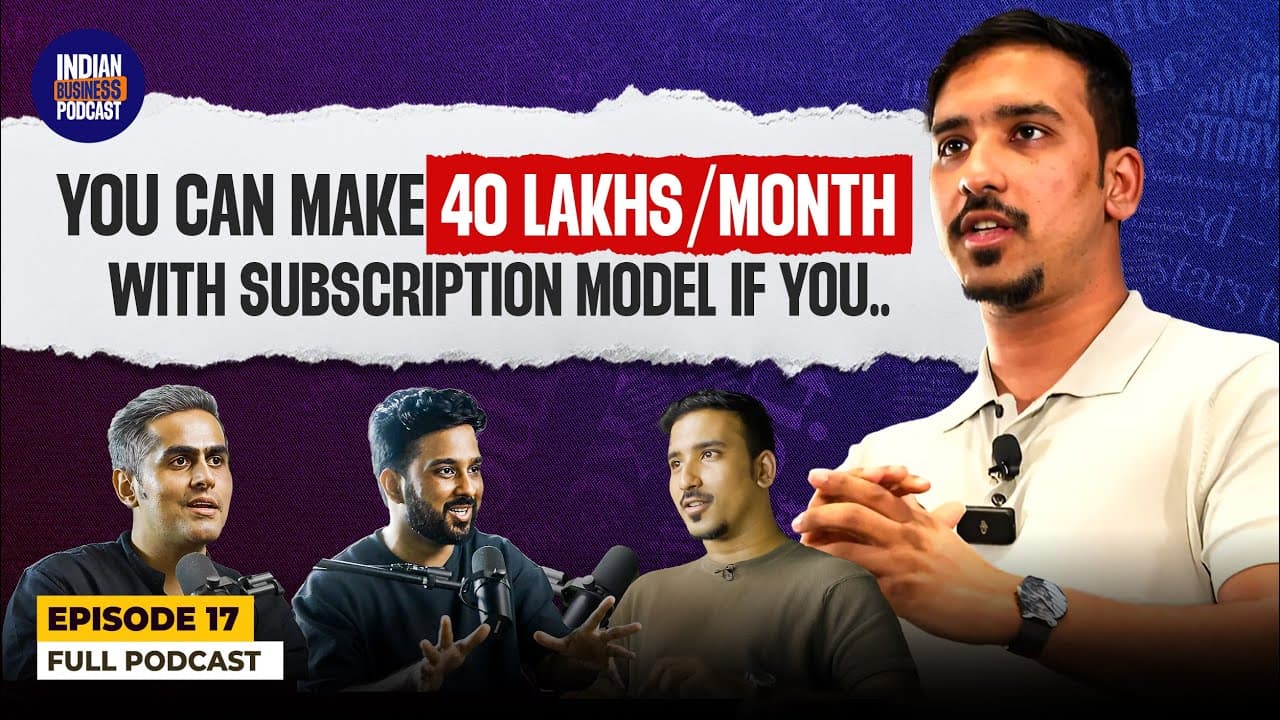
The founders spotted a gap in the meditation space and built Level Supermind to scale from India to the world. They prioritized fast market entry, consumer feedback, and a product tuned to a price sensitive market, aiming for broad adoption and a growing paying subscriber base.
Transcript
there are certain businesses especially in Creator domain if Creator is for example not there anymore like plane crash something happens the entire business can fall down which are the most important AI tools that you guys use whenever an makes a video what kind of Spike do you guys see app crashed app crashed yeah wow level supermind is co-founded... Read More
Key Insights
- The opportunity was to consolidate Indian meditation knowledge and export it globally.
- The founders personal meditation experiences validated the product concept and impact.
- Desk research alone proved insufficient, real consumer feedback was essential.
- Velocity to market is prioritized; fast iteration beats long planning cycles.
- A consumer-first mindset is embedded, with each team member engaging with users weekly.
- A proprietary consumer feedback system was built to manage and learn from inquiries.
- Pricing sensitivity in India necessitates growing a paying subscriber base alongside downloads.
- The product aims to serve India first while building for global reach.
Install to Summarize YouTube Videos and Get Transcripts
Explore YouTube Video Summarizer or Get YouTube Transcript Extractor
Questions & Answers
Q: How did you identify the gap in the meditation and wellness market?
The gap emerged when the founders reflected on how meditation could enhance performance and mental wellness in both personal and professional life. They saw an opportunity to consolidate Indian meditation knowledge and deliver it globally through a technology platform. This insight combined personal growth experiences with the ambition to create a scalable product that could serve a wide audience, starting with India and expanding worldwide.
Q: What role did personal experience play in shaping Level Supermind?
Personal journeys of growth through meditation were a binding factor for the founders. They noticed improvements in focus, stress management, and the ability to handle more variables in life and work. This direct experience created belief in the product’s impact and helped translate a subjective practice into a scalable, user-focused platform that could help others achieve similar benefits.
Q: What market research approach did you use initially?
They started with desk research to understand global market size, top apps, and users. However, they realized that such research based on secondary data or external studies did not capture genuine consumer needs. The lesson was that real user feedback, not just numbers, was crucial to validate the problem and the product solution.
Q: What is the MOM Test and how did it influence your process?
The MOM Test is used as a framework to learn from customers without asking them to validate a desired solution. It emphasizes uncovering real problems and needs instead of confirming your assumptions. Applying this test helped Level Supermind extract authentic insights during customer conversations, guiding product development toward what users actually require.
Q: How did feedback influence product development after launch?
Post-launch feedback highlighted where users found value and where friction existed, guiding rapid iterations. The team embraced a consumer-first approach, using direct user input to refine content, UX, and features. This continuous loop ensured the product remained aligned with real user needs, rather than theoretical ones from planning alone.
Q: Why is market velocity emphasized over perfecting the product before launch?
Velocity matters because waiting for perfection delays learning and adaptation. By releasing quickly and learning from real users, the team could iterate based on actual usage patterns and needs. This approach reduces risk and accelerates growth, enabling the app to scale while responding effectively to market realities.
Q: How does Level Supermind balance global ambitions with local pricing and market realities?
The team recognizes India is price sensitive and that building a large paying subscriber base is essential. They aim to serve India first while scaling globally, ensuring the product remains accessible and valuable within the local context. This balance supports sustainable growth and helps expand internationally without sacrificing affordability.
Q: What operational practices support the consumer-first approach?
A key practice is that every team member speaks to five consumers weekly, creating a built-in feedback culture. They also use a proprietary consumer calling portal to manage inquiries, prioritizing both premium users and free users on the cusp of conversion. These systems ensure consistent, actionable insights for product decisions.
Summary & Key Takeaways
-
The team identified an opportunity to consolidate Indian meditation knowledge for global use, believing they could win with strong tech and practitioners. Their initial vision tied personal growth journeys to a scalable product that could serve both India and the world. They focused on building the right product from the start.
-
They learned market reality through quick market testing and direct consumer feedback, recognizing that desk research alone was insufficient to validate needs or pricing. This shifted emphasis toward rapid iteration and real user input.
-
A core practice became getting closer to consumers: every team member speaks to five users weekly, creating a consumer-first culture and continuous feedback loop that shapes product decisions.
Read in Other Languages (beta)
Share This Summary 📚
Summarize YouTube Videos and Get Video Transcripts with 1-Click
Try YouTube Summary with ChatGPT & Claude or YouTube Transcript Generator
Explore More Summaries from Think School 📚






Summarize YouTube Videos and Get Video Transcripts with 1-Click
Try YouTube Summary with ChatGPT & Claude or YouTube Transcript Generator