Why Is American Exceptionalism Losing Its Edge?
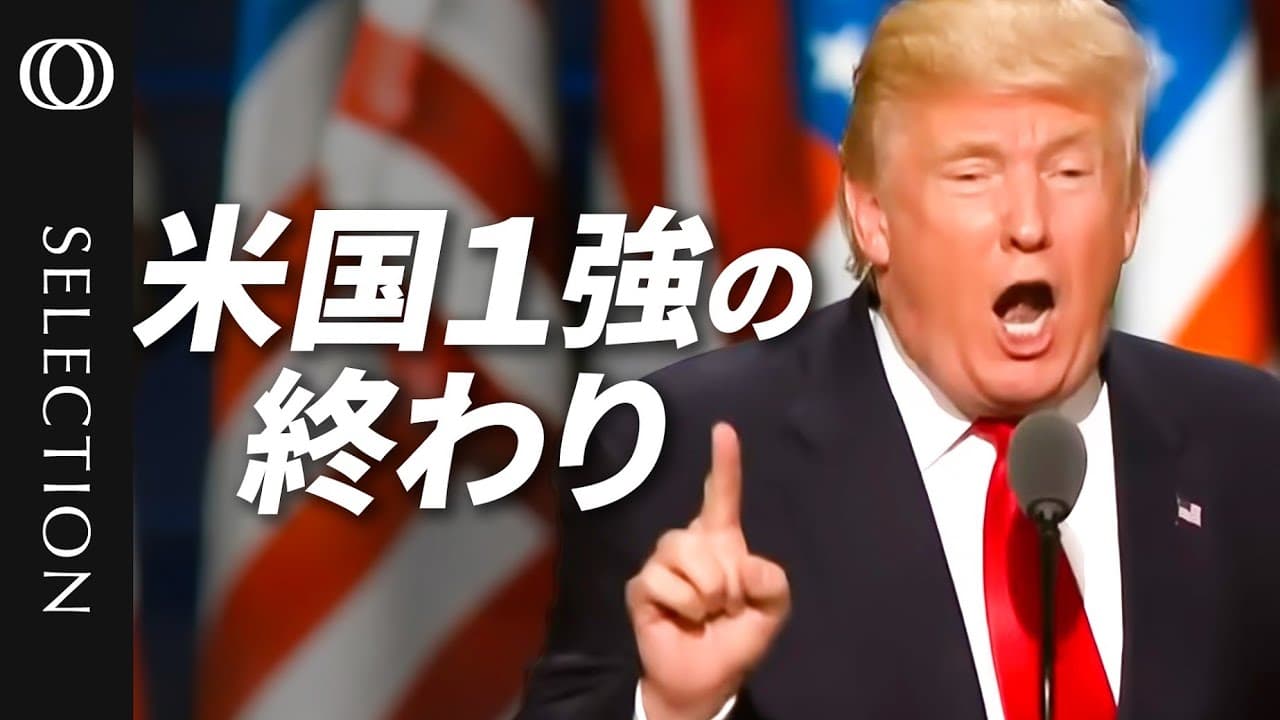
TL;DR
American exceptionalism is weakening because its three market pillars, growth, liquidity, and rule of law, have all come under pressure. The April 2025 tariff announcement triggered selling across US stocks, bonds, and the dollar, damaging investor confidence and encouraging equity diversification toward markets such as Europe, although the dollar remains difficult to replace in global finance.
Transcript
When it comes to investments, there's no such thing as guaranteed returns. But the US has for years been viewed as an exception. The US sits in a very special place in the global economy. American exceptionalism is a concept that has been gaining traction because the only place where you could find growth was the United States. Global investors hav... Read More
Key Insights
- American exceptionalism is supported by three market pillars: economic growth, financial liquidity, and the rule of law. Together, these qualities made US stocks, dollars, and Treasury bonds unusually attractive to global investors for more than two decades.
- US equity leadership is partly concentrated in a small group of large technology companies. The S&P 500 rose about 120% from 2018 to 2024, compared with roughly 30% for the Euro Stoxx 600, creating substantial investor exposure to the Magnificent Seven.
- Dollar liquidity is reinforced by the currency's central role in global finance. The transcript states that the dollar participates in 88% of foreign exchange trades, 70% of foreign-currency debt issuance, 59% of currency reserves, and 54% of export invoicing.
- US Treasury bonds are supported by institutional confidence in American agencies, courts, and Congress. Investors traditionally treated Treasuries as assets with negligible credit concerns, effectively purchasing the stability associated with US law and government institutions.
- The April 2025 tariff announcement produced an unusual triple decline in US stocks, bonds, and the dollar. This simultaneous selling challenged the normal pattern in which investors seek safety in Treasury bonds and dollar assets when equity markets fall.
- Policy uncertainty can damage confidence even when policies are later reversed or moderated. A shift to a 10% baseline tariff produced a large market rally, but investors had already begun reconsidering portfolio concentration and moving toward other assets.
- De-dollarization is more visible in equity portfolios than in the global monetary system. Central banks have diversified into gold and investors have reduced some dollar exposure, but no alternative market can quickly absorb a major worldwide withdrawal from US assets.
- Europe is a potential beneficiary of diversification away from US equities. The transcript highlights German fiscal stimulus and more accommodative European monetary policy, which allow companies to refinance at lower rates while receiving support from increased government spending.
Install to Summarize YouTube Videos and Get Transcripts
Explore YouTube Video Summarizer or Get YouTube Transcript Extractor
Questions & Answers
Q: What are the three pillars of American exceptionalism?
The three pillars are growth, liquidity, and the rule of law. Growth refers largely to the performance and global reach of US companies and equity markets. Liquidity comes from the dollar's unmatched role in trading, reserves, and financial transactions. The rule of law supports confidence in Treasury bonds through American agencies, courts, and Congress.
Q: Why did the April 2025 tariffs weaken confidence in US assets?
The sweeping tariffs introduced abrupt uncertainty about trade policy and the rules governing markets. Investors responded by selling US stocks, Treasury bonds, and the dollar at the same time. That combination was especially unsettling because bonds and dollars would normally provide safety during an equity decline. Later policy changes lifted markets, but confidence had already been damaged.
Q: Why was the simultaneous fall in stocks, bonds, and the dollar unusual?
The global financial system normally expects different US assets to offset one another. When stocks decline, nervous investors often move into Treasury bonds and dollars for safety and liquidity. In April 2025, all three categories were sold together, leaving investors with fewer places to hide and signaling broad concern about US policy, institutions, and market reliability.
Q: How concentrated is the US stock market in large technology companies?
The transcript describes heavy concentration in the Magnificent Seven as a longstanding weakness of American exceptionalism. These large technology companies account for substantial investor exposure, and much of their revenue comes from outside the United States. Such concentration creates portfolio risk because investors depend heavily on a small number of companies that are themselves tied to global growth.
Q: Can another currency quickly replace the US dollar?
A rapid replacement appears unlikely because dollar usage remains deeply embedded in global finance and US markets are exceptionally large. The transcript says the dollar is used in 88% of foreign exchange trades, 70% of foreign-currency debt issuance, 59% of global currency reserves, 54% of export invoicing, and 47% of interbank foreign exchange transactions.
Q: What does de-dollarization mean for investment portfolios?
For portfolios, de-dollarization can mean reducing exposure to US equities and adding foreign stocks, gold, or other assets. The transcript distinguishes this process from replacing the dollar throughout global finance. Equity diversification is already occurring as confidence weakens, while the dollar remains difficult to displace because international trade, reserves, debt, and foreign exchange markets still depend heavily on it.
Q: Why could Europe benefit from declining US exceptionalism?
Europe could attract capital as investors diversify away from concentrated US positions. The transcript identifies German fiscal stimulus as an important shift and says European monetary policy is more accommodative than US policy. European companies can refinance at lower rates while benefiting from fiscal support, whereas the United States faces inflation pressures, constrained monetary policy, and reduced government spending.
Q: Why does protectionism have no clear winner?
Protectionism raises barriers to international trade and places pressure on companies and consumers across connected economies. US technology companies earn large portions of their revenue abroad, so disruptions do not remain confined to foreign exporters. The transcript argues that everyone suffers as global growth weakens, while tariffs and an isolationist foreign policy further undermine the globalized economic system.
Summary & Key Takeaways
-
American exceptionalism rested on three pillars: superior growth, unmatched dollar liquidity, and confidence in the rule of law. US equities strongly outperformed European stocks from 2018 to 2024, while the dollar's reserve role and Treasury bonds gave global investors liquid assets supported by trusted American institutions.
-
The April 2025 tariff announcement caused an unusual simultaneous decline in US stocks, Treasury bonds, and the dollar. Abrupt policy changes and uncertainty about future rules intensified volatility. Although a later tariff adjustment sparked a major technology rally, the earlier shock had already damaged confidence in American assets.
-
Diversification away from US equities may benefit Europe, Asia, and emerging markets, but replacing the dollar remains difficult because US markets are enormous and dollar usage dominates several financial activities. Protectionism offers no clear winner, and weakening globalization could reduce growth even if the United States avoids a near-term recession.
Read in Other Languages (beta)
Share This Summary 📚
Summarize YouTube Videos and Get Video Transcripts with 1-Click
Try YouTube Summary with ChatGPT & Claude or YouTube Transcript Generator
Explore More Summaries from TBS CROSS DIG with Bloomberg 📚






Summarize YouTube Videos and Get Video Transcripts with 1-Click
Try YouTube Summary with ChatGPT & Claude or YouTube Transcript Generator