How Does Lipoprotein Metabolism Work?
TL;DR
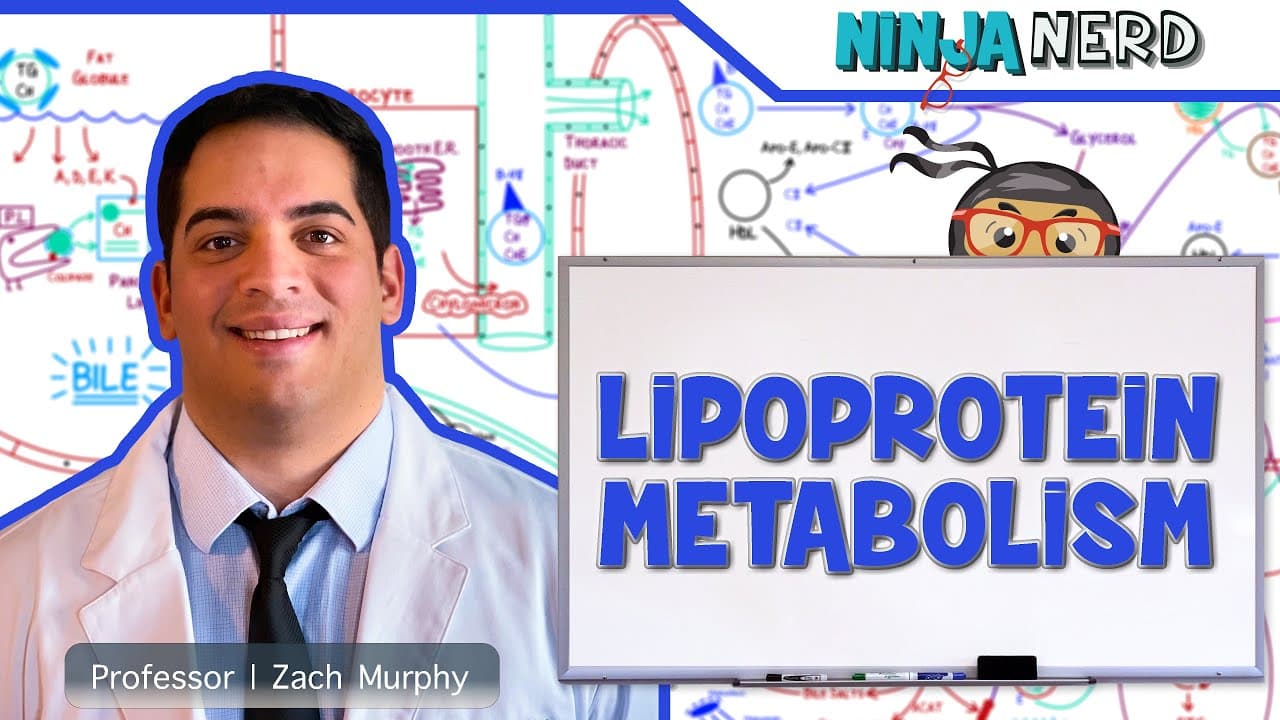
Lipoprotein metabolism involves two key pathways: exogenous and endogenous. Exogenous metabolism transports dietary lipids via chylomicrons, while endogenous metabolism distributes synthesized lipids through VLDL, IDL, and LDL. HDL facilitates reverse cholesterol transport, reducing cardiovascular risk by moving cholesterol from tissues back to the liver.
Transcript
I ninja tears in this video we are gonna talk about lipoprotein metabolism we got a lot of stuff to cover in this video so let's go ahead and get started so when we talk about lipoprotein metabolism we have two different pathways by which we're going to perform this and generally what is this lipoprotein metabolism when we talk about in the two pat... Read More
Key Insights
- Lipoprotein metabolism has two main pathways: exogenous and endogenous.
- Chylomicrons transport dietary triglycerides and cholesterol from the intestines to tissues.
- VLDL is produced by the liver to distribute endogenous triglycerides.
- IDL and LDL are formed as VLDL loses triglycerides, with LDL being the primary cholesterol carrier.
- HDL plays a critical role in reverse cholesterol transport, moving cholesterol back to the liver.
- Apolipoproteins like apoB-100 and apoE are crucial for lipoprotein function and recognition.
- Disruptions in lipoprotein metabolism can lead to atherosclerosis.
- LDL receptors and hepatic uptake are vital for cholesterol homeostasis.
Install to Summarize YouTube Videos and Get Transcripts
Explore YouTube Video Summarizer or Get YouTube Transcript Extractor
Questions & Answers
Q: How does the exogenous pathway of lipoprotein metabolism work?
The exogenous pathway involves the transport of dietary lipids absorbed from the intestines. Chylomicrons, formed in the intestinal cells, carry triglycerides and cholesterol through the lymphatic system into the bloodstream. They deliver these lipids to various tissues, where lipoprotein lipase breaks down triglycerides for energy or storage, leaving chylomicron remnants to be taken up by the liver.
Q: What is the function of VLDL in lipid transport?
VLDL (Very Low-Density Lipoprotein) is produced by the liver to transport endogenous triglycerides and cholesterol to peripheral tissues. As VLDL circulates, lipoprotein lipase removes triglycerides, converting VLDL into IDL and eventually LDL. This process facilitates the distribution of lipids for energy use or storage, with LDL becoming the primary cholesterol carrier to tissues.
Q: How is LDL involved in cholesterol homeostasis?
LDL (Low-Density Lipoprotein) is crucial for delivering cholesterol to cells throughout the body. It binds to LDL receptors on cell surfaces, facilitating cholesterol uptake for membrane synthesis, hormone production, or storage. Proper LDL receptor function is essential for maintaining cholesterol balance, while disruptions can lead to cholesterol accumulation and atherosclerosis.
Q: What role does HDL play in cardiovascular health?
HDL (High-Density Lipoprotein) is vital for reverse cholesterol transport, collecting excess cholesterol from peripheral tissues and returning it to the liver. This process helps maintain cholesterol balance and reduces cardiovascular risk by preventing cholesterol accumulation in blood vessels, thus protecting against atherosclerosis and related diseases.
Q: How do apolipoproteins influence lipoprotein function?
Apolipoproteins are protein components of lipoproteins that play key roles in their structure and function. They assist in lipoprotein assembly, enzyme activation, and receptor recognition. For example, apoB-100 is crucial for LDL receptor binding, while apoE facilitates hepatic uptake of chylomicron remnants and IDL, influencing lipid metabolism and cholesterol homeostasis.
Q: Why is LDL considered 'bad cholesterol'?
LDL is often termed 'bad cholesterol' because high levels can lead to cholesterol buildup in blood vessels, contributing to plaque formation and atherosclerosis. This increases the risk of cardiovascular diseases such as heart attacks and strokes. Maintaining lower LDL levels is crucial for cardiovascular health, emphasizing the importance of managing LDL through diet and lifestyle.
Q: What are the potential consequences of disrupted lipoprotein metabolism?
Disruptions in lipoprotein metabolism can lead to imbalances in cholesterol levels, contributing to atherosclerosis and cardiovascular diseases. Issues such as LDL receptor malfunction or excessive LDL oxidation can result in cholesterol accumulation in arterial walls, forming plaques that narrow arteries and increase the risk of heart attacks, strokes, and other cardiovascular events.
Q: How can HDL levels be increased to improve heart health?
Increasing HDL levels can be achieved through lifestyle changes such as regular exercise, consuming healthy fats (like those in fish, nuts, and olive oil), quitting smoking, and maintaining a healthy weight. These changes enhance HDL's role in reverse cholesterol transport, reducing cardiovascular risk by promoting cholesterol removal from blood vessels and protecting against atherosclerosis.
Summary & Key Takeaways
-
Lipoprotein metabolism is essential for transporting lipids throughout the body via two pathways: exogenous and endogenous. Chylomicrons carry dietary lipids, while VLDL distributes synthesized lipids, eventually forming LDL, the primary cholesterol carrier. HDL aids in reverse cholesterol transport, returning cholesterol to the liver and reducing cardiovascular risk.
-
Key apolipoproteins, such as apoB-100, apoB-48, apoC-II, and apoE, are vital for lipoprotein maturation, enzyme activation, and receptor recognition. Any disruptions in these processes can contribute to atherosclerosis, highlighting the importance of understanding lipoprotein metabolism for cardiovascular health.
-
HDL's role in reverse cholesterol transport involves collecting excess cholesterol from peripheral tissues and delivering it to the liver. This process aids in maintaining cholesterol balance and preventing atherosclerosis, emphasizing the protective function of HDL in cardiovascular health.
Read in Other Languages (beta)
Share This Summary 📚
Summarize YouTube Videos and Get Video Transcripts with 1-Click
Try YouTube Summary with ChatGPT & Claude or YouTube Transcript Generator
Explore More Summaries from Ninja Nerd 📚





Summarize YouTube Videos and Get Video Transcripts with 1-Click
Try YouTube Summary with ChatGPT & Claude or YouTube Transcript Generator