How did Silicon Valley Bank fail? : Business case study
TL;DR
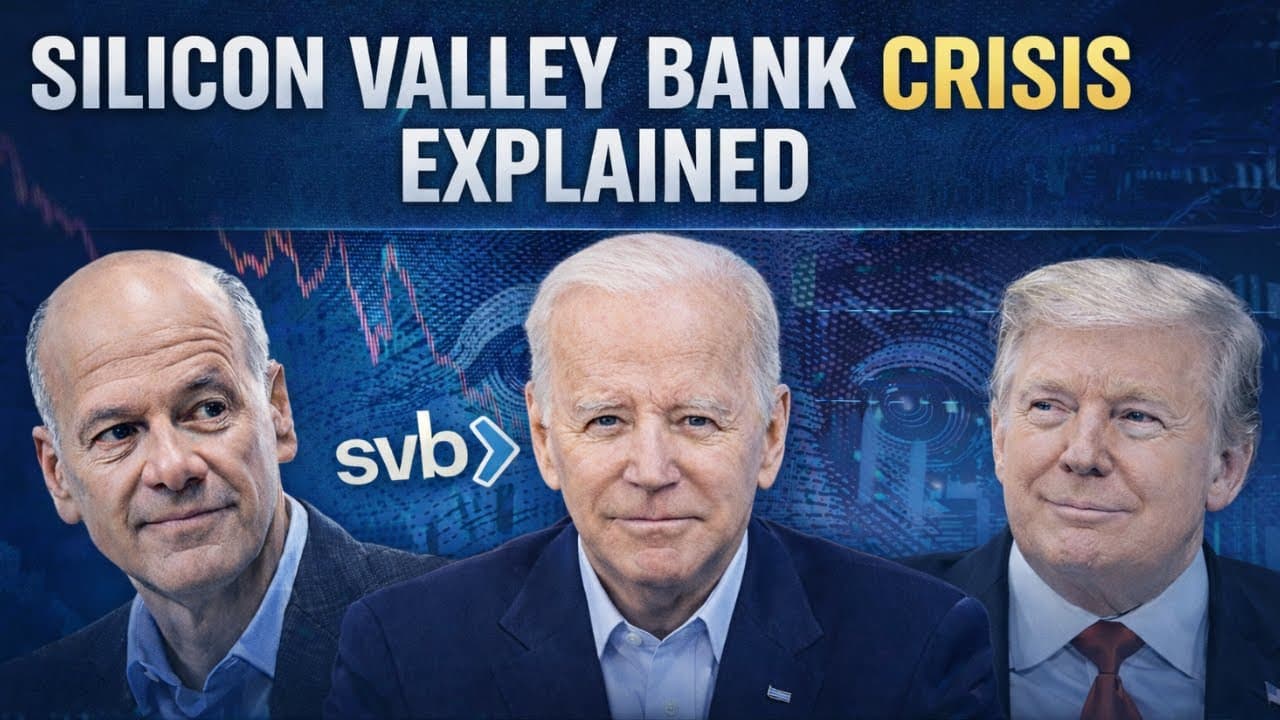
Silicon Valley Bank failed after inflation and Federal Reserve interest-rate increases contributed to an asset-liability mismatch, significant losses, and collapsing investor confidence. Once the 16th-largest US bank, SVB lost 80% of its stock value in one week, including 60% in a single day. Its shutdown threatened startups and venture capital firms that depended on it, making the case worth examining for its lessons on banking risk and startup funding.
Transcript
Silicon Valley Bank collapsed on Friday a collapse of Silicon Valley Bank is causing shock waves across the entire business world to Silicon Valley Bank the second biggest bank collapse in U.S history it is the epicenter of tech startups Venture Capital Silicon Valley Bank it is the 16th largest bank or it was in the United States the collapsed ban... Read More
Key Insights
- 🌐 Silicon Valley Bank's collapse is a significant event in the banking industry, with potential consequences for the global startup ecosystem and venture capital industry.
- 🧑🏭 The collapse highlights the risks associated with an asset-liability mismatch and the impact of external factors, such as inflation and geopolitical events, on financial institutions.
- 🤨 The crisis raises concerns about the stability and regulation of the banking system, particularly in relation to supporting innovative industries like startups.
- 😀 Indian startups with deposits at SVB may face difficulties in accessing funding and loans, which can hinder their growth and operations.
- 🏦 The collapse of SVB underscores the need for diversification and risk management in the banking sector, as well as a reassessment of the role of foreign banks in supporting startups.
- 💦 Federal officials are working to address the crisis, but the long-term implications and outcomes for SVB and its stakeholders remain uncertain.
- 👨💼 The collapse serves as a reminder for investors and businesses to assess their exposure to banks and ensure they have contingency plans in place for potential crises.
Install to Summarize YouTube Videos and Get Transcripts
Explore YouTube Video Summarizer or Get YouTube Transcript Extractor
Questions & Answers
Q: How did Silicon Valley Bank fail?
The pandemic, the Russia-Ukraine war, and the resulting energy crisis contributed to rising US inflation, which reached 9.1%. The Federal Reserve responded by raising interest rates, contributing to an asset-liability mismatch, significant losses, and declining investor confidence at Silicon Valley Bank.
Q: Why was the collapse of Silicon Valley Bank significant?
It was described as the largest US bank failure since the 2008 financial crisis and the second-largest bank failure in US history. Because SVB was central to technology startups and venture capital, its collapse sent shock waves across the business world.
Q: How large was Silicon Valley Bank before it collapsed?
Silicon Valley Bank was the 16th-largest bank in the United States. Founded in 1983, it became Silicon Valley’s largest bank by local deposits and served startups, businesses, and venture capitalists.
Q: How quickly did Silicon Valley Bank lose market value?
SVB’s stock lost 80% of its value in one week. It fell 60% in a single day, illustrating how rapidly investor confidence deteriorated.
Q: Which companies and startups were connected to Silicon Valley Bank?
SVB was a leading banker to successful US startups and reportedly served companies including Airbnb, Fitbit, and Pinterest. The bank had also invested in around 21 Indian startups.
Q: How could Silicon Valley Bank’s collapse affect Indian startups?
Indian startups holding deposits at SVB might be affected by the collapse. They could face difficulty accessing deposits, loans, or funding, potentially hindering their growth and operations as startup funding dries up.
Q: How do Federal Reserve interest-rate increases affect commercial bank lending?
The transcript explains that the Federal Reserve lends to commercial banks and charges interest, while those banks lend to consumers at a higher rate. In its example, a bank borrowing at 6.15% lends at 8.15%, earning a two-percentage-point difference; when the Federal Reserve raises its rate, commercial banks may also increase loan rates.
Q: What happened to Silicon Valley Bank’s management and investors after the collapse?
The transcript states that the bank’s management would be fired and its investors would not be protected. Federal officials were working around the clock to find a resolution, but the outcome for SVB and its stakeholders remained uncertain.
Summary & Key Takeaways
-
Silicon Valley Bank (SVB) is the 16th largest bank in the US and a crucial player in the tech startup and venture capital industry.
-
The bank invested in around 21 Indian startups and experienced a drastic decrease in stock value, losing 80% of its value in one week.
-
The collapse of SVB raises concerns for Indian startups with deposits at the bank as well as the overall stability of the startup ecosystem.
-
Federal officials are working to find a resolution, but the impact on investors and the future of SVB remains uncertain.
Read in Other Languages (beta)
Share This Summary 📚
Summarize YouTube Videos and Get Video Transcripts with 1-Click
Try YouTube Summary with ChatGPT & Claude or YouTube Transcript Generator
Explore More Summaries from Think School 📚






Summarize YouTube Videos and Get Video Transcripts with 1-Click
Try YouTube Summary with ChatGPT & Claude or YouTube Transcript Generator