How Is China Using Big Data to Enroll Uninsured Workers?
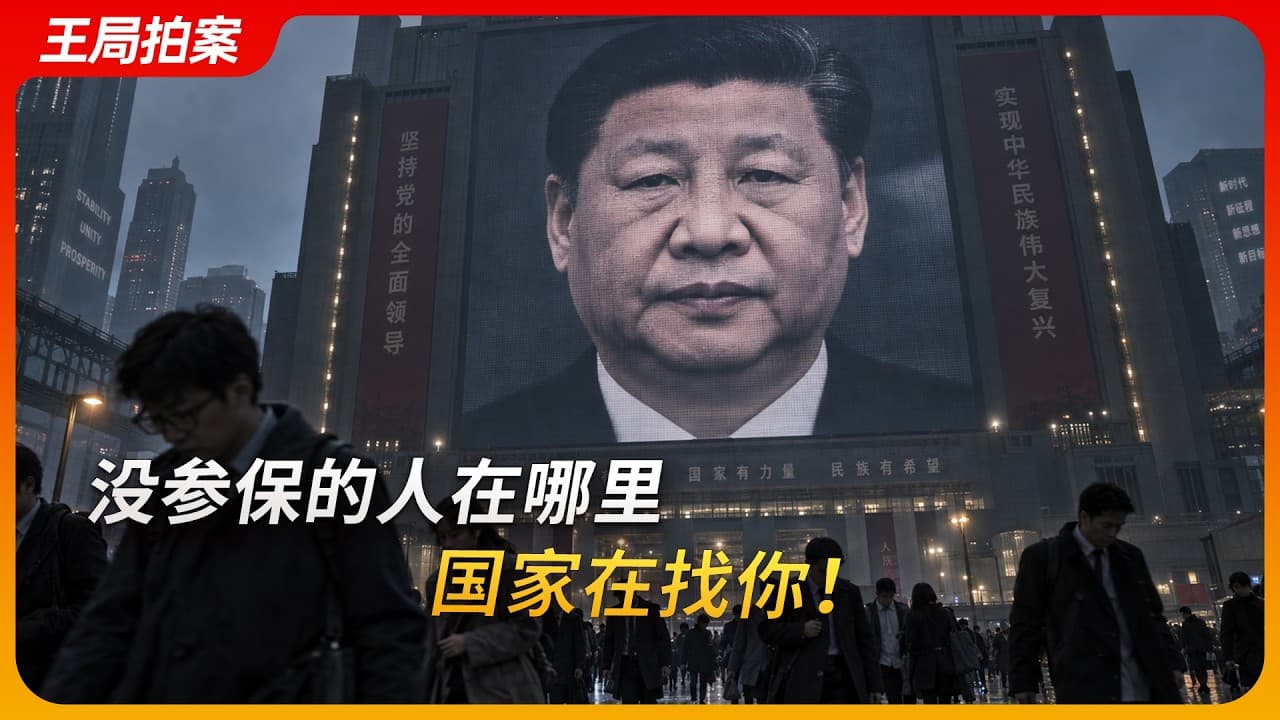
TL;DR
Big data is repurposed to help workers without social insurance join coverage, not to track criminals. The government plans data driven outreach to locate and contact those missing from enrollment, encouraging voluntary participation while explaining benefits. Coverage aims to stay high and sustainable through targeted outreach and affordability considerations.
Transcript
Deeply implement high-quality enrollment initiatives, striving to include more people under our protection. As I mentioned earlier. >> The person you see speaking now is Li Zhong, Vice Minister of Human Resources and Social Security. On October 10th, the Ministry held a press conference to report to the nation on the 15th Five-Year Plan wit... Read More
Key Insights
- Big data is being repurposed to find people who should be enrolled in social insurance, not criminals.
- The outreach approach uses data from multiple government departments to identify and contact individuals.
- Participation is voluntary, aiming to increase coverage without coercion or detention.
- The 95% social security coverage target is seen as difficult to raise further without drastic measures.
- Self employed and flexible workers have the highest dropout risk from urban employee pension schemes.
- Affordability and timing of payments (end of year lump sums) affect enrollment among low-income families.
- The government subsidizes urban and rural resident pension insurance to encourage participation.
- Resistance to enrollment is often due to current income needs and family financial burden, not lack of information.”
Install to Summarize YouTube Videos and Get Transcripts
Explore YouTube Video Summarizer or Get YouTube Transcript Extractor
Questions & Answers
Q: What is the main purpose of using big data to find uninsured workers?
The main purpose is to locate individuals who should be paying into social insurance and encourage them to enroll, rather than label them as suspects. By combining data from tax and public security departments, authorities can reach out directly to people who are not yet covered, offering information and assistance to join pension schemes and obtain protection.
Q: How does the video describe the past use of big data versus the new use?
In the past, big data was used mainly to find criminals or suspects who had committed crimes and fled. The new use shifts toward helping ordinary citizens who are currently insured but not paying, or who are not enrolled at all, by identifying them and guiding them toward enrollment in social insurance programs.
Q: What are the main pension schemes discussed and who tends to drop out most?
The video discusses urban employee pension insurance, urban and rural resident pension insurance, and the self employed segment of urban workers. The self employed group within urban workers shows the highest dropout rate due to income fluctuations and affordability issues, followed by other groups facing financial pressures.
Q: Why might people hesitate to enroll in urban and rural resident pension insurance?
People hesitate due to the end of year lump sum payment burden and competing financial priorities such as housing, illness, and daily living costs. For impoverished families, paying 500 yuan a year represents a significant upfront expense, making sustained enrollment challenging even when long term benefits are evident.
Q: What is the 95% coverage target, and why is it hard to raise it further?
The target is to maintain 95% coverage throughout the 14th Five Year Plan. Raising it beyond that level is difficult because many people already secure and may refuse to enroll due to financial constraints, personal circumstances, and the complexity of forcing larger segments of the population to participate.
Q: How do people describe the government outreach in the video, and what impact does it have?
People describe the outreach as meticulous and helpful, with community offices calling to inform individuals about their social insurance status. This proactive contact creates a sense of warmth and reassurance, and some participants begin to see pension insurance as a viable long term protection when explained clearly.
Q: What comparative example is used to illustrate pension schemes, and what does it imply?
Japan’s two-tier pension system is used as a comparison: Employer Paid Pension and National Pension, with government subsidies for the latter. The example implies that even with subsidies, a portion of people still do not participate, highlighting the difficulty of achieving full coverage in any large economy with diverse income groups.
Q: What challenges do self employed workers face regarding pension enrollment?
Self employed workers face high dropout rates due to income instability and the burden of regular payments. The official data shows a sizable self employed population, with private estimates suggesting even larger numbers, making comprehensive enrollment a complex issue influenced by economic conditions and affordability.
Summary & Key Takeaways
-
The video explains that the government wants to ensure everyone who should be covered is enrolled, using big data to locate gaps and reach out to individuals. It emphasizes data driven outreach and collaboration across tax and public security departments to contact people and invite them to join social insurance.
-
A key point is the distinction between past uses of big data for locating criminals and the new goal of helping the good ones, i.e., citizens who owe or need to enroll in pension schemes.
-
The discussion covers different pension schemes in China, including urban employee and urban rural resident pensions, and the challenges of achieving higher coverage given income variability and financial constraints.
Read in Other Languages (beta)
Share This Summary 📚
Summarize YouTube Videos and Get Video Transcripts with 1-Click
Try YouTube Summary with ChatGPT & Claude or YouTube Transcript Generator
Explore More Summaries from 王志安 📚






Summarize YouTube Videos and Get Video Transcripts with 1-Click
Try YouTube Summary with ChatGPT & Claude or YouTube Transcript Generator