How to Read Hard Books Faster and Understand More
TL;DR
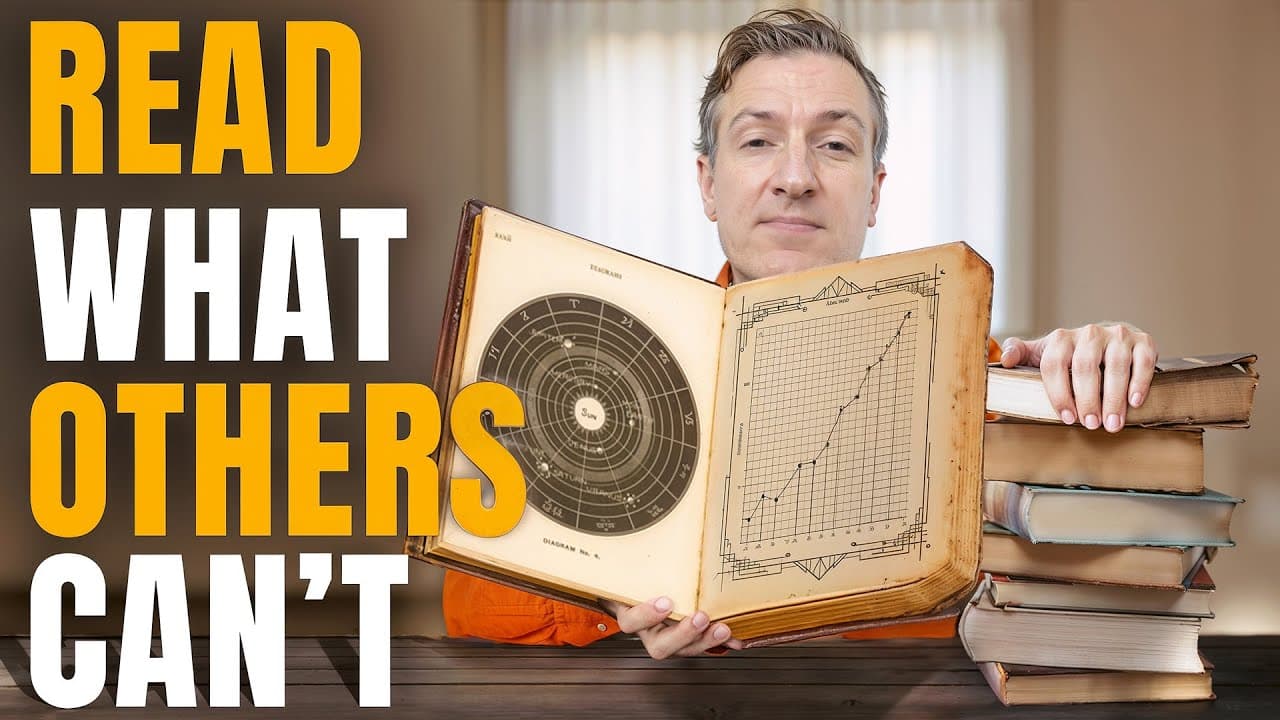
The main method is to read three books at once: a broad book for context, a mid level book for structure, and a niche book for detail. Distinguish between dense and light structures and set a clear reading goal before diving in. This combination speeds comprehension while maintaining depth.
Transcript
If you want to dramatically increase your ability to think faster, communicate effectively, and perform at an elite level, you need to challenge your mind with harder and harder books, but you might also find the prospect of reading hard books intimidating and overwhelming. In this video, I'm going to show you three strategies I use to simplify the... Read More
Key Insights
- Reading three books at once provides broader context, while maintaining a focus on the niche topic through targeted details. The broad book supplies general terms, frameworks, and key events that frame deeper study. The mid level book bridges general context with specific questions, enabling smoother integration.
- The distinction between dense and light structure books governs how you read and allocate mental effort. Dense structure demands active engagement and synthesis of multiple concepts, while light structure follows repeated patterns that can be captured quickly for quick understanding.
- Goal based selective reading is the single most important strategy. Defining clear research questions directs what to extract from each book and determines when to skim or slow down, optimizing time spent for meaningful insight.
- Overlaps between the three books reveal common themes and connections, making it easier to see how ideas recur across different sources and how they inform your research questions.
- Starting with aimless reading helps you discover genuine interests before committing to specific topics, ensuring motivation and relevance in later focused reading.
- A well chosen three book set should be slightly broader than the niche book and slightly more specific than the broad book, ensuring a coherent learning progression.
- The method is practical for graduate level research and self driven study, offering a scalable framework for complex subjects without getting overwhelmed.
- More videos from this channel:
- More from this channel: Stephen Petro
Install to Summarize YouTube Videos and Get Transcripts
Explore YouTube Video Summarizer or Get YouTube Transcript Extractor
Questions & Answers
Q: How can I start applying the three book method to a new topic I want to study
Begin by selecting a broad book that covers the general field, a mid level book that bridges general knowledge with specifics, and a niche book that dives into a detailed subtopic. Read each at a comfortable pace, noting key terms, concepts, and questions that arise. Then, compare what you learned across books to identify gaps and recurring themes. This initial pass creates a scaffold for deeper study, guiding where to focus and what to ignore. Over time, refine your selections as you clarify your research questions and interests.
Q: What is the difference between dense and light structure books and why does it matter
Dense structure books present multiple new concepts and their interactions in a compact form, requiring active engagement, reflection, and synthesis. Light structure books tend to present a single concept with a few supporting stories or examples and are easier to skim. Knowing the difference helps you allocate cognitive effort efficiently, slowing down for dense readings to extract deep understanding while skimming light structure books to glean core ideas and context for faster progress.
Q: How do you set effective reading goals without feeling overwhelmed
Start with a broad topic and choose initial questions you want to answer. Break the goal into small, concrete tasks such as identifying key terms in the broad book, outlining main ideas in the mid level book, and extracting specific evidence in the niche book. Review progress after each session and adjust questions as your understanding deepens. This creates a manageable learning path that scales with the topic’s complexity.
Q: Why is it beneficial to discover your interests before narrowing topics
Exploring broadly first helps you uncover genuine curiosities and patterns that resonate with you, increasing motivation to persist through challenging material. When you finally define clear research questions based on those interests, your reading becomes goal oriented rather than random. This alignment improves retention, makes synthesis easier, and yields more meaningful insights that drive further inquiry.
Q: Can you give an example of how to compare three books for a single topic
Choose a broad history of the topic to provide context, a mid level book to connect context with specifics, and a niche text that tackles a narrow subtopic. While reading, note how each book introduces key terms, supports arguments with evidence, and presents conclusions. Create a side by side summary of main ideas, then map overlapping themes and divergent points. This comparison clarifies the topic’s structure and your own stance.
Q: What should you do if you find a concept in the niche book unfamiliar
Pause to locate the concept in the broad or mid level book first for a gentler introduction, then revisit the niche text with fresh context. If necessary, search for a concise external explanation, but keep it minimal to avoid breaking focus. The goal is to connect unfamiliar terms to existing knowledge, gradually building a coherent framework that supports deeper reading.
Q: How often should you rotate or adjust your book selections
Treat book choice as an evolving process. After completing initial chapters and identifying core questions, reassess whether the current broad, mid level, and niche books still serve your goals. If gaps remain or new questions emerge, swap one or more books to better align with your research direction. This keeps your reading relevant and productive.
Q: What is the payoff of mastering this reading system
The payoff is a faster but deeper understanding of complex topics, improved ability to extract transferable insights, and clearer communication of ideas. By using a structured, goal oriented approach across multiple reading levels, you build a robust mental model that supports rigorous analysis, better synthesis, and more persuasive explanations in your own writing and conversations.
Summary & Key Takeaways
-
This summary explains a three book reading method that balances breadth and depth. It highlights the need to classify texts by structure, and to aim reading with specific questions in mind. The result is faster comprehension without losing critical nuance across complex topics.
-
The approach emphasizes active engagement with dense texts through targeted reading and synthesis. It also notes that lightweight structures can be skimmed more aggressively, while dense structures require deliberate reflection and integration of new concepts.
-
Finally, the method suggests starting with aimless reading to discover personal research questions, then refining goals to guide subsequent readings across broad, mid level, and niche books.
Read in Other Languages (beta)
Share This Summary 📚
Summarize YouTube Videos and Get Video Transcripts with 1-Click
Try YouTube Summary with ChatGPT & Claude or YouTube Transcript Generator
Explore More Summaries from Stephen Petro 📚



Summarize YouTube Videos and Get Video Transcripts with 1-Click
Try YouTube Summary with ChatGPT & Claude or YouTube Transcript Generator