How to Stop Rambling and Make Clear Points
TL;DR
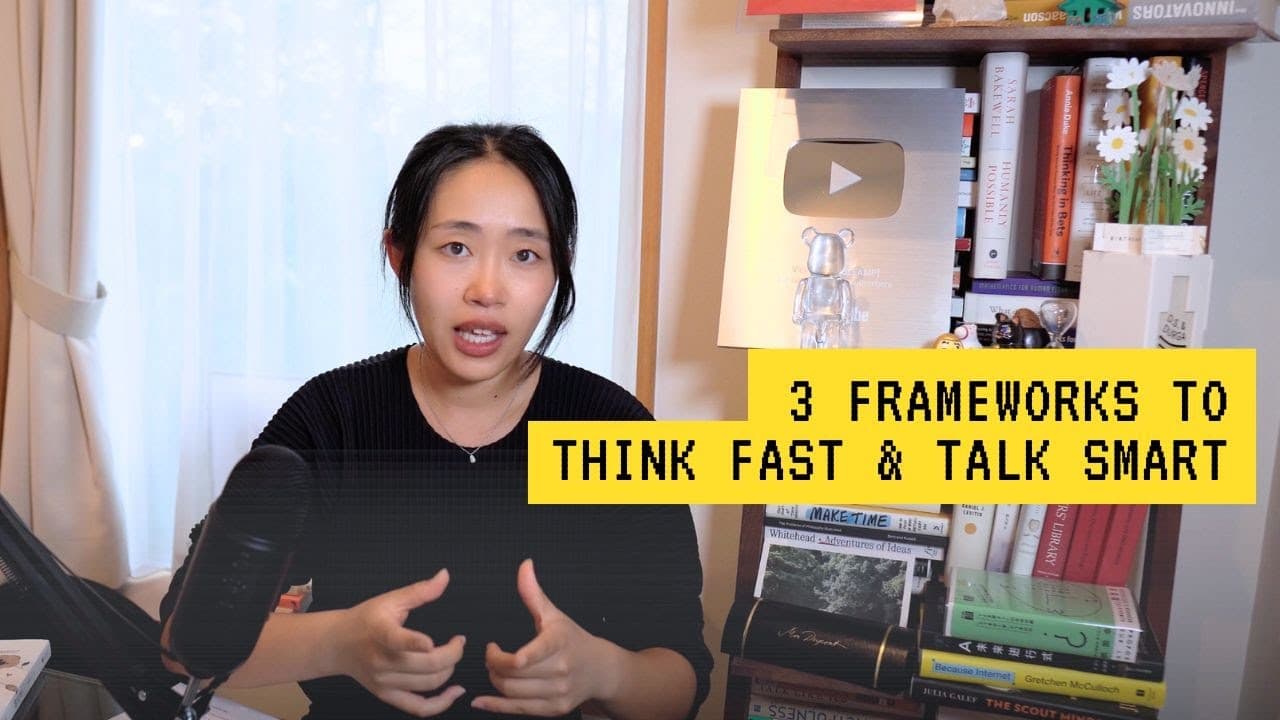
Start with the single most important point, add structure through a three-line sequence, and sharpen the message with specific details. Use prompts such as “The one thing you need to know,” “What I mean by that is,” and “It is not X, it is Y” to organize thoughts quickly, even when speaking on the spot or under pressure.
Transcript
For the longest time, I was a rambling kid. I had a million ideas running through my mind. I was learning new things, making connections. I was excited and tried to catch anyone. You know, my parents, my friends, my cousins, my grandparents, whoever would listen, I would tell them about all of these exciting things. And they all looked at me confus... Read More
Key Insights
- Rambling is often caused by three missing elements: a clear point, a usable structure, and sufficient specificity. A speaker may possess valuable ideas but still confuse listeners when those ideas are expressed as an unorganized stream of details rather than a directed message.
- Thoughts require translation before they can be communicated clearly. Turning a collection of mental connections into precise language is especially difficult when someone is speaking for the first time, responding on the spot, or operating under pressure without prior practice.
- The phrase “The one thing you need to know” directs attention toward a central message before supporting details appear. Even when the initial statement is basic, it gives listeners immediate orientation and allows the speaker to refine the conclusion while continuing to talk.
- A central point does not need to remain fixed throughout an explanation. A speaker can begin with a broad conclusion, examine the supporting details aloud, and then sharpen the point when a more meaningful reason or result becomes apparent.
- The three-line scene creates structure by setting the scene, adding depth, and explaining what comes next. This progression gives spontaneous speech a recognizable beginning, middle, and end, preventing research history and loosely connected observations from overtaking the main message.
- The second line adds depth through either explanation or surprise. “What I mean by X is” clarifies the original point, while “The surprising thing is” introduces information that changes how listeners interpret the surface-level conclusion and encourages them to hear the reason.
- The third line determines the next conversational move. A speaker can open discussion by asking a focused question, or close the explanation by giving the reason and recommending an action based on that reason, such as creating new product alternatives for customers.
- Via negativa creates specificity by describing what an idea is not rather than defining it directly. Contrasting rejected and accepted explanations can expose the important distinction, such as whether customers valued a product itself or the easier process surrounding it.
- More videos from this channel:
- More from this channel: Vicky Zhao
Install to Summarize YouTube Videos and Get Transcripts
Explore YouTube Video Summarizer or Get YouTube Transcript Extractor
Questions & Answers
Q: Why do people ramble when explaining their ideas?
People ramble when they lack a clear point, structure, or specificity. Thoughts begin as loosely connected mental activity, and translating them into words can be difficult, particularly when speaking for the first time, responding on the spot, or feeling pressure. Without a central message and a framework, speakers may process their research aloud, recount details chronologically, and never reach a clear conclusion.
Q: How can I identify my main point before speaking?
Use the prompt “The one thing you need to know about this topic is X.” The word “one” forces you to select a direction before expanding into details. Your first answer may be broad, such as saying that a campaign was successful, but it immediately orients listeners. As you continue, you can refine that statement into a more precise conclusion supported by customer feedback or another relevant detail.
Q: What is the three-line scene framework for clear speaking?
The three-line scene is an improv framework that organizes a response into three moves. The first line sets the scene by stating the one essential point. The second line adds depth by explaining what that point means or introducing a surprising detail. The third line addresses what comes next, either by asking a question that opens discussion or providing an answer and recommended action.
Q: How do I add depth without losing the main point?
Add depth with one of two focused prompts. Use “What I mean by X is” when the audience needs clarification, examples, or evidence explaining the original statement. Use “The surprising thing about X is” when an unexpected detail changes the interpretation of the result. Both approaches remain attached to the central point, so additional information develops the message instead of becoming an unrelated stream of consciousness.
Q: How should I end a concise explanation?
End by making the next conversational move explicit. You can open the discussion with a focused question, such as asking how the team should discover why customers are not making repeat purchases. Alternatively, close with an answer by stating the reason and its practical consequence. In the campaign example, the explanation ends by connecting limited repeat purchases to the need for new product options.
Q: What is via negativa in clear communication?
Via negativa means describing what something is not rather than only trying to state what it is. It is useful when a direct definition feels difficult, especially while speaking on the spot or under pressure. By rejecting one explanation and contrasting it with another, the speaker can identify a sharper distinction and reveal the specific idea that listeners need to understand.
Q: How can contrast make a business point more specific?
Contrast separates a vague conclusion from the reason that actually matters. In the marketing example, success did not come from customers loving the bear itself. It came from customers valuing the easy gifting process. That distinction changes the recommendation: instead of focusing only on the original product, the business should develop more alternatives that preserve the easy gifting experience customers valued.
Q: Can I revise my point while I am speaking?
Yes. The initial point provides direction, but it does not have to be set in stone. A speaker might begin by saying that a campaign was successful, then realize while reviewing the details that strong customer feedback was the more meaningful explanation. Refining the conclusion during the response preserves flexibility while still giving listeners a clear starting point and a coherent path through the supporting information.
Summary & Key Takeaways
-
Rambling often occurs because the speaker has not identified a central point before beginning. Thoughts must be translated into words, which is particularly difficult when speaking for the first time, on the spot, or under pressure. Deliberately choosing one essential message gives the explanation an immediate direction and a foundation for refinement.
-
A three-line scene provides a simple structure for spontaneous communication. The first line states the main point, the second adds depth through an explanation or surprise, and the third establishes what comes next. That final line can invite discussion with a question or close the explanation with an answer and proposed action.
-
Specificity turns a broad idea into something listeners can understand and act upon. Via negativa develops specificity by identifying what something is not, especially when its positive definition is difficult to express. Contrasting two explanations can reveal the real source of success, clarify customer behavior, and support a more focused recommendation.
Read in Other Languages (beta)
Share This Summary 📚
Summarize YouTube Videos and Get Video Transcripts with 1-Click
Try YouTube Summary with ChatGPT & Claude or YouTube Transcript Generator
Explore More Summaries from Vicky Zhao 📚


Summarize YouTube Videos and Get Video Transcripts with 1-Click
Try YouTube Summary with ChatGPT & Claude or YouTube Transcript Generator