How Do US Space Weapons Work and Why Defense?
TL;DR
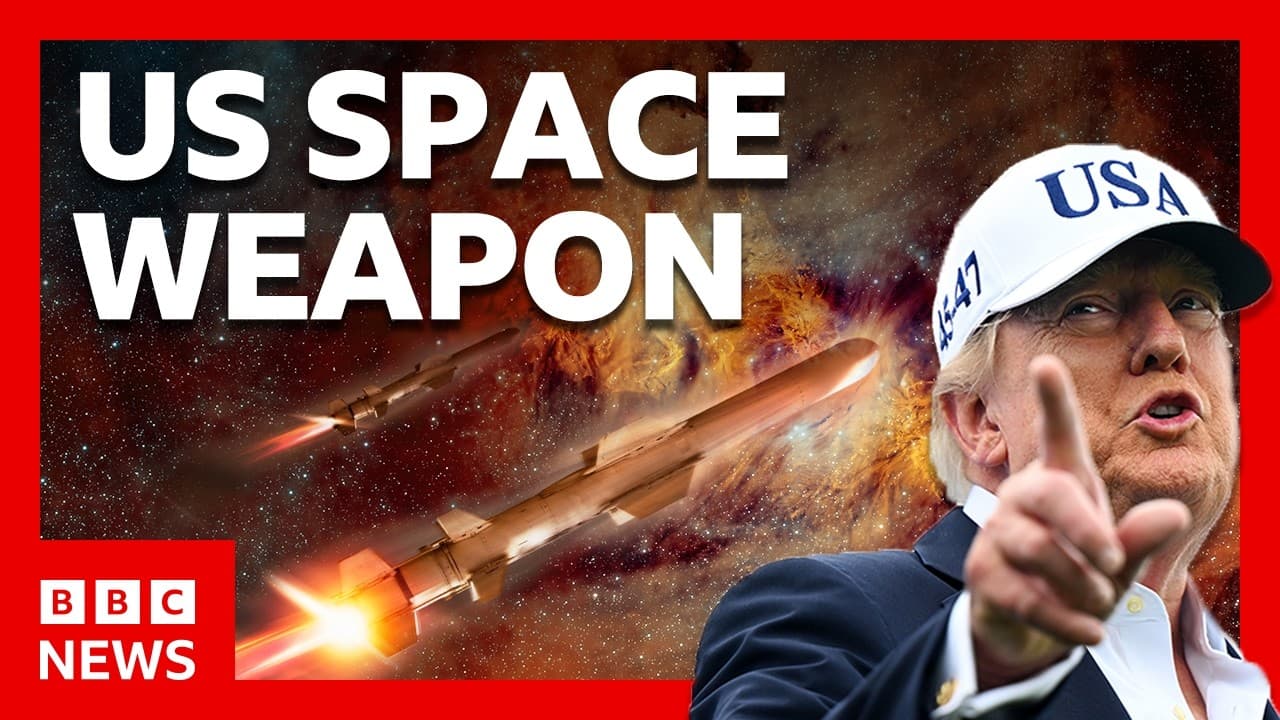
The US says it has space weapons on orbit to defend against hostile actions against satellites. Specific capabilities and deployment timing are undisclosed. Experts discuss possibilities such as kinetic and non kinetic options, including jamming, spoofing, or lasers, and the role of space treaties and deterrence.
Transcript
The United States confirms for the first time that it's deployed space weapons. China urges the US to stop preparing for war in space. My guess is probably something along the lines of lasers. I I would be guessing that an electronic warfare platform of some kind of like or jamming abilities or spoofing abilities, possibly things like what we call ... Read More
Key Insights
- The US confirms on orbit space control weapons exist.
- The purpose is to safeguard against hostile actions toward US satellites and forces.
- Weapons could range from kinetic to non kinetic, including jamming, spoofing, or lasers.
- The Outer Space Treaty bans nuclear weapons in space but does not fully prohibit conventional weapons.
- Space Force manages US military operations from space and detects launches quickly.
- China and Russia have in the past conducted anti satellite tests with debris implications.
- Deterrence in space involves both denial and punishment strategies.
- There is a debate about how peaceful space use should remain as weaponization increases.
- More videos from this channel:
- More from this channel: BBC News
Install to Summarize YouTube Videos and Get Transcripts
Explore YouTube Video Summarizer or Get YouTube Transcript Extractor
Questions & Answers
Q: What is the main reason the US says space weapons are necessary?
The US says space weapons are needed to safeguard satellites and US forces by defending against hostile actions in space. Officials argue that rivals are developing capabilities that could challenge US command and control and the ability to communicate with units in the field, making space defense a priority for national security.
Q: What kinds of space weapons might exist according to the discussion?
Possible options include kinetic kill mechanisms that could ram into another satellite, or non kinetic approaches such as jamming signals, spoofing satellite data, or using lasers. The video notes there could also be reversible actions that disable a satellite without creating debris, in addition to more destructive non reversible options.
Q: What does the Outer Space Treaty say and how is it relevant?
The Outer Space Treaty, signed in 1967, bans nuclear weapons in space and the testing of weapons there. The video explains that while this treaty sets limits, it does not completely prevent any country from disobeying it, and emphasizes that space is a special domain for peaceful use by all.
Q: What is the Space Force and what does it do?
The Space Force is a branch created to protect US assets in space. It focuses on tracking potential threats, such as missiles that could target satellites, and works with agencies like the National Reconnaissance Office to detect threats and respond to space related security issues.
Q: How do other countries view space weaponization according to the video?
Russia and China are described as developing capabilities that could challenge US dominance in space. China has conducted anti satellite tests in the past, creating debris, while Russia has targeted its own satellites, raising concerns about debris and risks to other satellites, including the International Space Station.
Q: What is Golden Dome in relation to space defense?
Golden Dome is described as a defense concept announced by the Trump administration that aims to combine ground based and space based systems to defend against new generation aerial threats, including interceptor missiles based in space.
Q: Why is debris from space weapon tests a major concern?
Debris from space weapon tests can threaten thousands of functioning satellites and missions, including those used for communications, navigation, and monitoring. The video notes that debris can require avoidance maneuvers for the International Space Station and other assets, highlighting the risk of creating long lasting space pollution.
Q: What does deterrence by denial mean in space defense?
Deterrence by denial refers to making it difficult for an adversary to achieve its objectives in space, thereby discouraging aggression. The video mentions that experts view competition rather than conflict as the space domain moves from peaceful use to potential weaponization, combining denial capabilities with punitive deterrence when necessary.
Summary & Key Takeaways
-
The video explains that the US has admitted space weapons on orbit to safeguard US forces and satellite infrastructure. It notes the lack of detail on capabilities and timeline, and cites statements from officials indicating both offensive and defensive needs.
-
It covers potential weapon types from kinetic to non kinetic and mentions risks of debris in space, while highlighting international responses and the Outer Space Treaty.
-
It explains the Space Force and how it fits into national security policy, and contrasts US positions with Russia and China on space weaponization and deterrence strategies.
Read in Other Languages (beta)
Share This Summary 📚
Summarize YouTube Videos and Get Video Transcripts with 1-Click
Try YouTube Summary with ChatGPT & Claude or YouTube Transcript Generator
Explore More Summaries from BBC News 📚






Summarize YouTube Videos and Get Video Transcripts with 1-Click
Try YouTube Summary with ChatGPT & Claude or YouTube Transcript Generator