Why Did Robert Jenrick Defect to Reform UK?
TL;DR
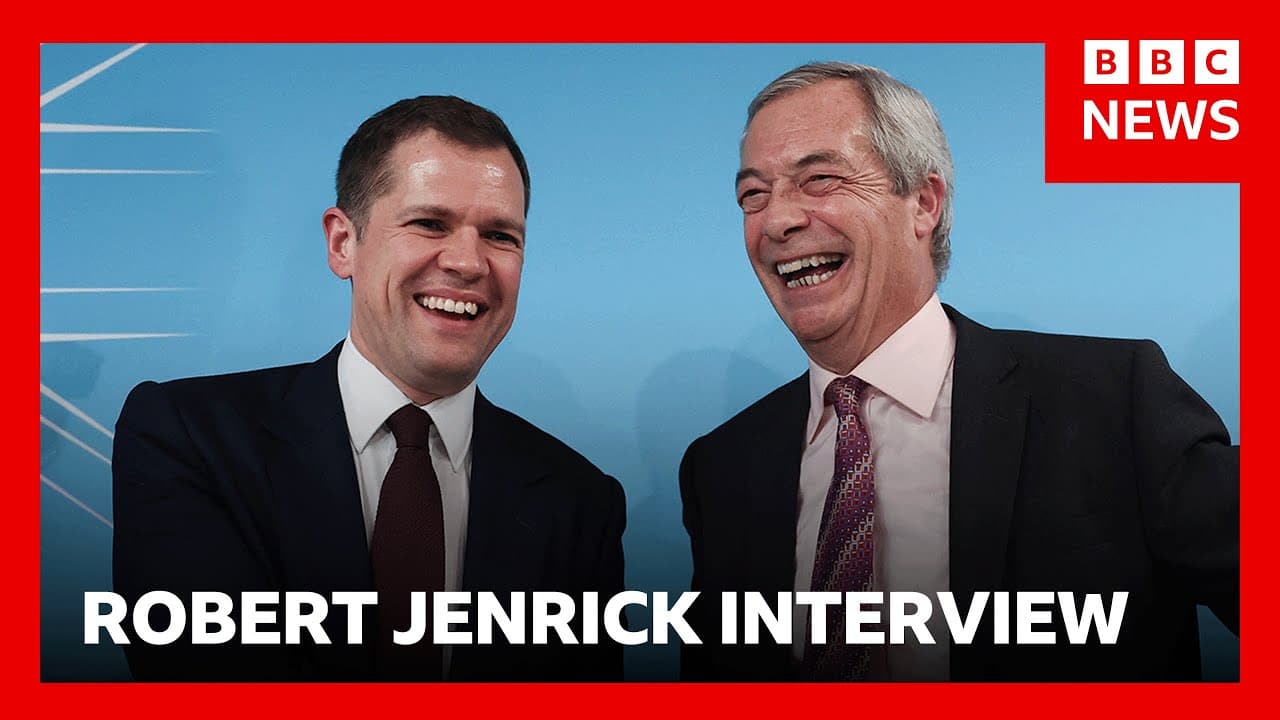
Robert Jenrick says he joined Reform UK because he no longer believed the Conservative Party could admit its failures or fix Britain’s problems. He says he resolved to defect over Christmas, viewed a shadow cabinet discussion about whether Britain was broken as the final straw, and argues that the move can unite the political right rather than advance his personal ambition.
Transcript
Now following yesterday's dramatic developments at Westminster, Robert Genrich, the former Conservative MP who was sacked as the shadow justice secretary by Kemmy Badnock of the Conservative Party and then defected to Reform UK has sat down with Laura Coonsburg for this exclusive interview. >> Robert Jenick, we will talk about how you came to this ... Read More
Key Insights
- Robert Jenrick says his decision to leave the Conservative Party developed gradually over years and became final over Christmas. He presents the move as the result of sustained disagreement with the party’s direction, rather than a sudden response to being dismissed as shadow justice secretary.
- The shadow cabinet debate over whether Britain is broken was the final straw for Jenrick. He says the official position denied the seriousness of problems experienced by his constituents, including A&E delays, poor roads, uncontrolled immigration, stagnant living standards, rising bills, and weak wage growth.
- Jenrick believes the Conservative Party has failed to acknowledge its mistakes in government. He argues that some of the people responsible remain influential and that the party cannot regain public trust or repair the country without honestly confronting its own record.
- Jenrick says he attempted to reform the Conservative Party from within by resigning from Rishi Sunak’s cabinet, standing for the party leadership, and arguing publicly and privately for fundamental change. He concluded during the following period that the transformation he wanted would not happen.
- The central trust dispute concerns what Jenrick told colleagues and constituents while considering defection. Kuenssberg says people feel misled because he continued participating in Conservative discussions while contemplating a move, but Jenrick compares the process to agonising over leaving a job or relationship.
- Jenrick frames loyalty to the country as more important than loyalty to a political party. He cites his resignation from the previous cabinet as evidence that he is willing to sacrifice his position when he believes a policy or party decision conflicts with his principles.
- Jenrick says the Conservative Party is constrained by its record in office. He uses the handling of the extremist El Fata as an example, arguing that senior Conservatives focused on avoiding attention to the party’s previous role instead of supporting his demand for deportation.
- Kemi Badenoch says the Conservative Party is stronger without Jenrick and that she is not worried about additional defections. Jenrick offers the opposite assessment, arguing that his move to Reform UK creates an opportunity to help fix the country and unite the political right.
Install to Summarize YouTube Videos and Get Transcripts
Explore YouTube Video Summarizer or Get YouTube Transcript Extractor
Questions & Answers
Q: Why did Robert Jenrick defect to Reform UK?
Robert Jenrick says he defected because he concluded that the Conservative Party could not admit its previous mistakes, change fundamentally, or provide convincing solutions for Britain. He says concerns about A&E delays, potholes, immigration, living standards, bills, and wages demanded greater urgency. A shadow cabinet discussion in which the party maintained that Britain was not broken became his final straw.
Q: When did Robert Jenrick decide to leave the Conservatives?
Jenrick says the decision developed gradually over a long period, with doubts stretching back to his resignation from Rishi Sunak’s cabinet over the Rwanda policy. He says he resolved to leave the Conservative Party and join Reform UK over Christmas. Although discussions with Nigel Farage continued, Jenrick insists he had reached the decision before Kemi Badenoch dismissed him as shadow justice secretary.
Q: What was the final straw behind Robert Jenrick’s defection?
The final straw, according to Jenrick, was a shadow cabinet away day held roughly a week before his defection. A presentation stated that the party position was that Britain was not broken. Jenrick challenged that view because he believed his constituents’ experiences with public services, roads, immigration, living costs, and wages showed that the country faced serious and urgent problems.
Q: How did Robert Jenrick justify leaving after remaining in the shadow cabinet?
Jenrick says he agonised over the decision while continuing to perform his responsibilities, comparing the situation to someone considering whether to leave a job or relationship. He argues that he had consistently expressed his beliefs publicly and privately, even when they caused disagreement within the party. His justification is that serving the country and speaking honestly mattered more than preserving party loyalty.
Q: Why was Robert Jenrick challenged about public trust?
Laura Kuenssberg challenged Jenrick because colleagues and constituents believed he remained a committed Conservative while he had been considering and discussing a move to Reform UK. She noted that he had recently attended ordinary shadow cabinet meetings and had previously denied that he was contemplating defection. Jenrick responded that he had been frank about his political positions and had tried to make the party change.
Q: What problems does Robert Jenrick say show Britain is broken?
Jenrick points to constituents waiting for A&E appointments, badly maintained roads, immigration that he describes as out of control, stagnant living standards, rising household bills, and wages that are not increasing. He says these pressures make everyday life difficult in Nottinghamshire and elsewhere. In his view, treating them as issues that require only limited technical adjustments fails to recognise the country’s broader decline.
Q: Why does Robert Jenrick believe the Conservatives cannot regain trust?
Jenrick argues that the Conservative Party has not honestly confronted the mistakes it made while governing. He says many of the people connected to those decisions still hold influential positions and that some party figures either do not understand the country’s difficulties or will not acknowledge the party’s responsibility. He concludes that voters cannot trust the Conservatives to repair problems they refuse to recognise.
Q: How does Robert Jenrick answer claims that his move was driven by ambition?
Jenrick presents the defection as a decision based on principle and the country’s interests, not personal advancement. He refers to his earlier resignation from Rishi Sunak’s cabinet as evidence that he has previously surrendered political office over policy disagreements. He says joining Reform UK gives him an opportunity to contribute to fixing the country and supports his stated aim of uniting the political right.
Summary & Key Takeaways
-
Robert Jenrick says his departure followed years of frustration with the Conservative Party, beginning before his resignation from Rishi Sunak’s cabinet over the Rwanda policy. After unsuccessfully seeking the party leadership, he concluded that the Conservatives had neither understood their previous mistakes nor changed enough to offer credible solutions for the country.
-
Jenrick says he resolved to join Reform UK over Christmas. The final straw came at a shadow cabinet away day, where the party position was that Britain was not broken. He disagreed, pointing to A&E waits, potholes, uncontrolled immigration, stagnant living standards, rising bills, and wages that were not increasing.
-
Laura Kuenssberg repeatedly challenges Jenrick about trust, noting that colleagues and constituents believed he remained committed to the Conservatives while he considered defecting. Jenrick responds that he had been candid about his political beliefs, had agonised over leaving, and ultimately placed what he saw as the country’s interests above loyalty to a party.
Read in Other Languages (beta)
Share This Summary 📚
Summarize YouTube Videos and Get Video Transcripts with 1-Click
Try YouTube Summary with ChatGPT & Claude or YouTube Transcript Generator
Explore More Summaries from BBC News 📚





Summarize YouTube Videos and Get Video Transcripts with 1-Click
Try YouTube Summary with ChatGPT & Claude or YouTube Transcript Generator