How Did Transatlantic Trade Shape Colonies?
TL;DR
Transatlantic trade made colonial economies dependent on one another, encouraged specialized commodity production, and sharply increased demand for enslaved labor. Mercantilism directed colonies to enrich Britain through trade restrictions, but inconsistent enforcement allowed colonial autonomy, while commerce with American Indians spread European goods, shifted power relationships, transmitted disease, and created new dependencies.
Transcript
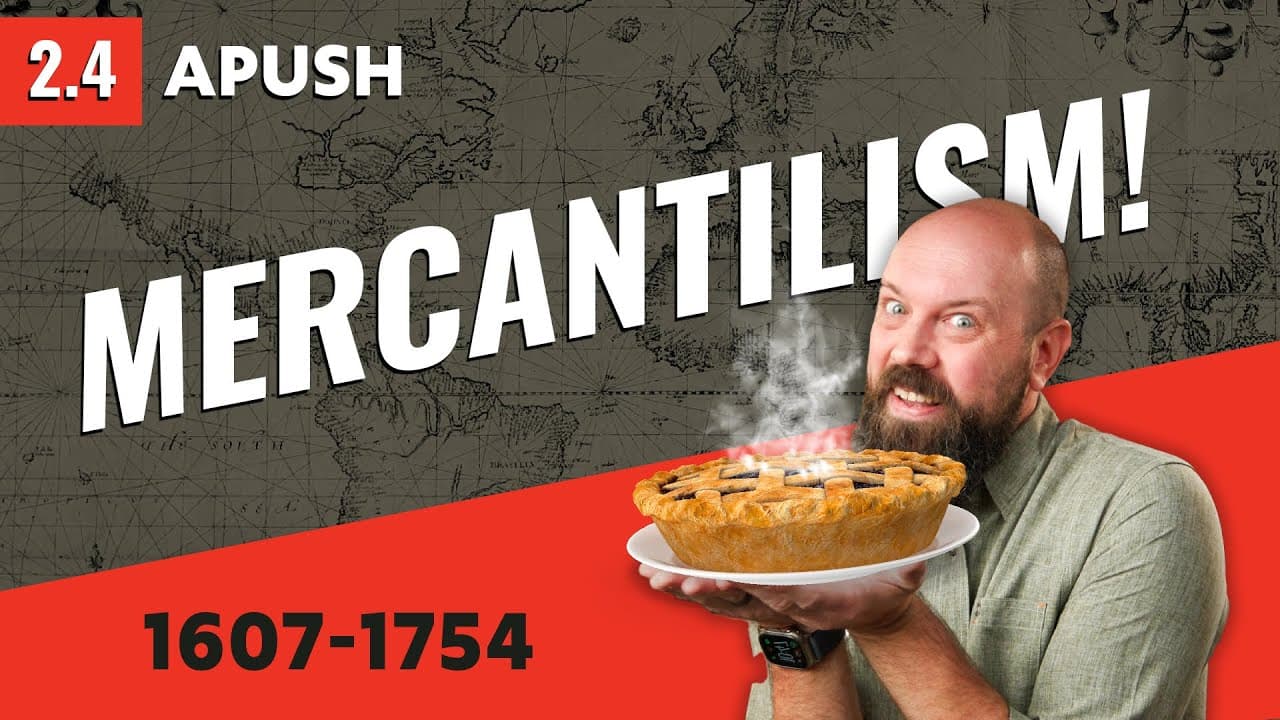
All right, it's time to talk about the transatlantic trade system and its multitudinous effects. And if you're anything like me, well, that sounds like a party. So, if you're ready to get them brain cows milked, let's get to it. Okay, now if you'll recall in the last video, we talked about the development of the British colonies in the Americas and... Read More
Key Insights
- Transatlantic trade created economic interdependence among colonial regions because each economy relied on goods or labor supplied by another. New England rum helped purchase enslaved laborers in West Africa, enslaved workers produced Caribbean sugarcane, and that sugarcane returned to New England for rum production.
- Colonial economies increasingly specialized in commodities that were highly demanded along Atlantic trade routes. In the British West Indies, favorable soil, a warm climate, and long growing seasons encouraged Barbados and Jamaica to devote much of their economic activity to cultivating sugarcane.
- European demand for sugar expanded because it could sweeten unpleasant foods, drinks, and medicines. As access to sugar increased, demand grew rapidly, encouraging sugar-producing islands to concentrate their economies on cultivation instead of maintaining more varied forms of colonial production.
- Sugar production increased demand for enslaved labor because planting and harvesting the crop required intensive work. Enslaved Africans supplied much of this labor, while American Indians were also enslaved on a large scale. Deadly working conditions further increased the continuing demand for replacement laborers.
- Mercantilism was an economic system that favored greater exports than imports. European states measured wealth through gold and silver, so exports brought wealth into a country while imports sent it outward. Colonies therefore existed primarily to enrich and strengthen their imperial mother states.
- The Navigation Acts restricted colonial commerce through three major rules. Imported goods had to pass through English ports for taxation, colonial trade had to use English ships, and certain highly valuable colonial goods could be exported only to England, limiting colonists' ability to serve their own interests.
- Salutary neglect was the inconsistent enforcement of British colonial laws rather than a formal policy. Because Britain was separated from the colonies by the Atlantic and sometimes distracted by other concerns, colonists could often ignore trade restrictions and preserve a significant degree of practical economic autonomy.
- Trade with American Indians changed indigenous societies by introducing metal tools, firearms, horses, and epidemic diseases such as smallpox and measles. Firearms altered power relationships between rival groups, while dependence on European goods increased vulnerability to manipulation, internal division, and devastating population loss.
Install to Summarize YouTube Videos and Get Transcripts
Explore YouTube Video Summarizer or Get YouTube Transcript Extractor
Questions & Answers
Q: How did triangular trade connect Atlantic economies?
Triangular trade connected New England, West Africa, and the West Indies through a recurring exchange of goods and labor. New Englanders shipped rum to West Africa, where it was traded for enslaved laborers. Those people were transported across the Middle Passage and exchanged for West Indian sugarcane, which was then shipped to New England and distilled into more rum.
Q: Why did sugar dominate some Caribbean economies?
Sugar dominated colonial economies in places such as Barbados and Jamaica because good soil, a warm climate, and long growing seasons supported its cultivation. As Europeans gained greater access to sugar, demand increased because it made unpleasant drinks, medicines, and other foods taste better. Sugar-producing islands consequently devoted nearly their entire economies to meeting this expanding demand.
Q: How did sugar demand expand enslaved labor?
Rising sugar demand increased the need for laborers to perform the intensive work of planting and harvesting sugarcane. Enslaved Africans supplied much of this workforce, although American Indians were also enslaved on a large scale. Because conditions were harsh and unforgiving, many laborers died, which further increased demand for enslaved people to sustain continued production.
Q: What was mercantilism in the colonial Atlantic?
Mercantilism was an economic system emphasizing a favorable balance of trade, meaning that a state sought to export more goods than it imported. European states measured wealth through their stores of gold and silver. Exports brought gold into a country, while imports sent it out, so colonies were expected to enrich the mother state rather than pursue independent economic interests.
Q: How did the Navigation Acts restrict colonists?
The Navigation Acts imposed three central restrictions on colonial trade. Goods imported by colonists first had to pass through English ports so they could be taxed. Colonial trade had to be carried on English ships. Britain also identified highly valuable colonial goods that could be exported only to England, reducing the colonists' freedom to make economic choices benefiting themselves.
Q: What was salutary neglect in British America?
Salutary neglect was Britain's inconsistent enforcement of colonial laws, not a formally declared policy. The Atlantic Ocean made control difficult, and Britain was sometimes occupied with more pressing issues elsewhere. Colonists therefore discovered that they could often ignore the Navigation Acts without punishment, allowing them to maintain some of the economic and political independence they had developed earlier.
Q: Why did the Dominion of New England collapse?
King James II created the Dominion of New England in 1686 by combining several colonies under a crown-appointed governor who did not answer to elected colonial assemblies. After Parliament overthrew James during the Glorious Revolution in 1688 and installed William and Mary, news reached the colonies and sparked rebellions. The dominion collapsed, and elected colonial assemblies returned.
Q: How did European trade affect American Indians?
European trade affected American Indians in three major ways. It introduced metal tools, firearms, and horses, with firearms shifting power toward indigenous groups that obtained them. Trade also spread epidemic diseases such as smallpox and measles, devastating indigenous populations. Finally, increasing dependence on European goods made indigenous communities more vulnerable to manipulation and internal division.
Summary & Key Takeaways
-
Transatlantic commerce connected New England, West Africa, and the West Indies through mutually dependent exchanges. One triangular pattern moved rum from New England, enslaved laborers from West Africa, and sugarcane from the West Indies. The system shaped colonial economies by rewarding production of commodities that were in high demand along Atlantic trade routes.
-
Sugar cultivation came to dominate islands such as Barbados and Jamaica because their soil and warm climate supported long growing seasons. Growing European demand for sugar increased demand for enslaved African and American Indian labor. Harsh working conditions killed many laborers, which further intensified the trade in enslaved people across the Atlantic.
-
Mercantilism treated colonies as instruments for enriching the mother country through exports and accumulated gold and silver. Britain used the Navigation Acts and the Dominion of New England to restrict colonial autonomy, although salutary neglect weakened enforcement. Indigenous trade introduced tools, firearms, horses, epidemic diseases, dependence, political manipulation, and internal division.
Read in Other Languages (beta)
Share This Summary 📚
Summarize YouTube Videos and Get Video Transcripts with 1-Click
Try YouTube Summary with ChatGPT & Claude or YouTube Transcript Generator
Explore More Summaries from Heimler's History 📚



Summarize YouTube Videos and Get Video Transcripts with 1-Click
Try YouTube Summary with ChatGPT & Claude or YouTube Transcript Generator