How to Build Charisma by Making People Feel Seen
TL;DR
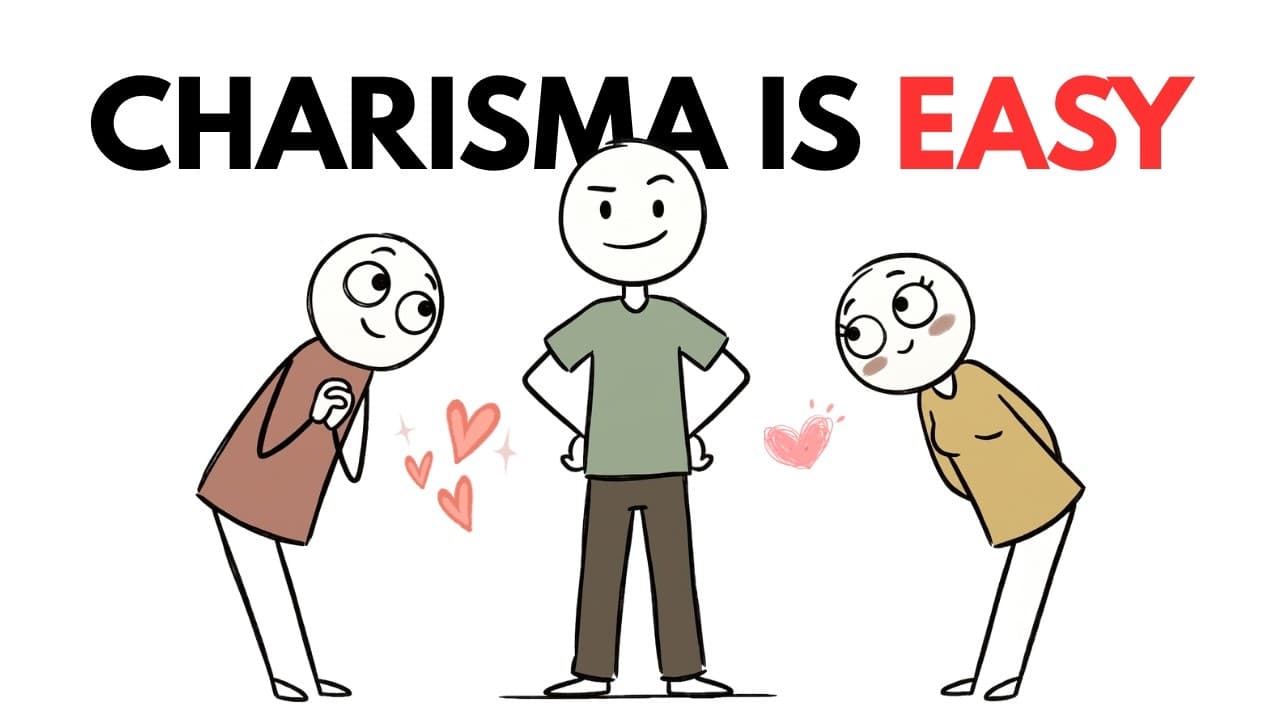
Charisma grows when people feel understood, validated, and cared for in your presence. Instead of monitoring your performance or trying to appear impressive, focus attention outward: ask follow-up questions, establish warmth before displaying competence, and voice sincere, specific compliments. These behaviors are trainable, and research described in the source suggests they improve how others experience and evaluate you.
Transcript
Almost everything you have been taught about charisma is aimed at the wrong target. If you want to make people like you, the advice is always the same. Stand taller. Hold eye contact a second longer. Tell better stories. Be more confident, more interesting, more impressive. So, you tried. You practiced the handshake. You prepared things to say befo... Read More
Key Insights
- Charisma is a combination of influence and affability. Influence gives a person weight and direction when speaking, while affability helps others feel comfortable and at ease. Training only confidence and presence can create respect, but it may not produce warmth or lasting attraction.
- Perceived partner responsiveness is built from understanding, validation, and caring. People feel closer when they believe someone accurately understands their meaning, respects their perspective even without agreeing, and genuinely cares about what happens to them. None of these experiences requires impressive self-presentation.
- Warmth is evaluated before competence when people form impressions. The first concern is a person's intentions, not merely their abilities. Leading with warmth can therefore shape how later evidence of competence is interpreted, while presenting credentials first invites immediate evaluation rather than connection.
- Self-conscious performance monitoring reduces responsiveness. Attention spent checking how a comment sounded, planning the next reply, or wondering whether a joke succeeded is attention unavailable for listening. The attempt to prevent rejection can consequently weaken the warmth that makes connection possible.
- The liking gap is the tendency to underestimate how much a conversation partner liked you. The research described found that people judged their own performance harshly instead of judging the interaction itself, creating unnecessary doubt even when the other person viewed the conversation more positively.
- Charisma is trainable behavior rather than a fixed personality trait. Managers and MBA students who learned specific charismatic behaviors were later rated as more charismatic by independent evaluators, showing that people can improve how they affect others without becoming fundamentally different individuals.
- Follow-up questions increase likability because they demonstrate continued attention. Asking about something the other person just mentioned communicates understanding, validation, and care more clearly than immediately switching to a related personal story. In speed-dating data, more follow-up questions were associated with more second dates.
- Specific compliments communicate evidence of genuine attention. Research across nine experiments found that compliment givers underestimated recipients' positive feelings and overestimated awkwardness. A detailed observation about someone's effort or skill carries more meaning than a generic remark because it shows what was actually noticed.
Install to Summarize YouTube Videos and Get Transcripts
Explore YouTube Video Summarizer or Get YouTube Transcript Extractor
Questions & Answers
Q: What is charisma according to psychological research?
Charisma is described as having two components: influence and affability. Influence is the ability to guide people, carry weight when speaking, and move a group in a direction. Affability is the ability to make others feel comfortable and at ease. Building influence alone can produce intensity and respect, but genuine charisma also requires the warmth that encourages people to connect and return.
Q: How does perceived partner responsiveness make people like you?
Perceived partner responsiveness creates closeness by giving another person three experiences: understanding, validation, and caring. Understanding means accurately grasping what the person meant, not merely hearing the words. Validation means respecting the person's view even when it differs from yours. Caring means showing genuine investment in what happens to them. Together, these experiences make the person feel recognized and valued.
Q: Why should warmth come before competence in a first meeting?
Warmth should come first because people initially evaluate your intentions toward them, then assess your ability to act on those intentions. Establishing warmth can involve using the person's name, appearing glad to be present, and asking about them before discussing yourself. Once warmth is established, later signs of competence are more likely to be received generously instead of treated primarily as claims requiring judgment.
Q: Why can trying too hard to be liked reduce charisma?
Trying too hard can direct attention toward self-monitoring instead of the person in front of you. Checking how you sound, wondering whether a joke worked, and preparing your next statement all consume attention that could support listening and responsiveness. Because warmth depends on noticing and responding to another person, excessive performance management can undermine the connection it was intended to secure.
Q: What is the liking gap in conversations?
The liking gap is the consistent tendency for people to underestimate how much their conversation partners liked them. In the research described, participants spoke with one another, rated how much they liked their partners, and estimated how much their partners liked them. People were commonly too pessimistic because they focused on evaluating their own performance and interpreted their self-criticism as evidence that the interaction went poorly.
Q: Can charisma be learned through specific behaviors?
Charisma can be learned as a collection of behaviors rather than treated as a personality assigned at birth. In the study described, managers and MBA students were filmed speaking, taught specific charismatic behaviors, and filmed again weeks later. Independent evaluators who did not know who received training rated the trained speakers as more charismatic, even though the individuals and their underlying personalities remained the same.
Q: How do follow-up questions make someone more likable?
Follow-up questions make someone more likable by proving that attention continued after the first answer. Instead of using another person's response as a cue to tell a personal story, a listener stays with the subject and asks about an omitted or meaningful detail. The Harvard research described found that people asking more questions were better liked, with the strongest effect concentrated in follow-up questions.
Q: Why are specific compliments more effective than generic praise?
Specific compliments are more effective because they provide evidence that the giver truly noticed something. A broad comment such as praising a shirt can feel like conversational noise, while recognizing how someone handled a difficult call, explained an idea, or sustained visible effort demonstrates attention. Research across nine experiments found that givers underestimated the recipient's positive reaction and overestimated how awkward the exchange would feel.
Summary & Key Takeaways
-
Charisma consists of influence and affability, but conventional advice concentrates mainly on influence through confidence, presence, and performance. Influence without affability can feel intense rather than inviting. Genuine likability depends more on making others comfortable and creating an experience of understanding, validation, and care than on appearing impressive.
-
Self-monitoring consumes the attention needed to respond warmly to another person. The liking gap compounds this problem because people commonly underestimate how much conversation partners like them, then interpret their own harsh self-evaluations as evidence that they lack charisma. Greater outward attention interrupts this cycle and supports genuine connection.
-
Charismatic behavior can be learned without adopting a different personality. The practical methods described include asking follow-up questions, establishing warmth before presenting credentials, and expressing sincere observations with specific evidence. Each method shifts attention toward the other person and communicates responsiveness through concrete, repeatable actions.
Read in Other Languages (beta)
Share This Summary 📚
Summarize YouTube Videos and Get Video Transcripts with 1-Click
Try YouTube Summary with ChatGPT & Claude or YouTube Transcript Generator
Explore More Summaries from PsychToons 📚


Summarize YouTube Videos and Get Video Transcripts with 1-Click
Try YouTube Summary with ChatGPT & Claude or YouTube Transcript Generator