If superpowers were real: Immortality - Joy Lin
TL;DR
Immortality can lead to profound loneliness and memory loss as one outlives loved ones and struggles to recall a vast history. Additionally, physical changes due to evolution and the accumulation of scars over time raise questions about the desirability of eternal life, making it a complex notion to consider.
Transcript
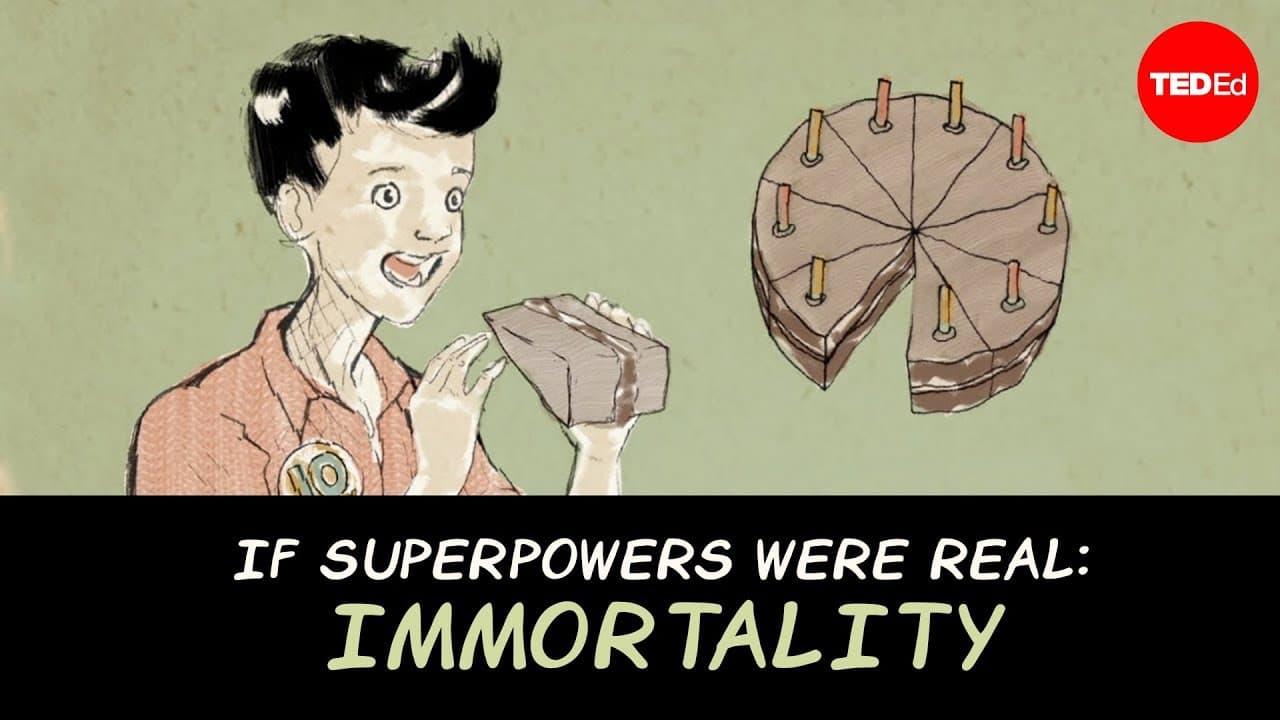
Immortality. In movies, kings are always searching for the secret to immortality. But is immortality really a good thing? To a ten-year-old boy, one year is the same as 10% of his life. To his forty-year-old mother, one year is merely 2.5% of her life. The same year, 365 days, can feel differently to different people. If we live until we're 82, tha... Read More
Key Insights
- 🥰 Immortality may lead to emotional isolation and loneliness due to outliving loved ones.
- 🌸 Memory loss could become a significant challenge with a potentially infinite lifespan.
- 💱 Evolutionary changes could cause physical disparity between immortals and evolving humans.
- 😨 Scars and physical deterioration pose serious challenges for those seeking eternal life.
- ❓ Immortality may redefine the concept of meaningful relationships and connections.
- 🛟 The desirability of eternal life becomes questionable considering the potential drawbacks.
- 💱 Psychological impacts and physical changes are crucial considerations for those contemplating immortality.
Install to Summarize YouTube Videos and Get Transcripts
Explore YouTube Video Summarizer or Get YouTube Transcript Extractor
Questions & Answers
Q: What are the potential psychological challenges of living an immortal life?
Immortality could lead to extreme loneliness, as one would outlive loved ones, and memory loss, as the brain's capacity is limited.
Q: How might evolution play a role in the physical appearance of immortal beings in relation to evolving humans?
If immortals do not evolve while humans do, physical differences may arise, causing isolation and potential ostracization.
Q: What are the implications of accumulating scars over a long, immortal life span?
Scars can accumulate over time, leading to physical deterioration and decreased quality of life, highlighting the drawbacks of immortality.
Q: How does immortality challenge the traditional notions of relationships and meaningful connections?
Immortality could desensitize individuals to the value of relationships, making it difficult to maintain meaningful connections over centuries.
Summary
In this video, the question of whether immortality is a good thing is explored. It is argued that immortality may not be as desirable as it seems, as it can lead to loneliness, memory limitations, physical changes, and potential health issues.
Questions & Answers
Q: How does the perception of time differ for individuals of different ages?
The perception of time can vary greatly depending on a person's age. For a ten-year-old boy, one year is a significant portion of his life, while for his forty-year-old mother, one year is less significant. This difference in perception becomes even more pronounced when considering the potential length of an immortal life. If the boy were to live for 30,000 years, a year to him would feel like a day. However, this prolonged lifespan could lead to feelings of extreme loneliness and sadness as he outlives everyone he loves.
Q: What challenges arise if everyone were immortal?
The issue of limited resources and living space comes to the forefront if everyone were immortal. Earth has finite space, and accommodating an ever-increasing population of immortal individuals would eventually become problematic.
Q: Why do we forget certain memories from our past?
Our brains have a limited capacity, which leads to the replacement of irrelevant or unimportant memories with new information. We don't remember every detail of our past because our brains prioritize relevant and useful information over unnecessary details. This limitation becomes even more significant when considering an immortal life, as the accumulation of memories over vast periods may make it difficult to recall specific details.
Q: How does immortality influence the meaning of a meaningful relationship?
Immortality can greatly impact what is considered a meaningful relationship. If the immortal individual were to enter into a new relationship only once every hundred years, they would have ten thousand girlfriends in a million years. Remembering the names and details of such a large number of relationships becomes virtually impossible, altering the nature of what constitutes a meaningful connection.
Q: How does immortality affect physical appearance?
Immortality allows an individual to outlive the evolutionary changes that occur in the human species. Over time, the average height or physical attributes of the surrounding population may become significantly different. The immortal individual may stand out physically from those around them and potentially face challenges in forming social connections.
Q: What impact does immortality have on scars and physical damage?
While immortality means one cannot die, it does not guarantee invincibility or the prevention of physical damage. Considering the number of scars an average person accumulates in a lifetime, the damage after a thousand years or a million years would be substantial. The likelihood of amputations or physical deformities increases with prolonged life, leading to potential loss of limbs, facial features, and dental health.
Q: What are the consequences of living forever?
Living indefinitely presents numerous challenges and potential negative consequences. These include loneliness, memory limitations, physical changes, deterioration of health and physical appearance, and the loss of meaningful relationships.
Takeaways
Immortality is not as desirable as it may initially appear. While the concept of living forever may be intriguing, the realities of prolonged life include potential loneliness, memory limitations, physical changes, and deteriorating health. These factors should be taken into consideration when contemplating the idea of immortality.
Summary & Key Takeaways
-
Immortality raises questions about psychological impacts due to the passage of time, such as loneliness and memory loss.
-
Evolutionary changes may cause physical disparities between immortals and evolving humans.
-
Eternal life comes with the burden of accumulating scars and potential physical degradation over time.
Read in Other Languages (beta)
Share This Summary 📚
Summarize YouTube Videos and Get Video Transcripts with 1-Click
Try YouTube Summary with ChatGPT & Claude or YouTube Transcript Generator
Explore More Summaries from TED-Ed 📚
Summarize YouTube Videos and Get Video Transcripts with 1-Click
Try YouTube Summary with ChatGPT & Claude or YouTube Transcript Generator