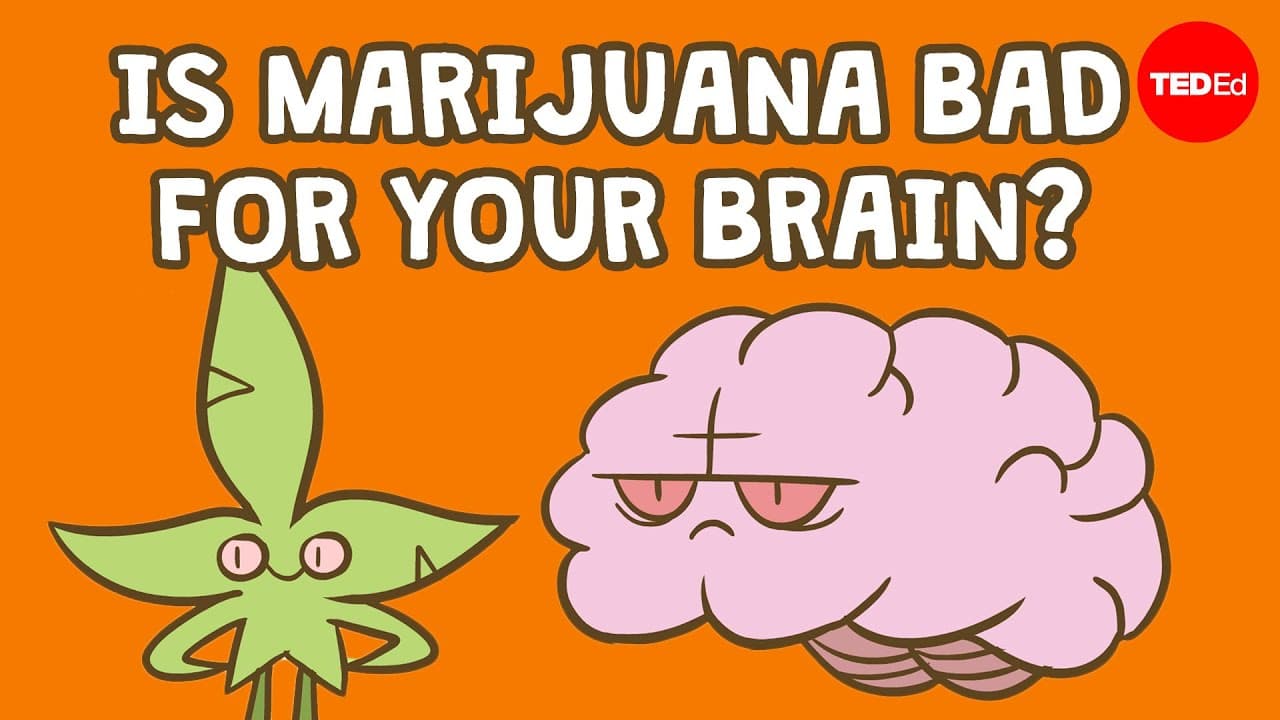
Is marijuana bad for your brain? - Anees Bahji
TL;DR
Marijuana's impact on the brain varies by individual and age. For those under 25, frequent use can disrupt brain development and harm cognitive functions. While it can lead to conditions like marijuana-induced psychosis, especially in those predisposed to such disorders, the overall effects depend on personal brain chemistry and genetics.
Transcript
In 1970, marijuana was classified as a schedule 1 drug in the United States: the strictest designation possible, meaning it was completely illegal and had no recognized medical uses. For decades, this view persisted and set back research on the drug's mechanisms and effects. Today, marijuana’s therapeutic benefits are widely acknowledged, and s... Read More
Key Insights
- 💱 Marijuana's classification has changed over time, from being completely illegal to now being recognized for its therapeutic benefits.
- 🧠 The endocannabinoid system, which marijuana acts upon, has receptors all over the brain and body and influences neural signaling.
- 🧑 The effects of marijuana vary greatly from person to person due to individual brain chemistry, genetics, and life experiences.
- 🧠 Frequent marijuana use in individuals under 25 can disrupt brain development and potentially impact learning and problem-solving abilities.
- 🧑 Marijuana-induced psychosis is more common among young adults and individuals with a family history of psychotic disorders.
- ❓ It is unclear whether marijuana triggers or is merely indicative of an underlying psychotic disorder.
- 🧠 The brain and body can develop tolerance to marijuana with repeated use, leading to a need for higher doses to achieve the same effects.
Install to Summarize YouTube Videos and Get Transcripts
Explore YouTube Video Summarizer or Get YouTube Transcript Extractor
Questions & Answers
Q: Does marijuana have any recognized medical uses?
Yes, marijuana's therapeutic benefits are widely acknowledged, and it has been legalized for medical use in some countries.
Q: How does marijuana impact brain signaling?
Marijuana slows down neural signaling by binding to cannabinoid receptors. This can affect behavior, cognition, and perception, but the exact impact depends on each individual's brain chemistry and genetics.
Q: Can marijuana disrupt brain development?
Frequent marijuana use in people under 25 can disrupt the development of white matter tracts in the brain, potentially affecting learning ability and problem-solving skills. The extent of damage and reversibility are still unclear.
Q: What are the risks of marijuana-induced psychosis?
Marijuana can cause hallucinations or paranoid delusions, known as marijuana-induced psychosis. It is more common among people with a family history of psychotic disorders or in young adults. The relationship between marijuana use and the onset of a psychotic disorder is still not fully understood.
Q: Is there a risk of withdrawal symptoms from marijuana?
Unlike many other drugs, marijuana does not lead to life-threatening withdrawal symptoms if use stops. However, there may be subtle withdrawal symptoms such as sleep disturbances and mood changes, which typically resolve within a few weeks.
Key Insights:
- Marijuana's classification has changed over time, from being completely illegal to now being recognized for its therapeutic benefits.
- The endocannabinoid system, which marijuana acts upon, has receptors all over the brain and body and influences neural signaling.
- The effects of marijuana vary greatly from person to person due to individual brain chemistry, genetics, and life experiences.
- Frequent marijuana use in individuals under 25 can disrupt brain development and potentially impact learning and problem-solving abilities.
- Marijuana-induced psychosis is more common among young adults and individuals with a family history of psychotic disorders.
- It is unclear whether marijuana triggers or is merely indicative of an underlying psychotic disorder.
- The brain and body can develop tolerance to marijuana with repeated use, leading to a need for higher doses to achieve the same effects.
- There is no risk of fatal overdose from marijuana, and withdrawal symptoms are generally mild and temporary. However, some negative effects may still occur even without known risk factors.
Summary
This video explores the question of whether recreational marijuana use is bad for the brain. While marijuana's medical benefits are widely acknowledged, concerns remain about its effects on the brain. The video explains how marijuana acts on the body's cannabinoid system, which has receptors throughout the brain and body. It also discusses the different active compounds in marijuana, THC and CBD, and how they affect signaling in the brain. The video highlights the importance of individual factors such as brain chemistry, genetics, and age in determining the effects of marijuana use. It also discusses known risk factors, such as disruptions in white matter development and the potential for marijuana-induced psychosis. Overall, the impact of marijuana on the brain varies from person to person, and more research is needed to fully understand its effects.
Questions & Answers
Q: How does marijuana act on the body's cannabinoid system?
Marijuana acts on the body's cannabinoid system, which has receptors throughout the brain and body. These receptors interact with both the molecules native to the body, called endocannabinoids, and the active compounds in marijuana, THC, and CBD.
Q: What is the function of the cannabinoid system?
The exact function of the cannabinoid system is not fully understood. However, it is believed to primarily serve as a modulator of other signals in the brain and body. Endocannabinoids travel backward from the receiving neuron to influence the sending neuron, providing feedback that can amplify or diminish different kinds of signals.
Q: What are the main active compounds in marijuana and what effects do they have?
The main active compounds in marijuana are THC and CBD. THC is thought to be primarily responsible for marijuana's psychoactive effects on behavior, cognition, and perception. On the other hand, CBD is responsible for the non-psychoactive effects of marijuana.
Q: How does THC affect signaling in the brain?
THC slows down signaling in the brain by binding to cannabinoid receptors. Unlike endocannabinoids, which are released in specific places in response to specific stimuli, THC binds to receptors all over the cannabinoid system at once. This widespread activity and indirect effects on other systems in the body contribute to the individual variability in how marijuana affects people.
Q: Are there known risk factors for experiencing harmful effects from marijuana use?
Yes, there are known risk factors that can increase the likelihood of experiencing harmful effects from marijuana use. The clearest risk factor is age, as the concentration of cannabinoid receptors in the white matter of the brain is higher in people younger than 25. Frequent marijuana use during this period can disrupt white matter development and affect the brain's ability to form new connections. Additionally, a family history of psychotic disorders like schizophrenia is a risk factor for marijuana-induced psychosis.
Q: Can marijuana cause hallucinations or paranoid delusions?
Yes, marijuana can cause hallucinations or paranoid delusions, which is known as marijuana-induced psychosis. In most cases, these symptoms subside when a person stops using marijuana. However, in rare cases, psychosis may persist and unmask a persistent psychotic disorder. It is still unclear whether marijuana triggers an underlying disorder or if it is merely an indication of an existing condition.
Q: Does marijuana use become less effective over time?
Similar to many other drugs, the brain and body become less sensitive to marijuana with repeated use. This means that it takes more marijuana to achieve the same effects over time.
Q: Are there any risks of fatal overdose or severe withdrawal symptoms from marijuana use?
Unlike many other drugs, there is no risk of fatal overdose from marijuana use. Even heavy use does not lead to debilitating or life-threatening withdrawal symptoms if use is stopped. However, there are more subtle forms of marijuana withdrawal, such as sleep disturbances, irritability, and depressed mood, which typically pass within a few weeks of stopping use.
Q: Can marijuana have negative effects even if a person does not have any known risk factors?
Yes, there is still a possibility of experiencing negative effects from marijuana use, even if a person does not have any known risk factors. The impact of marijuana on the brain varies from person to person, and there are still many factors that are not well understood.
Takeaways
The effects of recreational marijuana use on the brain depend on individual factors such as brain chemistry, genetics, and age. While some risk factors, such as disruptions in white matter development and a family history of psychotic disorders, are known, there are still many aspects that are not fully understood. Marijuana use can have both positive and negative effects, and more research is needed to fully understand its impact on the brain.
Summary & Key Takeaways
-
In the past, marijuana was classified as a schedule 1 drug and considered completely illegal and without medical use. However, its therapeutic benefits are now widely acknowledged.
-
Marijuana acts on the body's cannabinoid system, which has receptors all over the brain and body. Endocannabinoids, molecules native to the body, also act on these receptors.
-
THC is primarily responsible for marijuana's psychoactive effects, while CBD is responsible for non-psychoactive effects. The effects of marijuana vary greatly from person to person.
Read in Other Languages (beta)
Share This Summary 📚
Summarize YouTube Videos and Get Video Transcripts with 1-Click
Try YouTube Summary with ChatGPT & Claude or YouTube Transcript Generator
Explore More Summaries from TED-Ed 📚




Summarize YouTube Videos and Get Video Transcripts with 1-Click
Try YouTube Summary with ChatGPT & Claude or YouTube Transcript Generator