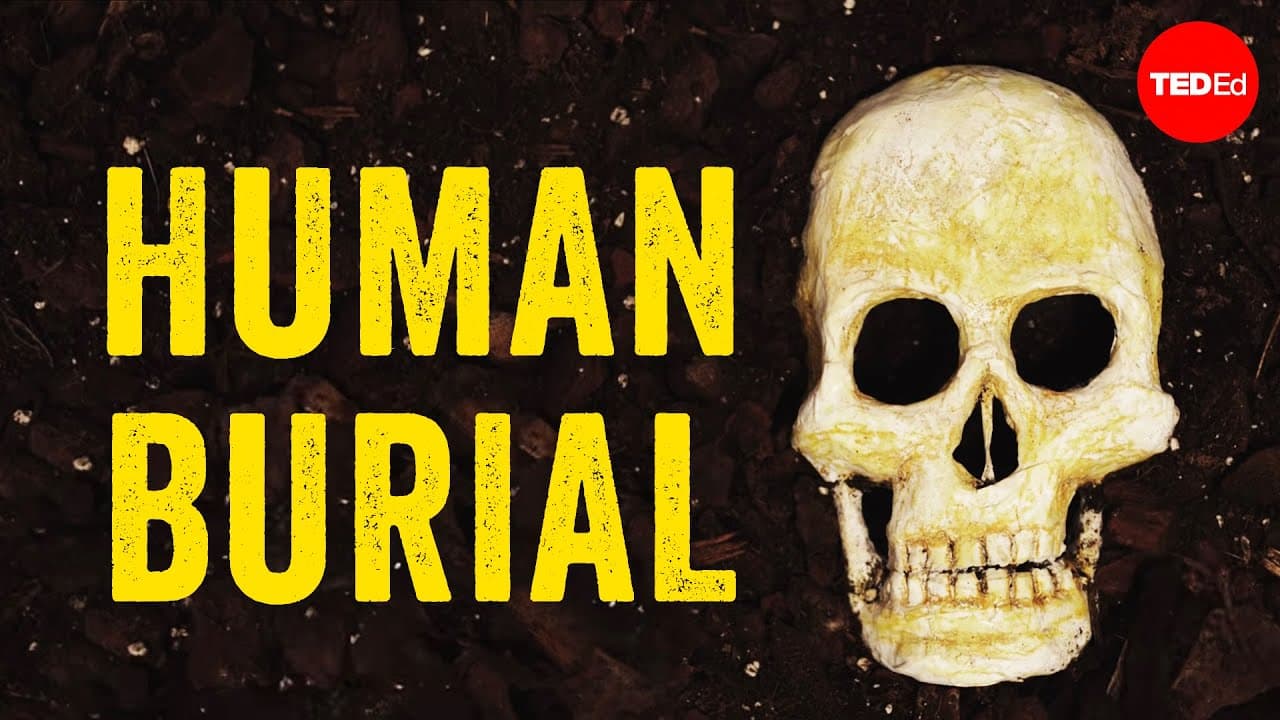
What happens to our bodies after we die? - Farnaz Khatibi Jafari
Transcript
Read and summarize the transcript of this video on Glasp Reader (beta).
Install to Summarize YouTube Videos and Get Transcripts
Explore YouTube Video Summarizer or Get YouTube Transcript Extractor
Summary
This video explores what happens to the human body after death and the potential problem of running out of burial space on Earth. It discusses the stages of decomposition, the factors that affect the rate of decomposition, and the various burial practices across different cultures throughout history. It also examines the issue of limited burial space in densely populated areas and provides alternative options, such as vertical burials in skyscraper cemeteries and environmentally-friendly burial practices like promession and green burials. The video concludes by highlighting the need for creative solutions to the increasing demand for burial space.
Questions & Answers
Q: What happens to the body after a person dies?
After death, various stages occur in the body before it begins decomposing. Blood starts settling in the lower parts of the body. Then, livor mortis or post-mortem stain appears around eight to twelve hours later. The muscles initially relax completely (primary flaccidity) but stiffen (rigor mortis) within two to six hours. The body's temperature also adjusts to its surroundings.
Q: What is decomposition and how is it influenced?
Decomposition is the process in which bacteria and insects break down the body. Many factors affect the rate of decomposition, including temperature, humidity, and the presence of insects. Casper's Law provides a general guide stating that a body decomposes twice as fast in the air as in water and eight times as fast when buried in earth. Soil acidity, with a pH below 5.3, promotes rapid bone decomposition, while neutral or basic soil can preserve skeletons for centuries.
Q: How have different cultures approached burials throughout history?
Different cultures have developed unique burial practices. Neanderthals engaged in burial rituals involving positioning, coloring, or decorating corpses. Traditional Christian burials involve dressing the body, while in traditional Islam, the body is wrapped in a ritual fabric with the face toward Mecca. Hindus ceremonially burn bodies, and Zoroastrians place them atop towers to expose them to the Sun and scavenging birds.
Q: Why is burial land running out in high-population areas?
With the growth of high-population areas, suitable burial land is becoming scarce. Purchasing private gravesites has become expensive, making simple burials inaccessible to many. Cremation, the second most common burial practice, also comes at a high cost. The issue of running out of space is not a matter of total land globally, but rather the clustering of large populations in cities. Some major cities, such as London, may face the exhaustion of burial grounds by 2035.
Q: What alternatives to traditional burials exist?
Several alternatives to traditional burials have been developed to address the issue of limited space. Skyscraper cemeteries enable vertical burials, utilizing the vertical space in cities. Environmentally-friendly options include promession, which freeze-dries and pulverizes the body to create compost, and green burials that utilize biodegradable materials, such as caskets and urns that sprout trees or burial suits that cultivate mushrooms. Eternal reefs take ashes mixed with cement to create marine habitats for sea life.
Q: What is the significance of burial practices for humanity?
Burial practices reflect the evolving treatment of bodies after death. While different people may have unique spiritual, religious, or practical approaches to dying, the increasing demand for burial space urges us to be creative in our approach to body disposition. The challenges posed by limited burial space highlight the need for innovative solutions to ensure respectful and sustainable practices.
Takeaways
The video highlights the different stages of decomposition after death, emphasizing the factors that influence the speed of decomposition. It also explores various historical and cultural burial practices, showcasing the diversity of approaches throughout human history. The concept of running out of burial space in dense populations is discussed, with specific examples given. Alternatives and creative solutions, such as vertical burials and environmentally-friendly practices, are presented as potential ways to address the issue. The overarching message is that while death is inevitable, the increasingly limited burial space on Earth should inspire us to find innovative and sustainable ways to handle the final stages of life.
Read in Other Languages (beta)
Share This Summary 📚
Summarize YouTube Videos and Get Video Transcripts with 1-Click
Try YouTube Summary with ChatGPT & Claude or YouTube Transcript Generator
Explore More Summaries from TED-Ed 📚
Summarize YouTube Videos and Get Video Transcripts with 1-Click
Try YouTube Summary with ChatGPT & Claude or YouTube Transcript Generator