How to Think in English Without Translating
TL;DR
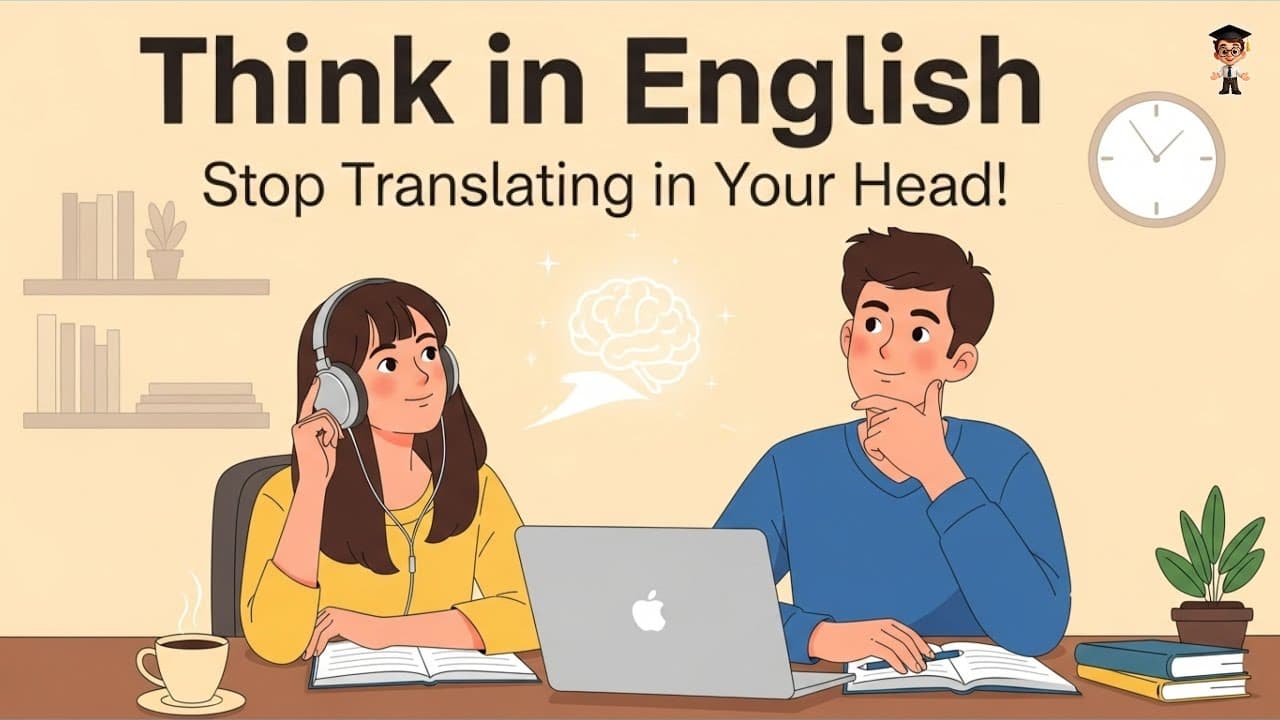
Start thinking directly in English by linking familiar objects, pictures, feelings, and actions to simple English words and sentences. Practice naming nearby items for five minutes daily, use picture flashcards, and spend 10–15 minutes with visual English content such as cartoons or children’s songs. Be patient because replacing the translation habit requires small, consistent steps.
Transcript
Hello everyone and welcome back to Mr. English Channel where learning English is easy and fun. I'm Emily and I'm Paul. Hello Emily. How are you today? I'm doing great Paul. The sun is shining and I have my cup of tea. It's a good day. How about you? I'm fantastic. I'm really excited for our topic today. It's a big one. It is. But before we start, e... Read More
Key Insights
- Translating in your head is a slow process because the brain moves from English to another language and then back to English before responding. During this delay, the conversation may continue, leaving the learner feeling one step behind.
- Word-for-word translation is sometimes inaccurate because an English word can have several meanings, and a word in another language may not have a perfect English equivalent. Direct translation can therefore produce sentences that sound strange or communicate the wrong meaning.
- Direct connection is the central goal of thinking in English. Instead of using another language as an intermediary, learners connect an object, image, feeling, or action immediately with its English word or phrase, creating a faster route from thought to speech.
- Naming nearby objects is a practical starting exercise for beginners. Looking at a pen, door, window, table, or cup and thinking only of its English name for five minutes daily strengthens the connection between the physical object and the English word.
- Picture flashcards support translation-free vocabulary practice by placing an image on one side and its English name on the other. Pictures of the sun, animals, fruit, and other familiar subjects allow learners to associate a universal visual directly with English vocabulary.
- Simple self-narration builds sentence-level thinking by connecting immediate experiences with short English statements. Learners can identify feelings with phrases such as “I am tired” or describe current actions with sentences such as “I drink water” and “I sit down.”
- Visual English content helps learners infer meaning directly from context. Cartoons and children’s songs pair simple language with visible characters, objects, movements, and actions, allowing the brain to connect spoken English with what is happening instead of translating each word.
- Patience is necessary because translating is an established habit that takes time to change. Mistakes should be treated as signs of what needs more practice, while small daily victories and consistent repetition gradually make direct English thinking feel more natural.
Install to Summarize YouTube Videos and Get Transcripts
Explore YouTube Video Summarizer or Get YouTube Transcript Extractor
Questions & Answers
Q: Why does translating in your head slow English conversations?
Translating creates a three-step mental process: hearing or reading English, converting it into your own language, and then converting your intended response back into English. This process takes time while the conversation continues. As a result, you may feel one step behind, respond slowly, or miss what the other person says next.
Q: How can beginners start thinking directly in English?
Beginners can start with single, familiar words. Look around the room, notice an object, and think only of its English name, such as “pen,” “door,” “window,” “chair,” or “cup.” Practicing this for five minutes every day connects each object directly to English and removes the need to pass through another language first.
Q: How do picture flashcards help you stop translating?
Picture flashcards create a direct association between an image and an English word. One side shows a picture, such as the sun, a dog, or an apple, while the other side shows its English name. Looking at the picture and recalling only the English word builds vocabulary without first retrieving the equivalent word in another language.
Q: How can you practice thinking in simple English sentences?
Connect short sentences to feelings and actions as they happen. When you feel happy, tired, or hungry, think “I am happy,” “I am tired,” or “I am hungry.” When you drink water, open a door, or sit down, describe the action in your head using a simple English sentence at that exact moment.
Q: What daily exercise can connect English words to objects?
Spend five minutes looking at familiar items around your home or workspace and naming each one silently in English. For example, look at a kitchen table and think “table,” or hold a pen and think “pen.” Repeating this exercise creates a direct link between the object and its English label without using another language.
Q: Why are simple cartoons useful for thinking in English?
Simple cartoons combine basic spoken English with visible actions, characters, and objects. When a character mentions a ball and the ball appears on screen, the image helps the learner understand the word directly. Because the story keeps moving, learners watch, listen, and use visual context instead of stopping to translate every expression.
Q: How can children’s songs support direct English understanding?
Children’s songs often connect simple English words with physical actions. A song can name body parts while the learner points to or moves them, linking each spoken word directly to its meaning. The combination of sound, movement, and repetition helps the learner remember vocabulary without relying on a translation into another language.
Q: What should you do when you notice yourself translating?
Do not become angry or conclude that you are bad at English. Recognize that translating is a habit and that changing it takes time. Notice what happened, return to a simple English word or phrase, and try again. Treat mistakes as useful signs of what needs more practice, then continue with small, consistent steps.
Summary & Key Takeaways
-
Translating English into your first language and then converting a response back into English creates a slow, three-step process. It can leave you behind in conversations and produce mistakes because words do not always have exact equivalents. The goal is to connect meaning directly with English words and phrases.
-
Beginners can develop direct connections by naming visible objects in English for five minutes each day. Picture flashcards provide similar practice by pairing images with English words. Learners can then connect feelings and actions to simple sentences, such as “I am happy,” “I am hungry,” or “I open the door.”
-
Simple cartoons and children’s songs combine words with visible objects, movements, and actions, helping learners understand English without translating. Changing a long-established habit takes time, so patience matters. Small daily practices, kindness toward mistakes, and consistent repetition gradually make thinking and responding in English easier and more natural.
Read in Other Languages (beta)
Share This Summary 📚
Summarize YouTube Videos and Get Video Transcripts with 1-Click
Try YouTube Summary with ChatGPT & Claude or YouTube Transcript Generator
Explore More Summaries from Mr. English Channel 📚

Summarize YouTube Videos and Get Video Transcripts with 1-Click
Try YouTube Summary with ChatGPT & Claude or YouTube Transcript Generator