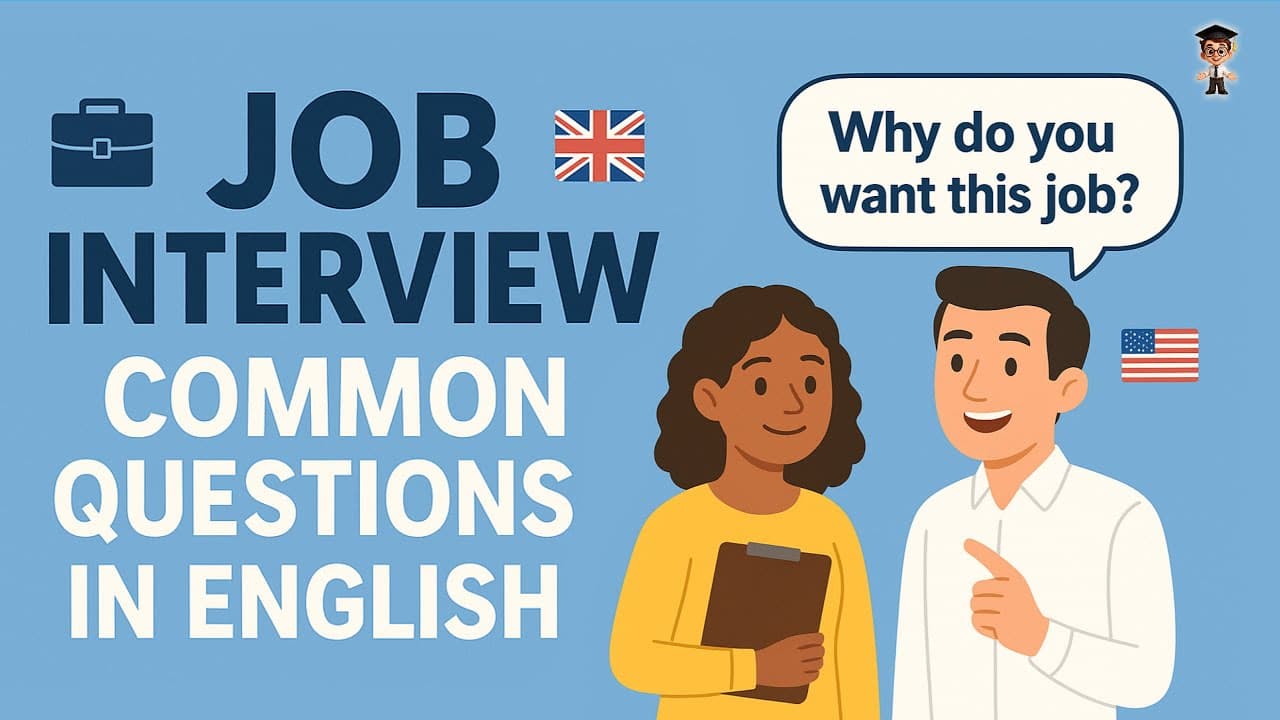
How to Answer Common Job Interview Questions in English
TL;DR
Answer common job interview questions in English with short, positive responses focused on your experience, skills, goals, and fit for the role. Research the company, choose one or two relevant strengths, pair a manageable weakness with improvement efforts, and structure challenge stories around the problem, action, and result. Read on for practical answers to eight questions you are likely to encounter.
Transcript
Hello everyone and welcome back to Mr. English channel where learning English is easy and fun. I'm Emily >> and I'm Paul. Hello. Hello Emily. How are you today? Are you feeling good? >> I am doing great, Paul. Thank you for asking. The sun is shining and I'm ready to talk about something super important for everyone learning English. How about you?... Read More
Key Insights
- A strong personal introduction is a short, work-focused summary of relevant experience, skills, and education. Personal subjects such as favorite food, pets, or unrelated hobbies should not replace information showing why the applicant fits the available position.
- Company research is essential for answering why you want to work there. Reviewing the organization’s website, activities, goals, and mission helps you connect your interests or values to the employer instead of saying that you simply need money.
- An effective strengths answer identifies one or two abilities that matter for the role. Organization, communication, teamwork, problem-solving, meeting deadlines, and learning quickly are examples presented in the lesson, but the selected strengths should remain relevant to the specific job.
- A credible weakness answer demonstrates self-awareness and active improvement. The weakness should not be a serious obstacle to performing the job, and the response should explain a concrete effort, such as speaking more during meetings or learning to trust personal decisions.
- A five-year career answer should communicate goals without requiring a highly specific plan. Expressing an intention to keep learning, develop professional skills, accept greater responsibility, and become a valuable team member shows the growth and commitment the interviewer wants to assess.
- A professional explanation for leaving a job focuses on future opportunities rather than past complaints. Seeking new challenges, greater growth, more effective use of existing skills, or a better cultural fit keeps the answer positive and avoids criticizing a former employer or manager.
- A challenge story works by describing the problem, the action taken, and the resulting outcome. Examples include listening carefully to an angry customer before offering a solution or finding a new way to complete a team task by its deadline.
- Questions for the interviewer demonstrate interest in the position and organization. Asking what a typical day looks like, learning about the team or company plans, or requesting the next steps in the hiring process uses the final part of the interview productively.
Install to Summarize YouTube Videos and Get Transcripts
Explore YouTube Video Summarizer or Get YouTube Transcript Extractor
Questions & Answers
Q: How should I answer “Tell me about yourself” in a job interview?
Give a short, clear introduction focused on your work life. Mention relevant experience, skills, and education, then explain why you fit the job. One example is a marketing assistant with three years of experience creating social media campaigns who studied business at university.
Q: How should I answer “Why do you want to work here?”
Research the company’s website, activities, goals, and mission before the interview. Connect something specific about its work to your interests or values, such as helping people through technology or protecting the environment. Do not make needing money your main reason.
Q: What should I say when asked about my strengths?
Choose one or two work-related strengths that matter for the position. You could discuss being organized, finishing tasks on time, communicating well, solving problems, working with others, or learning quickly. Avoid listing ten qualities without focus.
Q: How can I discuss a weakness without making a bad impression?
Choose a genuine but manageable weakness that is not a major obstacle to doing the job. Explain how you are improving, such as learning to trust your decisions when you are too critical of your work or practicing speaking more during meetings when you are shy.
Q: How should I answer “Where do you see yourself in five years?”
Describe a realistic direction based on learning, growth, and greater responsibility, even if you do not have a specific plan. You might say that you hope to become a valuable team member, develop your skills, and continue growing in your field.
Q: What is a professional reason for leaving a current or previous job?
Keep the answer positive and focus on what you want from your next opportunity. You can mention seeking new challenges, professional growth, better use of your skills, or a better cultural fit. Avoid criticizing a former employer or manager.
Q: How should I describe overcoming a challenge at work?
Use a real example that clearly covers the problem, the action you took, and the positive result. You might describe listening carefully to an angry customer before offering a solution, or finding a new way for your team to finish a task by its deadline.
Q: What questions should I ask at the end of a job interview?
Prepare one or two thoughtful questions that demonstrate interest in the role and organization. Ask what a typical day looks like, how the team works, what the company plans for the future, or what comes next in the hiring process.
Summary & Key Takeaways
-
Effective interview answers are short, clear, positive, and focused on work. Introduce yourself through relevant experience, skills, and education rather than personal details. Research the organization before explaining why you want the role, then connect your interests or values with the company’s work, goals, or mission in a genuine way.
-
Discuss one or two job-related strengths instead of presenting a long list. When addressing a weakness, choose a manageable issue and explain how you are improving it. Career-goal answers should communicate learning, growth, responsibility, and a desire to become a valuable member of the company over the coming five years.
-
Behavioral questions require a real example that identifies the problem, explains your action, and states the positive result. Present yourself as someone who collaborates well but can also work independently. Research salary expectations, describe practical stress-management methods, and prepare questions about daily duties, the team, or the hiring process.
Read in Other Languages (beta)
Share This Summary 📚
Summarize YouTube Videos and Get Video Transcripts with 1-Click
Try YouTube Summary with ChatGPT & Claude or YouTube Transcript Generator
Explore More Summaries from Mr. English Channel 📚



Summarize YouTube Videos and Get Video Transcripts with 1-Click
Try YouTube Summary with ChatGPT & Claude or YouTube Transcript Generator