How to order coffee in English like a native speaker
TL;DR
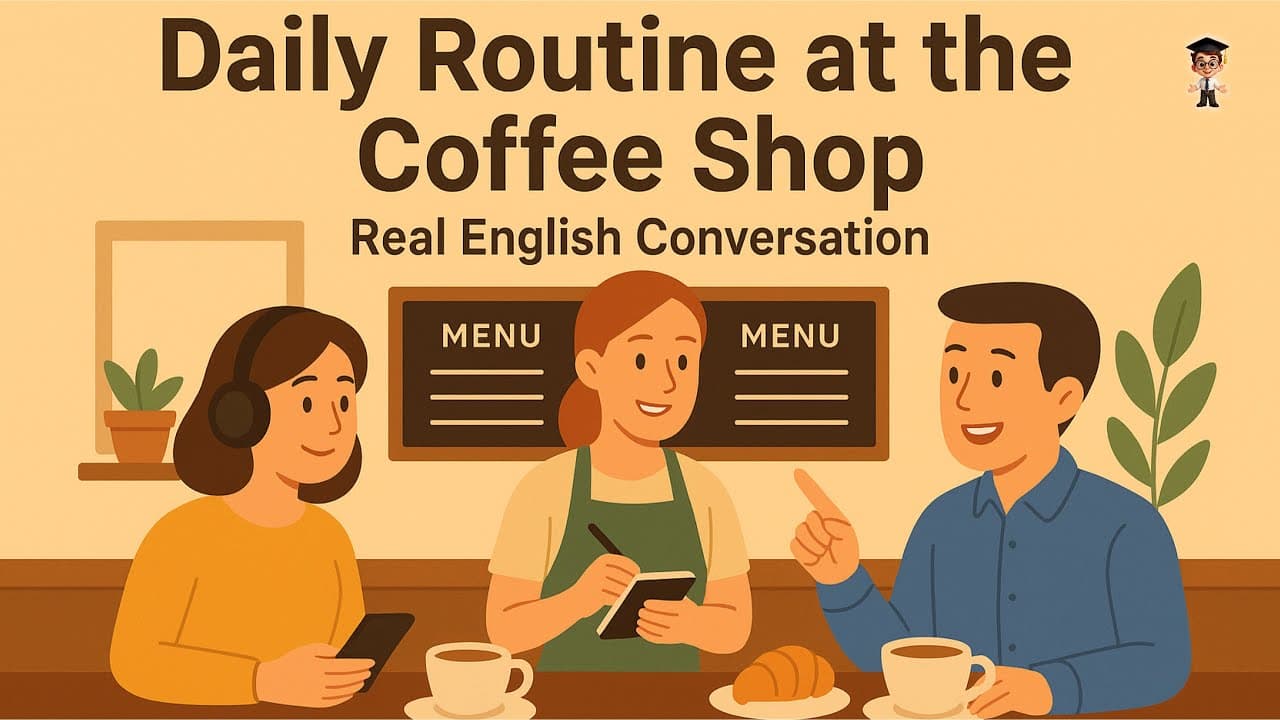
Polite ordering uses phrases like I would like a coffee, please or Can I have a coffee, please. Then you choose the drink, size, and any customizations, and finally decide if you are staying or taking it to go. Ask for seating and signal when your drink is ready.
Transcript
[music] [music] Hello everyone and welcome back to [music] Mr. English Channel where learning English is easy and fun. I'm Emily. >> Hello Emily. Hello to all our [music] wonderful listeners around the world. It is a beautiful day to practice English. >> It really is Paul. You sound very happy today. You have a lot of energy. [laughter] >> I do. I ... Read More
Key Insights
- Baristas are the staff you interact with when you enter a coffee shop and they are usually friendly, guiding the ordering process and providing options for customization. The term barista is used to refer to the person behind the counter who prepares your drink.
- Polite ordering phrases matter, with I would like a coffee, please and Can I have a coffee, please being preferred over direct forms like I want coffee, which is considered too direct in many contexts. The conversation demonstrates how to use these phrases naturally.
- Drink choices in coffee shops include espresso, Americano, latte and cappuccino, and customers may choose different milks such as oat, almond, soy or dairy based on preference and dietary needs. The menu can be overwhelming but the guide suggests sticking to familiar items or asking for guidance.
- Size terminology varies by shop, with small, medium and large commonly understood, while some places use Italian terms like tall, grande or venti. Understanding these terms helps avoid confusion at the counter.
- Special requests can customize drinks, for example asking for room for milk to leave extra space or requesting oat milk or syrup for sweetness, illustrating how to communicate preferences clearly.
- Common follow up questions from baristas include asking if you want room for milk or if you want to sit there or take away, reinforcing turn-taking in service interactions.
- The coffee shop setting is presented as a social and learning space where people work, read, or meet friends, making it a practical place to practice English listening and speaking in real life.
- Etiquette around seating, tipping and saying thank you are emphasized as universal politeness practices that improve customer experience and reflect cultural norms across cafe environments.
Install to Summarize YouTube Videos and Get Transcripts
Explore YouTube Video Summarizer or Get YouTube Transcript Extractor
Questions & Answers
Q: How to start an order in a coffee shop to sound polite
To start an order you should greet the barista and use a polite phrase such as I would like a coffee, please or Can I have a coffee, please. This establishes friendliness and respect, and it helps the interaction proceed smoothly. The approach also signals you are ready to specify the drink and any customizations.
Q: What are common coffee drink options explained
Common options include espresso, Americano, latte and cappuccino. Each has a distinct preparation: espresso is a strong shot, Americano adds hot water for a lighter profile, latte uses more milk for a milder taste, and cappuccino balances milk foam with coffee. Knowing these helps you order confidently.
Q: How does one indicate size in a coffee shop conversation
Size can be expressed as small, medium or large, which is widely understood and avoids confusion. Some shops also use Italian terms like tall, grande or venti. When in doubt, using small, medium or large ensures clear communication and aligns with most baristas.
Q: What should you say if you want no milk or a specific milk
If you want no milk you can say no room for milk or I would like it black. For a dairy alternative you can say I would like a latte with oat milk or Can I have almond milk in my latte. Clear phrasing avoids errors.
Q: How to handle seating in a busy cafe
If the shop is crowded, you can ask Is this seat taken? If it is not, you may sit down and enjoy your drink. This phrasing helps manage social interaction and keeps the seating etiquette polite, especially when tables are shared.
Q: What phrases help in a social coffee setting
Useful phrases include Let us grab a coffee to invite a friend, Hi there how are you, and Great to see you. Such phrases create a friendly environment, encourage conversation, and make the learning experience feel natural while practicing English.
Q: What are practical tips for cafe etiquette
Practicing good cafe etiquette includes saying please and thank you, tipping where appropriate, and waiting for your drink to be called. Paying attention to the barista and maintaining a courteous tone helps ensure a positive experience and reinforces respectful communication.
Q: How can a learner use the cafe as a listening practice
A learner can listen for real conversational patterns by observing how native speakers order, respond to questions, and interact with staff. Focusing on pronunciation, rhythm and natural phrases while in a cafe makes listening practice authentic and reinforces retention of vocabulary and phrases.
Summary & Key Takeaways
-
In this episode the hosts walk through a daily coffee shop routine from entry to order, highlighting polite language and common terms. The guide covers drink choices, sizes, and milk options, plus seating and to go questions. It emphasizes practicing real-life conversation for confidence.
-
The video demonstrates how to ask for room for milk, the difference between here and to go, and how to handle seating when a shop is busy. It also covers tipping culture and basic cafe etiquette while expanding vocabulary with Espresso, Latte, Americano and various milks.
-
Viewers learn practical phrases to simulate a cafe visit, including asking for the Wi-Fi password and inviting a friend to grab a coffee, turning a casual routine into an English learning moment.
Read in Other Languages (beta)
Share This Summary 📚
Summarize YouTube Videos and Get Video Transcripts with 1-Click
Try YouTube Summary with ChatGPT & Claude or YouTube Transcript Generator
Explore More Summaries from Mr. English Channel 📚
Summarize YouTube Videos and Get Video Transcripts with 1-Click
Try YouTube Summary with ChatGPT & Claude or YouTube Transcript Generator