How to Talk About Your Daily Routine in English
TL;DR
Describe your daily routine in English by moving chronologically from morning to bedtime and using short present-tense sentences such as “I wake up at 7:00” and “I go to work by bus.” Add concrete details about meals, transportation, work, relaxation, and sleep to make the conversation personal and practical. Read on for useful phrases covering every part of the day.
Transcript
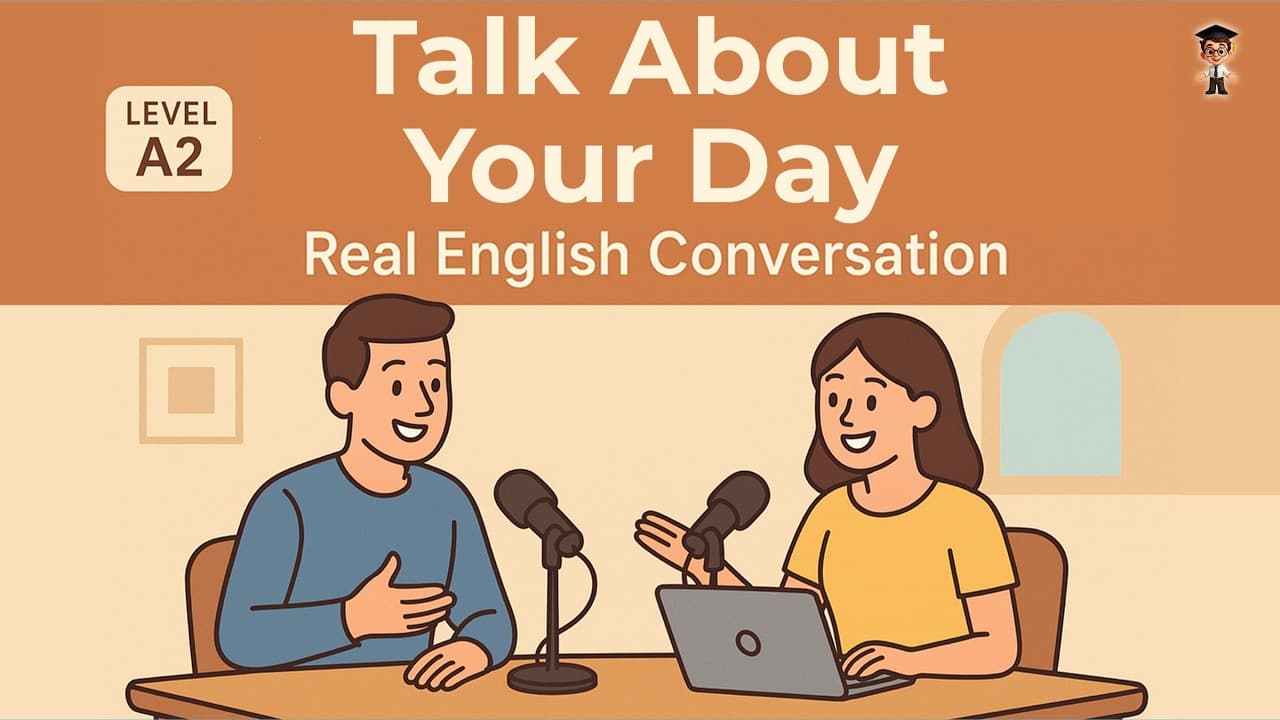
Hello everyone and welcome back to Mr. English channel where learning English is easy and fun. I'm Emily. Hello Emily. Hello everyone. It's great to be here again. How are you today Emily? I'm very good. Thank you, Paul. And you? I'm great, thanks. Ready for a new lesson? Wonderful. And to everyone listening, before we start, please remember to sub... Read More
Key Insights
- A daily routine is easy to describe by moving chronologically from waking up to going to bed. The conversation divides the day into morning preparation, breakfast, travel, work, lunch, returning home, dinner, free time, and a bedtime routine.
- Morning actions are expressed with short phrases such as “I wake up,” “I get up,” “I wash my face,” “I brush my teeth,” and “I get dressed.” Adding a time or small detail makes each basic sentence more personal and informative.
- Breakfast preferences provide simple speaking practice with food and drink vocabulary. Emily eats cereal with milk and drinks tea, while Paul eats toast with butter or strawberry jam and drinks coffee with a little milk and one sugar.
- Transportation can be described with phrases such as “I go to work by car,” “I drive my car,” and “I go by bus.” Paul’s drive takes about 20 minutes, while Emily uses a bus stop near her house and listens to music or a podcast.
- Work routines become clear through concrete actions and objects. Emily works as a shop assistant, greets customers, and helps them buy clothes, while Paul works in a quiet office with a desk, chair, and computer, writing emails and talking on the phone.
- Evening routines combine rest, exercise, meals, and personal interests. Emily changes clothes, relaxes on the sofa, and sometimes walks in a nearby park for about 30 minutes, while dinner choices include pasta, chicken with rice and vegetables, soup, or an omelette.
- Free-time vocabulary includes reading stories, watching comedies or television shows, listening to jazz or classical music, and calling family members. These familiar activities allow beginners to create truthful sentences about their own lives instead of memorizing unfamiliar situations.
- Simple sentences are sufficient for beginner conversation practice. Examples such as “I wake up at 8:00,” “I eat rice for lunch,” and “I watch TV in the evening” show how familiar subjects, present-tense verbs, times, and personal details can build speaking confidence.
Install to Summarize YouTube Videos and Get Transcripts
Explore YouTube Video Summarizer or Get YouTube Transcript Extractor
Questions & Answers
Q: How can beginners talk about their daily routine in English?
Describe the day in chronological order with short present-tense sentences. Begin with waking up and getting dressed, then cover breakfast, transportation, work, lunch, evening activities, and bedtime. Add personal details such as times, meals, job tasks, and transportation methods.
Q: What English phrases describe a morning routine?
Useful phrases include “I wake up,” “I get up,” “I wash my face,” “I brush my teeth,” and “I get dressed.” Emily makes these phrases more specific by saying that she wakes up at 7:00 and washes her face with cold water.
Q: How can you describe breakfast in simple English?
Name what you eat and drink with sentences such as “I eat cereal with milk” or “I drink a cup of tea.” Emily has cereal and tea, while Paul eats toast with butter or strawberry jam and drinks coffee with a little milk and one sugar.
Q: How do you describe going to work in English?
You can say “I go to work by car,” “I drive my car,” “I go by bus,” or “I take the bus.” Paul drives about 20 minutes to his office, while Emily takes a bus from a stop near her house and listens to music or a podcast.
Q: How can you describe your job with simple English?
State where you work, your role, and the actions you perform. Emily works as a shop assistant, greets customers, and helps them buy clothes. Paul works in a quiet office, uses a computer, writes emails, and talks on the phone.
Q: What phrases can you use to talk about lunch?
You can say “I have my lunch break at 1:00 p.m.,” “I bring a sandwich from home,” or “I go to a small cafe near my office.” Emily usually eats a cheese and tomato sandwich with an apple or banana, while Paul chooses a large salad or soup and drinks water.
Q: How do you talk about relaxing after work in English?
Useful sentences include “I go home,” “I change my clothes,” “I sit on the sofa,” and “I relax.” Emily puts on a comfortable T-shirt and leggings, checks her phone, and sometimes walks in a nearby park for about 30 minutes.
Q: How do you describe an evening and bedtime routine in English?
For the evening, you can talk about cooking dinner, reading, watching comedies, listening to music, or calling family. A bedtime sequence can include taking a shower, brushing your teeth, changing into pajamas, and going to bed. Emily goes to bed around 10:30 p.m., while Paul usually goes around 11:00.
Summary & Key Takeaways
-
Emily and Paul describe their morning routines with simple English phrases. They wake up, get out of bed, wash their faces, brush their teeth, get dressed, and eat breakfast. Emily has cereal and tea, while Paul prefers toast and coffee with a little milk and one sugar.
-
Their working days provide practical vocabulary for transportation, jobs, lunch, and schedules. Emily takes the bus to her shop assistant job, where she helps customers buying clothes. Paul drives about 20 minutes to an office, works with a computer, writes emails, talks on the phone, and eats lunch at a cafe.
-
After finishing work at 5:00 p.m., they return home, change into comfortable clothes, relax, cook dinner, and enjoy free time. Their evening activities include walking, reading, watching comedies, listening to music, and calling family. They finish with showers, tooth brushing, pajamas, and sleep around 10:30 or 11:00.
Read in Other Languages (beta)
Share This Summary 📚
Summarize YouTube Videos and Get Video Transcripts with 1-Click
Try YouTube Summary with ChatGPT & Claude or YouTube Transcript Generator
Explore More Summaries from Mr. English Channel 📚




Summarize YouTube Videos and Get Video Transcripts with 1-Click
Try YouTube Summary with ChatGPT & Claude or YouTube Transcript Generator