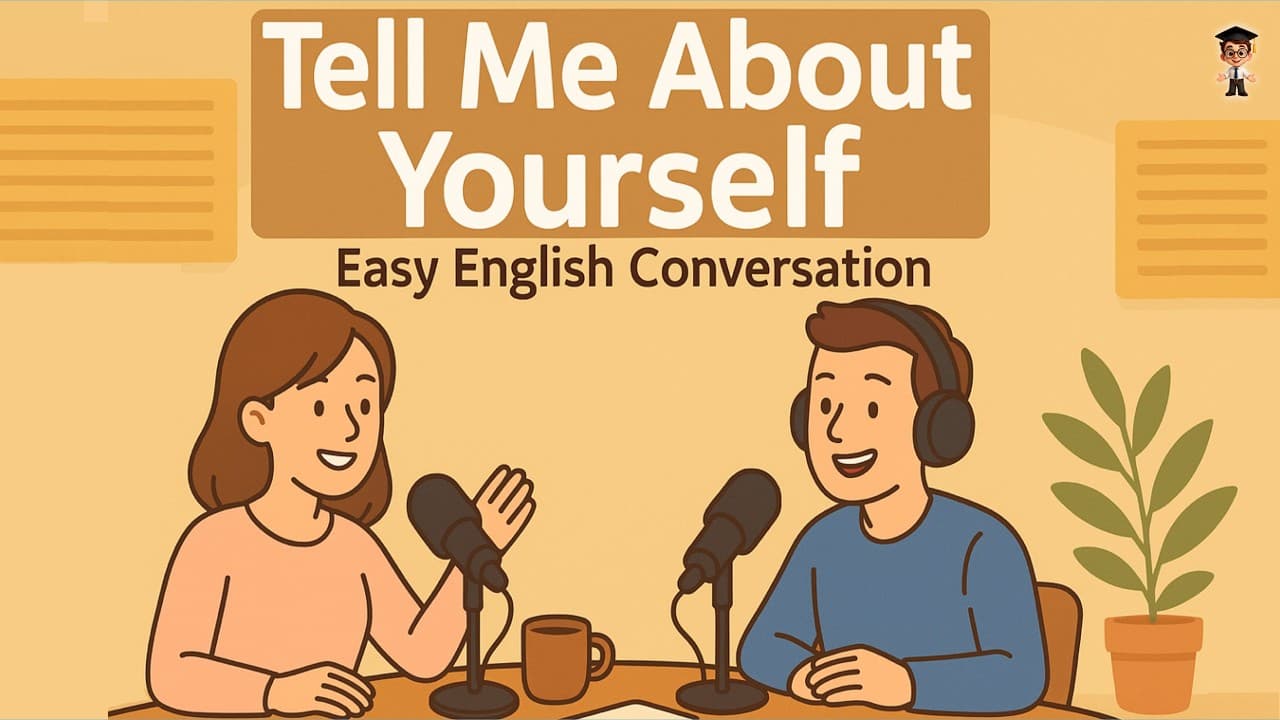
How to introduce yourself in English for beginners
TL;DR
You can introduce yourself with simple, clear sentences: state your name, job, and a few likes or facts. Use questions to keep the conversation going, and practice with short answers about family, pets, or hobbies. Start small and speak a little every day to build confidence.
Transcript
Hello everyone and welcome back to Mr. English channel where learning English is easy and fun. I'm Emily and I'm Paul. Hello Emily. How are you today? I'm great Paul. So happy to be here. And you? I'm very happy too. Ready for a new episode. Me too. It's always so good to talk to our listeners. Yes, it is. A big hello to everyone listening. Before ... Read More
Key Insights
- Self-introductions should begin with a name followed by a simple statement of occupation or role.
- Using simple adjectives and nouns makes introductions easy to understand for A1–A2 learners.
- Asking basic questions like What is your name or What do you do keeps conversations going.
- Talking about preferences (colors, foods, hobbies) adds relatable detail without complexity.
- Talking about pets and family is a practical way to expand the introduction.
- The guide emphasizes practice in everyday settings to build confidence.
- Mistakes are normal and part of learning, not a barrier to progress.
- Consistency and short practice sessions are more effective than occasional long sessions.
Install to Summarize YouTube Videos and Get Transcripts
Explore YouTube Video Summarizer or Get YouTube Transcript Extractor
Questions & Answers
Q: How can I start a simple self introduction in English?
Begin with your name, for example My name is Paul, followed by your job or role, such as I am a history teacher. Then add one or two easy likes or facts, for example I like books and I enjoy walks in the park. This structure keeps the introduction clear and manageable for beginners.
Q: What topics are recommended for a beginner to talk about in introductions?
Recommended topics include name, job, likes, color, pets, and family. These areas provide useful, everyday vocabulary and common phrases that are easy to memorize. Practicing sentences like I like music or My favorite color is blue helps learners communicate personal details without complexity.
Q: How can I keep a conversation going after the introduction?
Ask simple follow up questions such as What do you do, What do you like, or What is your favorite color? These prompts invite the other person to share, creating a natural exchange. Listening and responding with short, relevant answers maintains flow and boosts confidence.
Q: What is a practical way to practice introductions daily?
Practice in short sessions of 5 to 10 minutes, speaking aloud with a friend or in front of a mirror. Rehearse the structure name, job, likes, and a few personal facts. Regular, brief practice reduces stress and builds speaking fluency over time.
Q: How should beginners talk about family in introductions?
Include simple family details like I have one sister or I have two brothers when relevant. Comparing ages or roles, such as My sister is younger than me, adds a bit of context without requiring advanced vocabulary.
Q: What attitude helps when practicing introductions?
Be brave and patient. Confidence grows from starting small, making a few mistakes, and continuing to practice. Emphasizing simple sentences and everyday topics creates a friendly, non intimidating learning environment.
Q: Why are questions important in introductions?
Questions are the key to a good conversation because they show interest in the other person and keep the dialogue moving. They also give you a clear pathway to learn about the other person while practicing natural speaking patterns.
Q: What should I avoid when introducing myself as a beginner?
Avoid overly long sentences or advanced vocabulary. Keep sentences short and clear, stick to familiar topics like name, job, likes, and basic facts, and focus on clear pronunciation and natural rhythm to communicate effectively without confusion.
Summary & Key Takeaways
-
This episode teaches beginners to introduce themselves using simple English, focusing on name, job, likes, and basic personal facts. It emphasizes plain language, repetition, and natural conversation flow through a back-and-forth practice between two speakers.
-
Listeners are guided to discuss topics like color, pets, and family in easy, short sentences, which helps build confidence in real conversations and reduces anxiety for new learners.
-
The overall aim is to show that speaking English can be approachable, with practical phrases and step by step tips for starting conversations and encouraging regular practice.
Read in Other Languages (beta)
Share This Summary 📚
Summarize YouTube Videos and Get Video Transcripts with 1-Click
Try YouTube Summary with ChatGPT & Claude or YouTube Transcript Generator
Explore More Summaries from Mr. English Channel 📚



Summarize YouTube Videos and Get Video Transcripts with 1-Click
Try YouTube Summary with ChatGPT & Claude or YouTube Transcript Generator