How Do You Talk About the Future in English? | Future Tense Conversation Practice
TL;DR
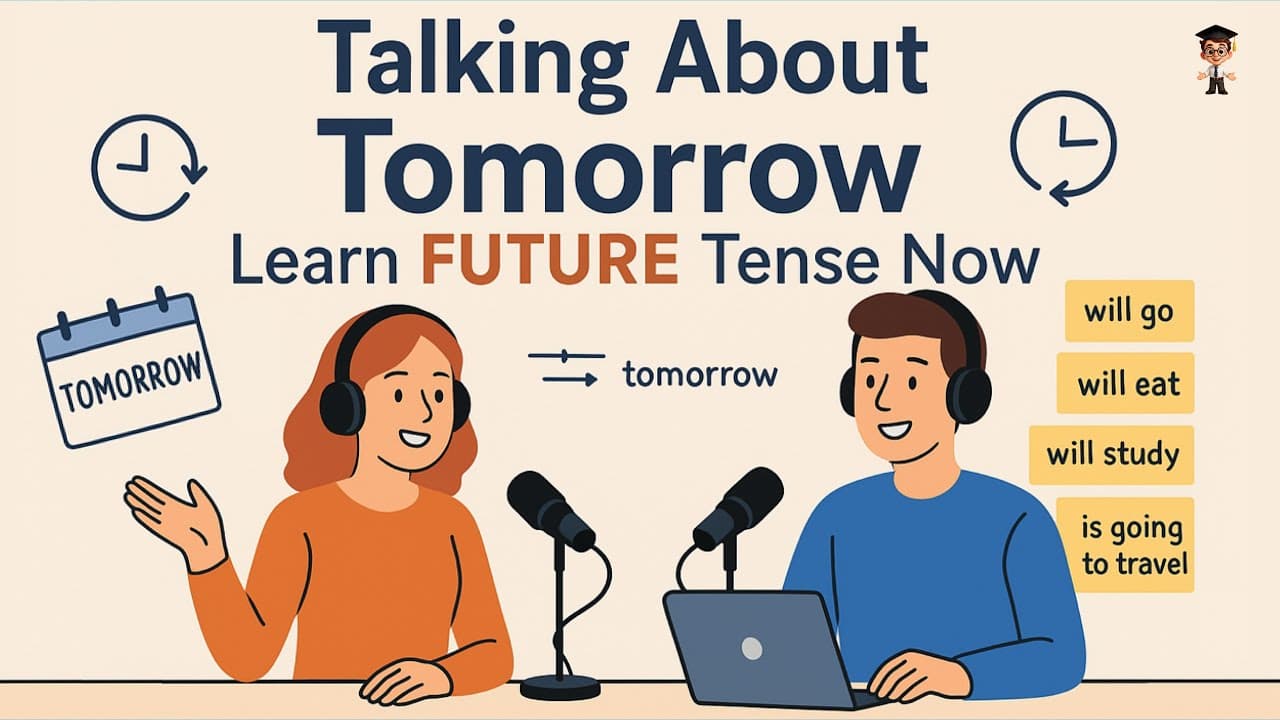
Use “will” for quick decisions, predictions, and strong beliefs about the future, while “am,” “is,” or “are going to” describes plans decided before speaking. Add expressions such as “tomorrow,” “next week,” or “in two days” to make the timing clear. Read on for sentence patterns, questions, negatives, and examples that connect future dreams with small plans.
Transcript
Hello everyone and welcome back to Mr. English channel where learning English is easy and fun. I'm Emily. Hello Emily. Hello everyone. It's great to be here. How are you today Emily? I'm fantastic, Paul. I am feeling very happy and excited about the future. Oh, the future. That sounds like a big topic. It is a great topic for today. Yes, exactly. T... Read More
Key Insights
- “Will” is used for a quick decision made at the moment of speaking. Feeling hungry and immediately deciding, “I will eat a sandwich,” shows that the action was not arranged earlier but was chosen in response to the present situation.
- “Will” can express a simple prediction, fact, or strong belief about the future. Statements such as “It will rain tomorrow,” “Sarah will call me tonight,” and “One day I will be a doctor” present expected or hoped-for future events.
- “Will” has the same form with every subject. Speakers use “I will,” “you will,” “he will,” “she will,” “it will,” “we will,” and “they will,” without changing the word according to the person performing the future action.
- Questions with “will” place the future word before the subject. A statement such as “You will come to the party” becomes “Will you come to the party?” Short answers can use “Yes, it will” or “No, it won’t.”
- “Won’t” is the shortened form of “will not” and creates a negative future statement. For example, a speaker can say, “I will eat a sandwich, but I won’t eat a big pizza,” to contrast a future choice with a rejected option.
- “Going to” is used for plans and intentions decided before the conversation. Visiting parents, cleaning an apartment, traveling to the beach, and saving money are expressed with “going to” when the speaker has already considered or arranged the action.
- “Going to” requires “am,” “is,” or “are” before the phrase and a verb after it. Correct patterns include “I am going to clean,” “he is going to play,” and “they are going to have a party.”
- Small plans can turn a distant dream into manageable action. Writing one page every day can produce thirty pages after a month, while learning ten English words or watching one English episode can support the larger dream of speaking fluently.
Install to Summarize YouTube Videos and Get Transcripts
Explore YouTube Video Summarizer or Get YouTube Transcript Extractor
Questions & Answers
Q: How do you talk about future plans in English?
Use “am,” “is,” or “are going to” for a plan decided before speaking. For example, “I am going to visit my parents on Saturday” describes an existing weekend plan, while “They are going to have a party” describes their planned activity.
Q: When should you use “will” instead of “going to”?
Use “will” for a quick decision made at the moment of speaking or for a prediction, fact, or strong belief about the future. Use “going to” when you already have a plan, such as visiting your parents or cleaning your apartment.
Q: How do you form future sentences with “going to”?
Use the subject, the correct form of “to be,” “going to,” and the main verb. The patterns include “I am going to clean,” “he is going to play,” and “they are going to have a party.”
Q: Does “will” change with different subjects?
No, “will” stays the same with every subject. The forms are “I will,” “you will,” “he will,” “she will,” “it will,” “we will,” and “they will.”
Q: How do you ask and answer future questions with “will”?
Place “will” before the subject, changing “You will come to the party” into “Will you come to the party?” A question such as “Will it be sunny tomorrow?” can be answered with “Yes, it will” or “No, it won’t.”
Q: What is the negative form of “will”?
The negative form is “will not,” and its short form is “won’t.” Examples include “It will not be sunny,” “It won’t be sunny,” and “I won’t eat a big pizza for lunch.”
Q: Which time expressions make future sentences clearer?
Future statements can use expressions such as “tomorrow,” “tonight,” “next week,” “next month,” and “next year.” More specific phrases include “in two days,” “in three weeks,” and “in five years.”
Q: How can small future plans support a big dream?
Connect a large dream to a small action expressed with “going to.” Someone who dreams of speaking English fluently might plan to watch one English episode tomorrow or learn 10 new English words during the week, making the next step clear and manageable.
Summary & Key Takeaways
-
“Will” is used for decisions made at the moment of speaking and for simple predictions, facts, or beliefs about the future. Its form remains the same with every subject. Questions place “will” before the subject, while negative statements use “will not” or its shortened form, “won’t.”
-
“Going to” expresses a plan or intention that was decided before speaking. Its structure requires the correct form of “to be”: “am,” “is,” or “are,” followed by “going to” and a verb. Examples include visiting parents, cleaning an apartment, starting a book, and studying English.
-
Big dreams become more manageable when they are connected to small, clear plans. A learner might dream of speaking English fluently, then plan to watch an English episode or learn ten words. Time expressions such as “tonight,” “next month,” and “in two days” make future statements more specific.
Read in Other Languages (beta)
Share This Summary 📚
Summarize YouTube Videos and Get Video Transcripts with 1-Click
Try YouTube Summary with ChatGPT & Claude or YouTube Transcript Generator
Explore More Summaries from Mr. English Channel 📚

Summarize YouTube Videos and Get Video Transcripts with 1-Click
Try YouTube Summary with ChatGPT & Claude or YouTube Transcript Generator