How to Use Shadowing to Improve English Speaking
TL;DR
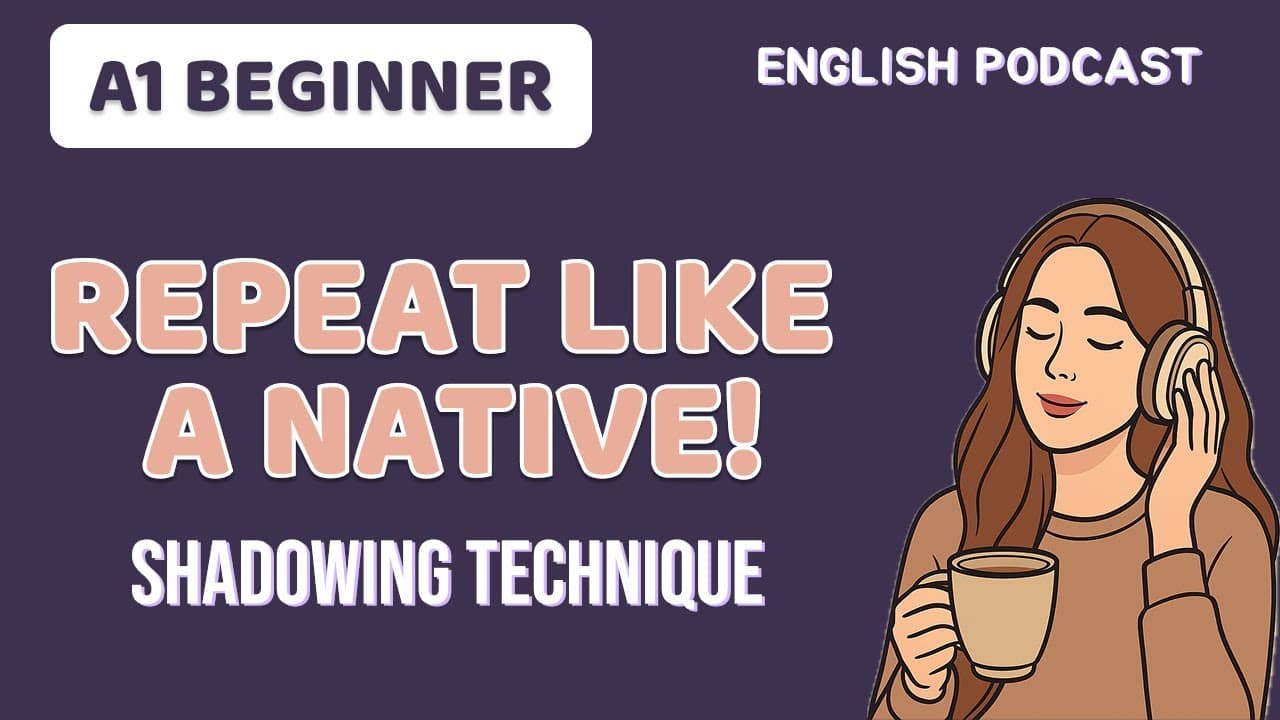
Shadowing means listening to English audio and repeating it out loud at the same time as the speaker, matching their rhythm, pronunciation, and intonation as closely as possible. It builds pronunciation, listening comprehension, natural intonation, and fluency at once. Even 10 to 15 minutes of focused practice a few times a week makes a big difference over time.
Transcript
Hello everyone and welcome back to Mr. English Channel. I'm Emily and as always, I'm super excited to be here with you all today. Hi Emily and hello to our amazing listeners. I'm Paul and I'm ready for another fun and helpful English learning session. Absolutely, Paul. Today we're diving into a fantastic technique that can really boost your English... Read More
Key Insights
- Shadowing is listening to English audio and repeating it out loud at the same time as the speaker, matching pace and intonation as closely as possible. Emily compares it to your voice acting as the shadow of the original audio.
- The goal of shadowing is not just repeating words but absorbing the rhythm, pronunciation, and flow of natural English. Paul calls it being like a parrot but with a purpose, an active rather than passive way to learn.
- Pronunciation improves through shadowing because matching a speaker's sounds makes you aware of how English words are actually pronounced, which can be quite different from how they look written down. It lets learners bypass tricky spelling.
- Listening comprehension improves because accurate repetition forces close attention to the audio. Emily describes shadowing as a workout for your ears and your mouth at the same time, engaging both skills in one session.
- Native speakers use changes in pitch and stress to convey meaning and emotion rather than speaking in a flat monotone. Shadowing helps learners internalize these intonation patterns, which are hard to grasp from textbooks alone.
- The best starting material is audio at your level or slightly above, since material that is too difficult becomes frustrating. Short ESL podcasts work well because speakers use clear pronunciation and a slightly slower pace.
- Recording yourself shadowing and comparing it to the original audio is described as eye-opening because it reveals pronunciation and intonation differences you were not aware of. The recordings are private and need not be shared.
- Short consistent sessions beat long infrequent ones. Even 10 to 15 minutes of focused shadowing a few times a week can make a big difference over time, so the technique should become a daily or weekly habit.
Install to Summarize YouTube Videos and Get Transcripts
Explore YouTube Video Summarizer or Get YouTube Transcript Extractor
Questions & Answers
Q: What is the shadowing technique in English learning?
Shadowing is listening to a piece of English audio and repeating it out loud at the same time as the original speaker, as closely as possible. Emily describes it as your voice being the shadow of the audio: you match the speaker's pace, sounds, and intonation simultaneously rather than waiting for them to finish. Paul sums it up as being like a parrot but with a purpose, because the aim is not simply repeating words but getting a feel for the rhythm, the pronunciation, and the flow of natural English.
Q: Why is shadowing effective for improving English speaking?
Shadowing works on several levels at once. It improves pronunciation because matching the speaker's sounds makes you aware of how English words are actually pronounced, which can differ greatly from their spelling. It improves listening comprehension because you must pay close attention to repeat accurately, which Emily calls a workout for your ears and your mouth at the same time. It builds a feel for natural rhythm and intonation, and it increases fluency by making you more comfortable forming English sentences and speaking smoothly.
Q: How do you start shadowing step by step?
Seven steps are given. Step one is to find suitable audio at your level or slightly above, ideally with a transcript. Step two is to listen to a short section without shadowing, just to understand the content. Step three is to play it again and shadow a sentence or two at a time. Step four is to repeat that same section again and again. Step five is to gradually lengthen the passages from sentences to whole paragraphs. Step six is to record yourself and compare with the original. Step seven is to be patient and persistent.
Q: What audio material is best for shadowing practice?
Short podcasts designed for English learners are recommended because the speakers usually speak clearly and at a slightly slower pace. Short clips from English TV shows or movies also work as long as the speakers have clear pronunciation, and audiobooks can work well, especially if you have the transcript to follow along with. Having a transcript is described as particularly helpful for beginners because it lets you read along while listening, connecting the sounds with the written words and clarifying any parts you might have missed.
Q: What are common mistakes learners make when shadowing?
Four mistakes are named. The first is choosing material that is too difficult, since constantly getting lost or falling behind is discouraging, so easier material that builds confidence is better. The second is focusing too much on individual words instead of overall flow and intonation, when the aim is to mimic the melody of the speech and not just the notes. The third is not being active enough, since shadowing requires focus and effort rather than passive listening. The fourth is getting discouraged by not sounding like a native speaker straight away.
Q: How long should a shadowing session be?
Consistency matters more than duration. Short consistent shadowing sessions are described as more effective than long infrequent ones, and the advice is to incorporate shadowing into your daily or weekly study routine. Even 10 to 15 minutes of focused shadowing a few times a week can make a big difference over time. When you start, the shadowed sections themselves should be short, a sentence or two at a time, and only lengthened to longer phrases and whole paragraphs once you feel comfortable.
Q: Why should you record yourself while shadowing?
Recording yourself shadowing and comparing it to the original audio is step six of the process and is described as really eye-opening. It lets you notice differences in your pronunciation or intonation that you were not aware of before, which identifies exactly where you need to improve. Paul notes it can feel intimidating to hear your own voice, but Emily points out that the recordings are just for your own learning and you do not have to share them with anyone, making it a private way to get feedback on your speaking.
Q: What shadowing material suits beginner, intermediate, and advanced learners?
Beginners are advised to use podcasts specifically designed for English learners, such as ESL podcasts, because these usually have clear pronunciation and a slightly slower pace. Intermediate learners can move to slightly more challenging material like short news clips or interviews, and can also shadow parts of English TV shows or movies with relatively clear dialogue. Advanced learners can challenge themselves with complex audio such as academic lectures, debates, or more nuanced and fast-paced conversations in movies or series, focusing on subtle aspects of pronunciation.
Summary & Key Takeaways
-
Shadowing is listening to a piece of English audio and repeating it out loud at the same time as the original speaker, as closely as possible. Emily describes it as your voice being the shadow of the audio, or like being a parrot but with a purpose, focused on rhythm, pronunciation, and the flow of natural English rather than words alone.
-
The technique works on four levels. It sharpens pronunciation by making you aware of how English words actually sound versus how they are spelled, improves listening comprehension because accurate repetition demands close attention, builds a feel for natural pitch and stress patterns instead of flat monotone delivery, and increases fluency by making sentence formation more comfortable.
-
Seven steps are given: find audio at or slightly above your level, listen once without shadowing, shadow a sentence or two at a time, repeat the same section many times, gradually lengthen the passages, record yourself and compare with the original, and stay patient and persistent. Material recommendations scale from ESL podcasts to lectures and debates.
Read in Other Languages (beta)
Share This Summary 📚
Summarize YouTube Videos and Get Video Transcripts with 1-Click
Try YouTube Summary with ChatGPT & Claude or YouTube Transcript Generator
Explore More Summaries from Mr. English Channel 📚






Summarize YouTube Videos and Get Video Transcripts with 1-Click
Try YouTube Summary with ChatGPT & Claude or YouTube Transcript Generator