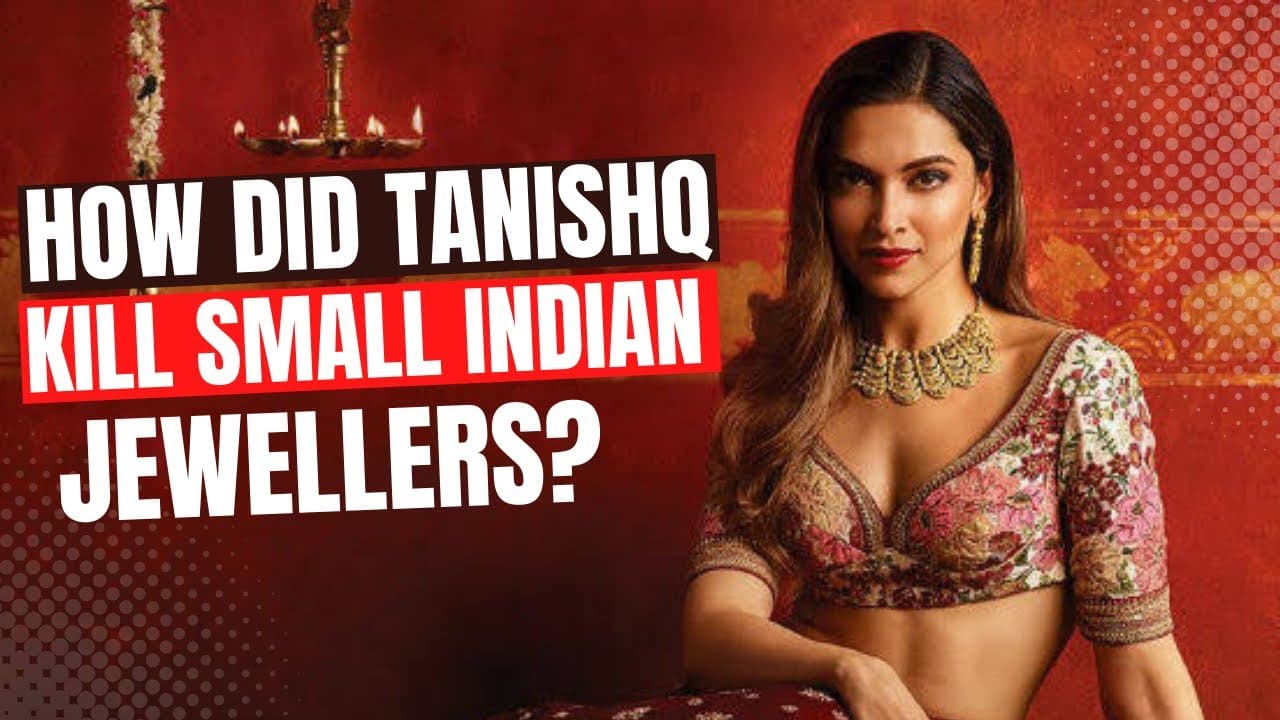
How did Titan turn Tanishq into a jewelry giant
TL;DR
Titan used a strategic pivot into jewelry, introducing trust and purity measures, price transparency, and customer acquisition schemes to overcome the unorganized market. Innovations like the carrot meter and the 1922 exchange, plus a middle class friendly gold harvest plan, helped scale Tanishq from losses to a leading brand.
Transcript
hi everybody tanishq is one of the most incredible brands in the indian business history and like we saw in the titan episode in the past 20 years the stock price of its parent company titan has shot up by not 10 not 20 but 33 000 going from just 7.11 rupees to 2700 rupees and a mere 10 000 rupees invested in titan 20 years back would be worth a mi... Read More
Key Insights
- Tanishq’s entry into jewelry addressed India’s high demand for gold as an investment and a trust issue with local dwellers.
- The purity meter (carrot meter) exposed adulteration and built credibility, driving customer migration to Tanishq.
- The 1922 strategy allowed customers to exchange impure gold for purer Tanishq jewelry by bearing manufacturing costs, expanding loyalty.
- Pricing transparency was introduced by showing gold and gem details and shifting focus from design to purity and value.
- Titan identified a market gap where strong margins existed due to trust issues and expanded through education and audits.
- The gold harvest plan made high value jewelry affordable for middle class families, unlocking mass adoption.
- Tanishq’s strategy reduced barriers of trust and cost, enabling lifetime value through multi-generational customers.
- The transformation leveraged a jugado mindset to convert a loss-making unit into a flagship brand with scalable growth.
Install to Summarize YouTube Videos and Get Transcripts
Explore YouTube Video Summarizer or Get YouTube Transcript Extractor
Questions & Answers
Q: What strategic shift helped Titan convert from a watch maker to a jewelry leader in India
Titan shifted focus from watches to jewelry to capitalize on India’s strong demand for gold as an investment and to disrupt the unorganized market. This pivot involved building trust through purity validation, transparent pricing, and customer acquisition strategies that turned a loss making unit into a scalable, high growth jewelry business.
Q: Why was purity important in Tanisqh’s early market strategy
Purity mattered because Indian customers valued gold for investment and trusted the local dwellers who sold jewelry, often adulterating products to preserve margins. By measuring purity with the carrot meter and offering free checks, Tanishq exposed adulteration, built trust, and redirected customers from unorganized sellers to a branded, reliable option.
Q: How did the 1922 exchange strategy work and what impact did it have
The 1922 strategy allowed customers to test their existing gold, and if purity fell within a certain range, exchange it for 22 karat Tanishq jewelry by paying only manufacturing charges. This reduced switching costs, tackled trust issues, and generated lakhs of potential customers through a trust-building, cost-absorbing offer.
Q: What role did pricing transparency play in Titan’s strategy
Pricing transparency meant showing both gold content and gem details on price tags, helping customers understand value beyond design. This shift aligned with the belief that gold weight and value mattered more than aesthetics alone, driving more informed purchases and reducing the advantage of unorganized sellers.
Q: How did the gold harvest plan address the middle class barrier to entry
The gold harvest plan functioned like an installment savings scheme, allowing customers to pool small monthly deposits toward a future purchase. This made high-value jewelry affordable for middle class families, enabling them to accumulate the funds necessary for a significant purchase while creating future demand for Tanishq products.
Q: What was the strategic purpose behind expanding jewelry sales in Europe during a downturn
Expanding jewelry sales in Europe allowed Titan to generate forex earnings to finance watch imports when the domestic forex position was stressed during economic shocks. This jugado approach used jewelry as a means to secure foreign exchange and sustain overall growth during challenging periods.
Q: How did Tanishq address the barrier of trust in traditional Indian jewelers
Tanishq addressed this barrier by introducing advanced purity validation through the carrot meter, offering free purity checks, and the 1922 exchange program. These measures created transparency and reliability, eroding blind loyalty to local dwellers and converting trust into a competitive advantage for the brand.
Q: What long-term impact did these strategies have on Titan’s brand and growth
The combination of purity validation, transparent pricing, and accessible financial options created a sustainable growth engine for Tanishq. Customer lifetime value increased as trust and perceived value grew, enabling brand leadership in jewelry and driving significant sales growth within the organization’s jewelry division.
Summary & Key Takeaways
-
Titan shifted from watches to jewelry to exploit India’s demand for pure gold, creating trust through the carrot meter and 1922 exchange strategy.
-
The company addressed cost barriers for middle class buyers with the gold harvest plan and flexible payment options, expanding its customer base.
-
Tanishq built its brand by combining purity validation, innovative pricing, and aggressive customer acquisition to outcompete local dwellers and unorganized players.
Read in Other Languages (beta)
Share This Summary 📚
Summarize YouTube Videos and Get Video Transcripts with 1-Click
Try YouTube Summary with ChatGPT & Claude or YouTube Transcript Generator
Explore More Summaries from Think School 📚






Summarize YouTube Videos and Get Video Transcripts with 1-Click
Try YouTube Summary with ChatGPT & Claude or YouTube Transcript Generator